


What are the common signs that indicate a microwave oven is faulty?
Common signs your JMW2430LL02 microwave is faulty include weak or uneven heating, unusual buzzing or grinding, burning smells, sparking, a door that does not latch cleanly, or a dead keypad or display. These symptoms often point to a failing safety interlock, turntable drive, or internal power components.
- Confirm the door closes fully and the latch feels solid (no sagging or bounce-back).
- Listen for the normal hum plus fan; loud buzzing, rattling, or grinding is a red flag.
- Watch the turntable; if it stops or jerks, heating can become uneven.
- Check for arcing or sparks (stop using it immediately if you see this).
- Note any burning smell, especially if it appears quickly after starting.
| Symptom | What it usually means | What we typically replace |
|---|---|---|
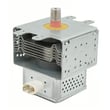
| Runs but barely heats | High-voltage system problem | Inverter or related components |
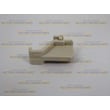
| Starts then stops when door moves | Door safety circuit issue | Switch W10211972 or related door parts |
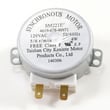
| Turntable not rotating | Turntable drive issue | Microwave turntable motor W10911403 or tt drive ht W11179756 |
| Completely dead (no lights) | Power protection opened | Fuse mda 20a W11188752 (and the cause) |
A microwave that sparks, smells like burning, or has a door that will not latch correctly is a safety issue. The door interlock system is designed to prevent operation when the door is not fully secured, so ignoring door or switch symptoms can lead to bigger failures.
- Sparking/arcing inside the cavity
- Burning smell or visible smoke
- Door will not close, latch, or stay aligned
- Loud buzzing plus poor heating
Last updated: January 2026
How long do Jenn Air wall ovens last?
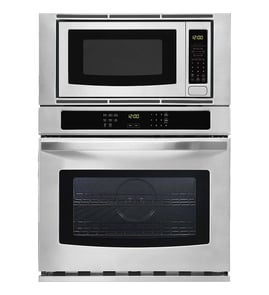
A Jenn-Air wall oven typically lasts 15 years with normal household use and basic maintenance. For the Jenn-Air JMW2430LL02 wall oven/microwave combo, keeping airflow clear and fixing heating or cooling issues early helps you reach that expected lifespan.
Most wall ovens land in a similar range, but real life depends on heat stress, ventilation, and how quickly small problems get corrected.
- Typical wall oven lifespan: about 15 years
- Heavy use (daily high-temp baking, frequent self-clean) can shorten life
- Poor cabinet ventilation can overheat controls and wiring
- Power surges can damage the electronic control board
- Ignoring fan noise or weak heating often leads to bigger failures
These are the highest-impact habits for a wall oven/microwave combo like JMW2430LL02.
- Keep vents and trim areas free of grease and dust buildup
- Avoid running self-clean back-to-back; let the oven cool fully between cycles
- Use cookware that fits; oversized pans can block airflow and cause uneven baking
- If the oven temperature seems off, address it early (don’t compensate by “guessing” hotter)
- If you notice cooling fan noise or the unit runs hot, troubleshoot promptly
When these parts start failing, performance drops and other components can be stressed.
| Symptom | Common area to check | Example part for JMW2430LL02 |
|---|---|---|
| Oven not heating evenly or takes too long to preheat | Heating circuit | Range bake element W11545804 |
| Unit seems to run hot, fan noisy, or shuts down after heating | Cooling/airflow | Assembly, cooling fan W11344874 |
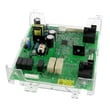
| Random resets, dead display, or erratic operation | Controls/power | Electronic control board WPW10260060 |
A wall oven is built for long service, but heat and airflow are the deciding factors. Catching a weak bake element, failing cooling fan, or control issue early prevents secondary damage and helps the appliance reach its full expected life.
Last updated: January 2026
What are common problems with Jenn Air stoves?
Jenn-Air cooking appliances commonly have heating problems (won’t heat or heats unevenly), control and display glitches, and fan or door-related issues. For the Jenn-Air JMW2430LL02 wall oven/microwave combo, the most frequent service-type failures involve the bake heating circuit, cooling airflow, and microwave door safety switching.
- Oven not heating or slow to preheat: failed bake element, temperature control issue, or a safety thermostat opening
- Uneven baking or hot spots: convection fan or airflow parts not moving air correctly
- Unit shuts down or shows erratic behavior: control board or wiring harness connection problems
- Microwave won’t run: door interlock switch not closing properly, fuse issue, or inverter problem
- Loud fan noise or overheating cabinet: cooling fan or blower issue
| Symptom | Commonly involved part | What it does |
|---|---|---|
| Oven won’t heat | Range bake element W11545804 | Provides heat for baking |
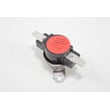
| Overheats or trips out | Range high-limit thermostat WP4449751 | Opens the circuit if temperatures get too high |
| Microwave won’t start | Switch W10211972 | Confirms the door is closed for safe operation |
| Random resets or dead display | Electronic control board WPW10260060 | Manages oven and microwave functions |
| Poor airflow or fan noise | Assembly, cooling fan W11344874 | Cools controls and moves air through the unit |
- Reset the breaker (turn it fully off, then on) to clear a control glitch.
- Confirm the oven is set to Bake (not Delay Start, Sabbath, or a timed mode).
- For uneven baking, test with an oven thermometer and try a different rack position.
- For microwave issues, check that the door closes firmly and the latch area is clean.
- If the unit overheats, stop using it until the cooling fan runs normally.
Heating, airflow, and door-safety circuits protect performance and safety. Catching a weak bake element, failing cooling fan, or worn door switch early helps prevent repeated shutdowns, poor cooking results, and additional component damage.
Last updated: January 2026