Owner’s manual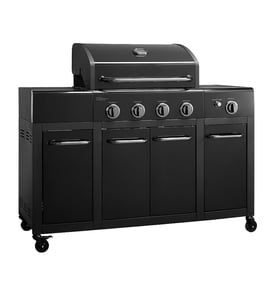




How do you tell what type of grill you have?
For Kenmore model 14620962910, the quickest way to tell what type of grill you have is to confirm the fuel type and cylinder setup. This model is designed to run on LP (propane) gas using the supplied regulator/valve assembly; it uses a standard 20 lb LP tank size.
Quick identification checklist (what to look for)
Use these physical and labeling checks to identify your grill type accurately:
- Model tag: Find the rating label (often on the cart frame, inside a door, or on a side panel) and match the model number to 14620962910.
- Fuel statement: Look for wording indicating LP (propane) use.
- Tank mount: An LP grill typically has a bracket or base ring to hold a 20 lb cylinder upright.
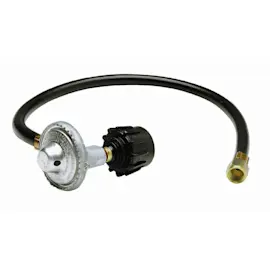
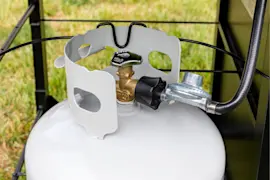
- Regulator and hose: LP grills use a regulator/hose assembly that connects to a Type 1 (handwheel) LP tank valve.
- Outdoor-only language: Safety labeling commonly states the grill is intended for outdoor residential use.
What “LP (propane) grill” means for this model
Kenmore 14620962910 is built to use an LP cylinder with these common specs:
| Item | Typical spec for this model type |
|---|---|
| Fuel | LP (propane) |
| Cylinder capacity | 20 lb (9 kg) max |
| Cylinder size | 12 in diameter x 18 in tall (approx.) |
| Valve style | Type 1 outlet with OPD handwheel |
Why it matters
Correctly identifying the grill type helps you use the right regulator, LP tank connection, and lighting and cleaning procedures. Using the wrong fuel setup or modifying the grill creates unsafe operation and poor burner performance.
Where to confirm the details
We recommend checking the safety and “Use and care” sections in the owner's manual for the exact fuel requirements, cylinder specs, and operating precautions for Kenmore 14620962910.
Last updated: February 2026
How to find Kenmore Grill model number?
For Kenmore gas grill model 14620962910, the model number is printed on the grill’s rating label. We use that label to match the correct parts diagram, troubleshooting info, and the right replacement parts for your exact grill.
Where to look on the grill
Check these common rating-label locations first:
- Back panel of the grill base or firebox area
- Inside the cabinet (on an inner side panel)
- Near the LP tank mounting area (inside the lower cabinet)
- On the side panel near the control knobs (less common)
- Under the lid edge or on the rear of the lid (less common)
What to write down (and why)
Record the key identifiers exactly as shown:
- Model number (example: 146.20962910 may appear with a dot in the manual)
- Serial number (the manual notes it’s on the rating label)
- Fuel type (this model is a liquid propane gas grill)
Quick ID guide
| Label item | What it does | Example for this grill |
|---|---|---|
| Model number | Matches parts and diagrams | 14620962910 (may print as 146.20962910) |
| Serial number | Identifies your specific unit | Varies by grill |
| Fuel type | Ensures correct regulator/orifices | Liquid propane (LP) |
Why it matters
Using the exact model number prevents ordering the wrong burner, igniter, regulator, or heat plates. It also helps us align your symptoms with the correct troubleshooting steps in the owner's manual.
Last updated: February 2026
How to tell if a regulator is bad on a gas grill?
On the Kenmore 14620962910 gas grill, a “bad regulator” usually shows up as low or unstable flame, trouble lighting, or gas flow that seems restricted. We confirm it by doing the manual’s leak test and by checking for connection and cylinder issues that mimic regulator failure.
Quick signs the regulator or gas supply needs attention
- Burners light but flames stay very low, even on HI
- Grill won’t ignite, or lights and then quickly dies out
- You hear a loud rushing sound at the tank connection when opening the valve (turn gas off immediately)
- Regulator frosting occurs (turn off grill and LP cylinder valve immediately; do not use that cylinder)
- Flames are uneven across burners (often caused by burner tube blockage, but gas flow issues can contribute)
Safe checks we use (LP tank setup)
Follow the steps in the owner's manual to verify the regulator connection and leak-test the valves, hose, and regulator.
- Turn all control knobs to OFF
- Confirm the regulator is tightly connected and the nipple is centered in the LP tank valve
- Open the LP tank valve slowly; if you hear rushing, shut it off and correct the connection before using the grill
- Brush a soapy water solution on the connection points; bubbles indicate a leak
- If flames are still low after lighting, reset the connection: shut off knobs and tank, disconnect regulator, reconnect, leak-test, then wait about 30 seconds before lighting
What to do based on what you find
| What you observe | Most likely cause | What we do next |
|---|---|---|
| Bubbles at regulator-to-tank connection | Loose connection or damaged seal | Reconnect properly; inspect rubber seal; re-test |
| Low flame on all burners | Regulator flow issue, tank valve issue, or OPD/flow limiting | Perform the shutoff, reconnect, leak-test, and re-light sequence |
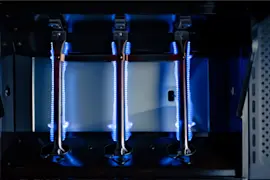
| One area cold, one hot | Burner or burner tube blockage | Clean burner tubes; check for spider nests and debris |
| Regulator frosting | LP cylinder problem | Stop using that cylinder immediately |
Why it matters
A failing regulator, damaged hose, or leaking connection can cause unsafe gas leaks and poor combustion. Doing the leak test and connection checks first prevents unnecessary parts replacement and helps restore steady heat.
For uneven heat troubleshooting, we also use how to fix uneven heating on a gas grill video.
Last updated: February 2026
What is the average lifespan of a propane grill?
Most propane gas grills last about 5 to 15 years with normal residential use; heavy use, weather exposure, and poor cleaning shorten that, while routine maintenance and timely part replacement extend it. For Kenmore model 14620962910, following the cleaning and safety steps in the owner's manual helps you get the longest service life.
Typical lifespan ranges (what to expect)
Lifespan depends more on care and environment than brand name. Here are realistic averages for an LP (propane) grill:
| Use and care level | Typical lifespan | What usually fails first |
|---|---|---|
| Light use, covered, cleaned | 10 to 15 years | Ignition parts, burners, grates |
| Average use, mixed weather | 7 to 10 years | Burners, heat diffusers, regulator |
| Heavy use, stored outdoors | 3 to 7 years | Burners, firebox hardware, grates |
What extends a propane grill’s life
We see these habits make the biggest difference:
- Clean after cooking; empty the drip tray after each use once the grill is cool
- Keep the burner and venturi area clear; insects and spider webs can restrict gas flow and cause flashback
- Maintain safe clearances (at least 3 ft from walls; keep the area free of combustibles)
- Protect cooking grates; clean with a stiff brush and hot water, dry thoroughly, and re-season when rust appears
- Store smart; keep the grill dry and covered, and avoid long idle periods without a pre-season inspection
Signs it’s time to repair vs. replace
A few quick checks help you decide where you are in the grill’s life cycle.
Repair is usually worth it when:
- Burners light but heat is uneven
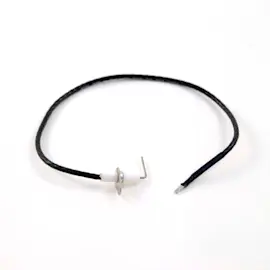
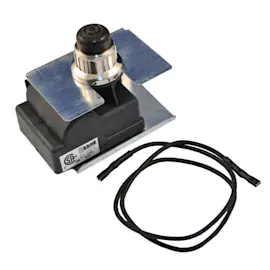
- Igniter clicks but does not spark consistently
- You have minor rust on grates that re-seasoning fixes
Replacement is usually the better call when:
- The firebox is badly rusted through
- Burner tubes have large cracks or enlarged holes from corrosion
- You repeatedly smell gas or cannot control flame height (stop using the grill until it’s inspected)
Why it matters
A well-maintained LP grill heats more evenly, reduces flare-ups, and helps prevent burner flashback issues caused by blocked venturi tubes. Those basics directly affect cooking results and safe operation.
Last updated: February 2026