 Error Codes




How many square feet will a 9000 BTU AC unit cool?
A 9,000 BTU air conditioner typically cools about 300 to 400 square feet in an average room with standard ceiling height and normal sun exposure. For your Amana PTAC package terminal air conditioner model 9, the real coverage depends most on insulation, heat load, and airflow setup.
Use these ranges as a practical starting point:
- 300 to 400 sq ft: average bedroom, office, or studio area
- 250 to 300 sq ft: hot, sunny rooms, poor insulation, lots of windows
- 400 to 450 sq ft: shaded rooms, good insulation, limited foot traffic
- Less coverage if the unit is in a high-heat space (kitchen-adjacent, west-facing, top floor)
| Room conditions | Typical 9,000 BTU coverage |
|---|---|
| Average (8 ft ceilings, normal sun) | 300 to 400 sq ft |
| High heat load (sun, poor insulation) | 250 to 300 sq ft |
| Low heat load (shaded, well insulated) | 400 to 450 sq ft |
Even with the same BTU rating, these factors can swing performance:
- Ceiling height: ceilings above 8 ft reduce effective coverage
- Sun exposure: large south or west windows increase heat load
- Insulation and air leaks: drafts and weak insulation make the unit work harder
- Occupancy and electronics: more people and equipment add heat
- Airflow restrictions: dirty filters or blocked return air reduce cooling output
Sizing by square footage helps prevent short cycling (too large) or nonstop running (too small). A properly sized 9,000 BTU unit should maintain temperature steadily and manage humidity without running constantly.
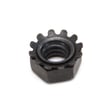
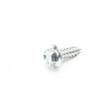
If the unit is not keeping up, basic maintenance and airflow checks come first. If you are servicing the cabinet or electrical connections, use the correct fasteners and hardware for reassembly, such as the frame screw WP693995 or terminal nut WP776338 when applicable.
Last updated: February 2026
What are the most common issues with 9?
For the Amana PTAC package terminal air conditioner model 9, the most common issues are poor cooling or airflow, water leaking into the room, unusual noise or vibration, and power or control problems. Many of these trace back to airflow restrictions, drainage problems, or loose electrical connections.
- Not cooling well: dirty filter or coils, blocked outdoor airflow, low refrigerant (sealed-system issue)
- Weak airflow: clogged filter, blower wheel buildup, obstructed grille
- Water leaking indoors: clogged drain path, unit not level, damaged or missing drain components
- Rattling or vibration: loose chassis screws, fan contacting shroud, worn mounts
- Won’t power on or trips breaker: loose wiring, failed capacitor/control, shorted component
- Set mode to Cool and temperature well below room temp; confirm the fan runs.
- Clean or replace the air filter; clear the front grille and return-air path.
- Inspect the drain area for slime or debris; flush if accessible.
- Verify the unit is slightly pitched to drain properly (typical PTAC requirement).
- Listen for where noise comes from (fan area vs. cabinet vs. electrical compartment).
These are small but important items that can affect noise, fit, and electrical reliability:
| Issue you notice | Part type that may be involved | Example on this model page |
|---|---|---|
| Rattling cabinet or loose panels | Frame/cabinet fasteners | Frame screw WP693995 |
| Loose electrical connection at a terminal | Terminal hardware | Terminal nut WP776338 |
| General loose hardware | Screws | Screw WP90767 |
A PTAC that runs with restricted airflow or poor drainage can ice up, leak, or strain electrical components. Fixing the basic airflow, leveling, and fastener issues early helps restore cooling performance and prevents repeat failures.
Last updated: March 2026
How do I find the model number on my 9?
For your Amana PTAC (package terminal air conditioner), the model number is printed on the unit’s rating label; it is usually inside the front grille area or on the side of the chassis. Use the full model number from that label when ordering parts for model 9.
Check these common rating-label locations (power off the unit first):
- Behind the front cover or intake grille (often near the control box area)
- On the side panel of the chassis (visible after removing the front cover)
- Along the lower front frame rail, near the filter area
- On the sleeve opening edge (sometimes visible when the chassis is partially slid out)
- Near the electrical compartment cover (do not remove sealed covers)
Record the full identification information exactly as shown on the label:
- Model number (letters and numbers)
- Serial number
- Electrical ratings (volts and amps)
- Cooling capacity (BTU)
| Label item | Why it matters |
|---|---|
| Model number | Ensures the correct parts list and diagrams |
| Serial number | Helps confirm production version changes |
| Voltage | Prevents ordering incompatible electrical parts |
Amana PTAC units can look similar across different BTU sizes and production runs; the model number on the rating label is what ties your unit to the correct parts breakdown. If you are replacing hardware after opening the front panel, match fasteners by size and type, such as the frame screw WP693995.
Last updated: March 2026





