Error Codes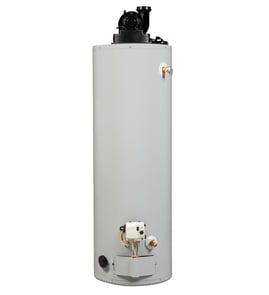



What is the typical cost to replace a 50 gallon water heater?
Replacing a 50-gallon water heater typically costs $800 to $2,500 installed (unit plus labor). For an Ao Smith FCV50 gas water heater, total cost usually lands toward the higher end when gas-line work, venting, permits, or code upgrades are needed.
Typical price breakdown (what you’re paying for)
- Water heater unit: about $500 to $1,500+ (higher for high-efficiency or specialty models)
- Labor: about $300 to $1,200+ depending on access and complexity
- Materials: vent pipe, gas flex line, shutoff valve, fittings, drain pan, and connectors
- Permits/inspection: often $50 to $500+ depending on location
- Disposal/haul-away: commonly $25 to $150
What makes the price go up for gas models
Gas water heater replacements can cost more than electric because venting and combustion safety requirements add time and parts.
- Tight installation space (attic, crawlspace, small closet)
- Venting changes (draft hood, vent connector, chimney or power vent routing)
- Gas piping updates (sediment trap, shutoff valve, sizing)
- Water damage prevention add-ons (drain pan, drain line, leak alarm)
- Bringing the install up to current code (expansion tank, seismic straps, T&P discharge piping)
Quick cost ranges by scenario
| Scenario | Typical installed cost | Notes |
|---|---|---|
| Straight swap, easy access | $800 to $1,400 | Minimal vent and plumbing changes |
| Average gas replacement | $1,200 to $2,200 | Common range for most homes |
| Complex install or upgrades | $2,000 to $3,100+ | Venting, gas, or code work adds cost |
Why it matters
A “cheap” replacement can become expensive later if venting, gas connections, or the temperature and pressure relief system are not set up correctly. Pricing is usually driven more by installation conditions than by the tank itself.
Parts that may be replaced during service (model-related)
If you’re repairing instead of replacing, these are common gas-combustion parts customers look at for the FCV50:
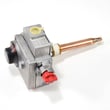
- Gas valve 100109217 (controls gas flow and temperature)
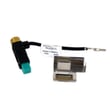
- Pilot assembly 100109294 (ignition and flame sensing)
- Burner 100109203 (main burner assembly)
Last updated: January 2026
How long does an A. O. Smith 50 gallon water heater last?
An A. O. Smith 50-gallon gas water heater like model FCV50 typically lasts 8 to 12 years. Actual life depends most on water quality, maintenance (especially flushing sediment), and whether key gas components like the burner and gas valve stay clean and properly adjusted.
Typical lifespan and what affects it
Most standard tank-style gas water heaters fall into a predictable lifespan range. These factors usually make the biggest difference:
- Hard water and heavy sediment buildup (shortens life)
- High thermostat setting and frequent recovery cycles (more wear)
- Corrosion inside the tank (often shows up as rusty hot water)
- Poor combustion or restricted airflow at the base (can cause shutdowns)
- Lack of routine draining or flushing (accelerates sediment issues)
Quick “replace vs. repair” guide
Use this as a practical way to decide what to do next.
| What you notice | Most likely cause | Typical next step |
|---|---|---|
| Not enough hot water, pilot issues | Pilot/ignition or combustion problem | Inspect/clean burner area; consider pilot assembly 100109294 |
| Rumbling or popping sounds | Sediment on the bottom of the tank | Flush tank; consider checking inlet tube 100108853 if flow is poor |
| Water leaking from tank body | Internal tank failure | Replace the water heater |
| Water dripping from discharge pipe | Temperature/pressure relief valve opening | Test/replace relief valve; check temperature setting |
Maintenance that helps you reach the full 8 to 12 years
These steps are the most effective for extending service life:
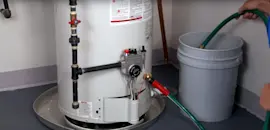
- Flush a few gallons from the drain valve periodically to reduce sediment
- Keep the burner area and air intake screen clear of dust and lint
- Set temperature to a safe, moderate level (many homes run around 120°F)
- Watch for early warning signs: rusty water, moisture at the base, soot, or frequent pilot outages
- Address combustion issues promptly; a dirty burner or pilot can cause repeated shutdowns
Why it matters
Once a tank water heater gets near the end of its typical lifespan, small performance problems can turn into no-hot-water events or leaks. Staying ahead of sediment and combustion issues helps protect hot water reliability and reduces stress on parts like the gas valve and burner.
Last updated: January 2026
Is there a reset button on a gas water heater?
Yes. Most gas water heaters, including the Ao Smith FCV50, have a safety reset (often called a high-limit reset) that trips if the burner area overheats; it is typically accessed behind the burner access door(s) and insulation near the gas control/thermostat area.
Where to look on an Ao Smith FCV50
On many FVIR-style Ao Smith units, the reset is not a big exterior button. It is usually behind the lower access area, so you may need to remove the outer door and insulation to reach it.
- Turn the gas control to OFF and wait several minutes before opening panels.
- Remove the lower access cover; on this model that is commonly the outer door 100109299.
- Pull back insulation carefully (often fiberglass) to expose the burner compartment.
- Look for a small reset on the safety switch/high-limit device near the burner or control area.
- If the reset immediately trips again, stop and correct the overheating or combustion-air issue.
What to check before you press reset
A tripped reset is a symptom. On a gas water heater, the most common causes are restricted airflow, dirty intake, or burner/pilot problems.
- Dirty or blocked flame arrestor or intake screen (clean the screen 100109216 if it is clogged)
- Pilot will not stay lit (inspect the pilot assembly 100109294 or pilot assembly 100109295)
- Weak ignition or intermittent lighting (check the igniter 100109221)
- Burner issues such as delayed ignition or poor flame pattern (inspect the burner 100109203)
- Venting or combustion air problems (blocked venting, tight closet, lint buildup)
Quick symptom guide
| What you see | What it usually means | What we recommend |
|---|---|---|
| No hot water and burner will not run | Safety opened or control issue | Check reset and airflow; inspect burner area |
| Pilot lights but goes out | Pilot/thermocouple or air restriction | Inspect pilot assembly and clean intake |
| Reset trips again quickly | Overheating or combustion problem | Stop and have a technician diagnose venting/combustion |
Why it matters
The reset is a safety device. If it trips, the heater is telling you something is overheating or burning improperly; repeatedly resetting without fixing the cause can lead to repeated shutdowns and unsafe operation.
Last updated: January 2026