 Owner’s manual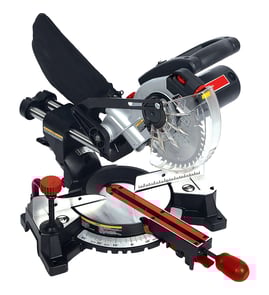

Can you make straight cuts with a miter saw?
Yes. With your Craftsman 32021228 miter saw, you can make straight cuts called straight crosscuts by setting the miter table to 0° and cutting across the board; this is one of the saw’s standard, everyday cuts (not just angled miters).
What “straight cut” means on a miter saw
A miter saw is designed for crosscutting (cutting across the grain). On the 32021228, a straight crosscut is made with the miter table set to 0°.
Common straight-cut setups
- Straight crosscut: miter table at 0°, blade vertical
- Straight bevel cut: miter table at 0°, bevel set between 0° and 46°
- Repeatable straight cuts: use the fence and clamp so the board does not shift
How we recommend making a straight crosscut (safe, accurate)
Use the steps and diagrams in the 32021228 owner's manual. In general, the process looks like this:
- Unplug the saw before adjusting the miter setting
- Set the miter table to 0° and lock it
- Place the workpiece flat on the table and tight against the fence
- Clamp the workpiece using the hold-down clamp (or a C-clamp for wide boards)
- Make a dry run to confirm clearance and hand position
- Start the saw, let the blade reach full speed, then lower smoothly through the cut
- Let the blade stop completely before raising the head or removing the workpiece
Quick reference: straight cut types
| Cut type | Miter table | Bevel/tilt | Typical use |
|---|---|---|---|
| Straight crosscut | 0° | 0° | Cutting boards to length |
| Straight bevel cut | 0° | 0° to 46° | Beveled edges, trim work |
| Miter crosscut | Left/right angle | 0° | Picture frames, corners |
Why it matters
A “straight cut” on a miter saw is usually a straight crosscut, not a rip cut. Setting the miter table to 0°, keeping the board tight to the fence, and clamping the workpiece prevents shifting that can cause inaccurate cuts or binding.
If you need replacement parts for your Craftsman 32021228, start with the parts list for this model, or search by model number on Sears PartsDirect.
Last updated: February 2026
What should you never cut with a miter saw?
On the Craftsman 32021228 miter saw, never cut metal or masonry, and never make freehand cuts or hold tiny workpieces by hand near the blade. This saw is designed for wood and wood-like products; use the fence and clamps to keep the cut controlled (see the 32021228 owner's manual).
Materials you should never cut
- Ferrous metals (iron or steel)
- Masonry products (brick, concrete, tile, stone)
- Any material not rated for your blade and guard setup
Cuts and setups to avoid (even on wood)
- Freehand cutting (not against the fence)
- Cutting pieces too small to clamp securely
- Reaching into the blade path or under the workpiece while the blade is moving
- Operating with any guard or cover removed
- Using a dull, bent, or damaged blade (binding and kickback risk)
Safer alternatives that work well on this saw
- Clamp the workpiece to the miter table whenever practical
- Keep the workpiece firmly against the fence as a backstop
- Make a test cut in scrap before a finish cut, especially for compound angles
- Let the blade stop completely after releasing the trigger before moving the workpiece
Quick guide: “Don’t cut” vs “Do instead”
| If you need to cut this | Don’t use the miter saw | Do this instead |
|---|---|---|
| Steel or iron | Metal cutting | Use a tool designed for metal cutting with the correct blade and guarding |
| Brick, tile, concrete | Masonry cutting | Use a masonry-rated saw or grinder with the correct wheel |
| Very small trim offcuts | Hand-held near blade | Clamp it, use a stop block, or cut a longer piece first |
| Any cut without fence support | Freehand cut | Keep the workpiece on the table and tight to the fence |
Why it matters
Most serious miter saw injuries come from loss of control: the workpiece shifts, the blade binds, or hands enter the “no hands” zone. Avoiding metal and masonry, using guards, and clamping the workpiece reduces kickback and keeps the cut predictable.
If you need to look up the correct operating steps, safety zones, and clamping points for this model, we recommend following the 32021228 owner's manual. You can also search by model number on Sears PartsDirect if you are tracking down replacement items for your saw.
Last updated: February 2026
Will a 10-inch miter saw cut a 2x8?
A 10-inch miter saw can cut a 2x8 only if the saw’s crosscut capacity is wide enough. On the Craftsman 32021228, the published max crosscut width at 0° miter and 0° bevel is about 5-1/2 inches, so a 2x8 will not crosscut in one pass at 90°.
What the Craftsman 32021228 cutting-capacity chart shows
From the 32021228 owner's manual, these are the approximate maximums (results vary by blade type and actual lumber size):
| Cut type | Miter | Bevel | Max thickness | Max width |
|---|---|---|---|---|
| Crosscut | 0° | 0° | 2-5/8 in. | 5-1/2 in. |
| Miter cut | 45° | 0° | 2-5/8 in. | 3-1/2 in. |
| Bevel cut | 0° | 45° | 1-1/2 in. | 5-1/2 in. |
| Compound cut | 45° | 45° | 1-1/2 in. | 3-1/2 in. |
Options when you need to cut 2x8 stock
If you’re working with 2x8 material on this type of non-sliding 10-inch compound miter saw, these approaches are common:
- Flip the board and finish the cut from the opposite face, keeping the cut line aligned.
- Use a different tool for the crosscut (for example, a circular saw with a guide) when you need a single-pass cut.
- Clamp the board; the manual specifically calls out clamping wide workpieces such as 2-in. x 8-in. boards.
- Do a dry run with the saw off to confirm the blade clears the work.
Why it matters
Cutting beyond the saw’s rated crosscut width can pinch the blade, pull the workpiece, and ruin accuracy. Staying within the 32021228 cutting capacities helps prevent binding and improves cut quality.
Parts lookup
For diagrams and replacement items for the Craftsman 32021228 (guard, switch, clamp, rails), use the model parts list, or search by model on Sears PartsDirect.
Last updated: February 2026
What are the parts of a miter saw?
On the Craftsman miter saw model 32021228, the main parts include the motor and blade assembly, the miter table and fence that support your workpiece, and the controls and locks that set the cut angle and keep the saw secured. For the exact feature names and locations, use the 32021228 owner's manual.
Core miter saw parts you will use most
- On/Off trigger switch with a safety lock-off button (prevents accidental starts)
- Blade and blade guard (cuts and shields the blade area)
- Miter table and miter-lock knob (sets and locks left-right miter angle)
- Saw arm with an arm lock (keeps the head locked before cutting)
- Fence (keeps the workpiece square to the blade)
- Hold-down clamp (helps secure the workpiece)
- Dust bag (collects some sawdust at the rear port)
Common “loose parts” that come with this model
These are accessories you may remove, adjust, or replace over time:
| Item | What it does | When you use it |
|---|---|---|
| Miter-lock knob | Locks the miter table angle | Any time you change miter angle |
| Hold-down clamp | Holds material down to the table | Small parts, repetitive cuts |
| Blade wrench/spanner | Helps loosen/tighten the arbor bolt | Blade changes |
| Dust bag | Captures sawdust | Indoor work, light cutting |
| Extension rails | Supports longer boards | Trim, baseboard, long stock |
Safety-related parts and checks (important)
Before operating, we always treat these as “must-check” items:
- Confirm the miter table and saw arm are locked before cutting
- Clamp or secure the saw to a stable bench at about hip height
- Keep hands out of the cutting area; use clamps or a vise when practical
- Replace damaged or failed parts before resuming operation
Why it matters
Knowing the names of the miter saw parts helps you set angles correctly, lock adjustments securely, and describe what you need when ordering replacement parts for model 32021228. You can search by model on Sears PartsDirect to match the right components.
Last updated: February 2026
What size is the miter slot on a Craftsman table saw?
Craftsman model 32021228 is a miter saw, not a table saw; it does not use a table-saw style miter slot for a miter gauge. If you are trying to fit an accessory, use the saw’s published specs and setup details in the 32021228 owner's manual.
What to check instead (for a miter saw)
On a miter saw, accuracy and accessory fit depend on the miter table, fence, and clamping, not a miter slot. Focus on these items:
- Miter angle range and detents (common stops like 0°, 15°, 22.5°, 31.6°, 45°)
- Bevel angle range and bevel lock operation
- Fence alignment and miter table lock tightness
- Throat plate opening (it can widen after the first bevel cut)
- Workpiece support (extension rails, stand, or bench) and hold-down clamp use
Model 32021228 specs you can use
The manual for Craftsman 32021228 lists these key specifications:
| Spec | Value |
|---|---|
| Power | 120V, 60Hz |
| Rated current | 15A |
| No-load speed | 5500 RPM |
| Blade size | 10 in. |
| Miter angle | 46° left to 46° right |
| Bevel angle | 46° left |
If you meant a Craftsman table saw
Most Craftsman table saws use a standard miter-gauge slot size of 3/4 in. wide x 3/8 in. deep. Confirm by measuring your table saw’s slot with calipers.
Why it matters
Using the right reference points prevents buying the wrong accessory and helps you set up safer, more accurate cuts. For parts and model-based searching beyond this tool, use Sears PartsDirect.
Last updated: February 2026