Owner’s manual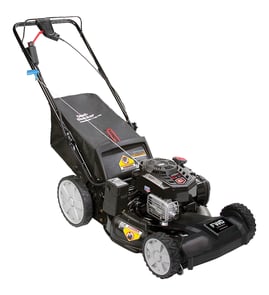



What are the negatives of robotic lawn mowers?
Robotic lawn mowers can save time, but the main negatives are higher upfront cost, more setup and upkeep than many owners expect, and performance limits in complex yards (steep slopes, tight passages, heavy debris, or fast-growing grass). For safe mowing basics that still apply to any mower, use the LSPG-M7 owner's manual.
- Higher total cost: purchase price plus blades, boundary wire (for wired models), and occasional repairs.
- Setup time: mapping, boundary wire installation, docking placement, and schedule tuning.
- Yard prep requirements: sticks, toys, wire, pinecones, and edging still need attention.
- Terrain limitations: steep grades, ruts, roots, and narrow corridors can cause traction or navigation issues.
- Cut quality tradeoffs: tall or wet grass can reduce cut quality; many robots do best with frequent light cuts.
- Stuck or tangled events: can happen around landscaping, low branches, and uneven transitions.
- Security and storage: outdoor equipment needs a plan for storage and theft deterrence.
| Topic | Robotic mower | Gas walk-behind (like Senix LSPG-M7) |
|---|---|---|
| Time spent mowing | Low hands-on time | Higher hands-on time |
| Setup | Higher (initial) | Lower |
| Handling tall growth | Often limited | Typically better for catch-up cuts |
| Yard debris tolerance | Lower | Higher (still requires clearing hazards) |
| Maintenance | Smaller but ongoing | Seasonal tune-up style maintenance |
- Keep the lawn clear of sticks, stones, and wire before any mowing cycle.
- Avoid cutting wet grass; it clumps and can stick under decks.
- Use a “little and often” schedule so grass height stays consistent.
- If you keep a walk-behind mower as backup, inspect and keep fasteners tight; blade and engine mounting bolts should be checked periodically.
- After any impact with a foreign object, stop the engine (or power down), then inspect for damage before resuming.
Most robotic mower complaints come from mismatch: the mower is sized for the wrong yard, or the yard is not maintained for frequent automated cutting. Planning for setup, terrain, and debris control prevents poor cut quality and repeated stoppages.
Last updated: February 2026
What is the quietest gas lawn mower?
The quietest gas lawn mower is typically a walk-behind model with a smaller-displacement engine, a well-designed muffler, and a sharp, balanced blade; in real use, blade noise often matters as much as engine noise. For your Senix LSPG-M7, use the owner's manual to keep the mower tuned and the blade maintained for the lowest practical noise.
Several factors drive sound level on any gas walk-behind mower:
- Engine size and RPM control: smaller engines and proper governor operation reduce noise
- Muffler condition: a damaged or loose muffler gets noticeably louder
- Blade condition: a dull blade tears grass, increases load, and raises noise
- Deck buildup: wet clippings stuck under the deck increase turbulence and sound
- Fastener tightness: loose hardware can add rattles and vibration
These steps reduce noise and also improve cut quality and safety:
- Mow only when grass is dry; wet grass sticks under the deck and increases noise
- Follow the “cut one-third or less” rule; heavy cutting forces the engine to work louder
- Reduce walking speed in thick grass to prevent bogging
- Keep all nuts, bolts, and screws tight (rattles are often mistaken for “engine noise”)
- Stop the engine and disconnect the spark plug wire before servicing the blade or underside of the deck
| Feature to compare | Usually quieter | Usually louder |
|---|---|---|
| Engine displacement | 140 to 160 cc | 170 cc and up |
| Blade condition | Sharp, balanced | Dull, bent, unbalanced |
| Cutting conditions | Dry, light cut | Wet, overgrown, heavy cut |
Lower noise usually means the mower is cutting efficiently (sharp blade, clean deck, correct technique). That reduces vibration, improves mulching/discharge, and helps prevent premature wear.
If you need a replacement fastener during blade or deck service, match the original hardware; the craftsman flange nut 8NE-08D01 is one option listed for this model’s parts.
Last updated: February 2026
How do I find the model number on my LSPG-M7?
Your Senix walk-behind mower’s model number is printed on the product identification label; for this mower it will read LSPG-M7. Use that exact model number when looking up diagrams, the correct parts, and maintenance information in the LSPG-M7 owner's manual.
On most Senix 21-inch walk-behind mowers, the model and serial label is typically located in one of these spots:
- On the rear of the mower deck near the discharge area
- On the top of the deck near the engine mounting area
- On the handle bracket area (near where the handle attaches to the deck)
- Near the rear wheel height-adjuster area
Record the information exactly as shown on the label so we can match the right parts and specifications.
- Model number (example: LSPG-M7)
- Serial number (unique to your mower)
- Date of purchase (helpful for maintenance and warranty paperwork)
| Item on label | What it does | Example |
|---|---|---|
| Model number | Identifies the mower design for parts lookup | LSPG-M7 |
| Serial number | Identifies your specific unit | Varies |
| Date of purchase | Helps track service intervals and records | Varies |
Small differences between mower versions can change the correct blade hardware, handle parts, or engine-related components. Using the exact model number helps ensure the replacement part fits and installs correctly the first time.
Last updated: March 2026