Installation guide
 Owner’s manual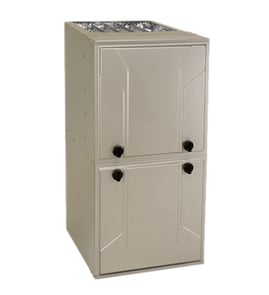





How many square feet will a 110,000 BTU furnace heat?
A 110,000 BTU furnace like the Carrier 58CVA110---10120 typically heats about 1,800 to 2,400 sq. ft. in many U.S. homes, but the real coverage depends on insulation, climate zone, ceiling height, duct losses, and how the furnace is set up. Use the installation guide to confirm model-specific setup requirements.
Quick sizing rule of thumb (what to expect)
In average conditions, these ranges are common for gas furnaces:
- Mild climates, tight/insulated homes: 110,000 BTU can cover the upper end of the range
- Cold climates, older or leaky homes: coverage drops; the same furnace heats fewer square feet
- High ceilings or lots of glass: expect reduced coverage
- Undersized return air or restrictive filters: reduces delivered heat to rooms
Typical square-foot coverage ranges
These are practical planning ranges, not a substitute for a load calculation:
| Furnace input (BTU) | Typical home size (sq. ft.) | Best for |
|---|---|---|
| 90,000 | 1,500 to 2,000 | Average insulation, moderate climates |
| 110,000 | 1,800 to 2,400 | Larger homes or colder regions |
| 125,000 | 2,000 to 2,800 | Colder climates, higher heat loss |
What matters most for your actual square footage
To estimate more accurately, we focus on heat loss and airflow, not just BTUs:
- Climate zone and design temperature (how cold it gets where you live)
- Insulation and air sealing (attic, walls, rim joists, windows)
- Duct condition (leaks, crushed flex duct, poor balancing)
- Combustion air and venting setup (affects safe, stable operation)
- Thermostat settings and staging (low heat vs high heat operation)
Why it matters
If the furnace is oversized, it can short-cycle, feel drafty, and waste fuel. If it is undersized, it can run constantly and still not maintain set temperature. Correct sizing improves comfort, efficiency, and component life.
Last updated: February 2026
What is the average lifespan of a Carrier furnace?
Most Carrier gas furnaces typically last 15 to 20 years. With correct installation, clean combustion air, and proper temperature rise, many units reach 20 to 30 years. For your Carrier 58CVA110---10120 furnace, overheating and corrosive combustion air are two common life-shorteners called out in the installation guide.
Typical lifespan ranges
| Condition | What you can expect | What usually drives it |
|---|---|---|
| Average home, routine filter changes | 15 to 20 years | Normal wear on inducer, blower, controls |
| Well-maintained system, correct setup | 20 to 30 years | Proper airflow, correct gas setup, clean combustion air |
| Poor airflow or repeated overheating | 10 to 15 years | High temperature rise, dirty filter, duct restrictions |
What extends furnace life (and what shortens it)
- Keep temperature rise within the rating-plate range; recommended operation is near the midpoint or slightly above (helps prevent overheating wear).
- Maintain strong airflow: replace filters on schedule and keep supply and return vents open.
- Avoid corrosive or contaminated combustion air (products with halogens like some aerosols, cleaners, and solvents can corrode the heat exchanger and shorten life).
- Keep the burner area clean and the cabinet panels properly installed so the furnace runs as designed.
- Address nuisance shutdowns quickly; repeated cycling stresses the igniter, control board, and blower components.
Parts that commonly affect “end of life” decisions
When a furnace is aging, these parts often show symptoms first (no-heat, short cycling, overheating, or blower issues):
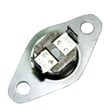
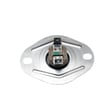
- Furnace temperature limit switch HH18HA495 (opens if the furnace overheats)
- Pcb c0ntrl HK42FZ064 (controls ignition sequence and blower timing)
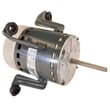
- Motor 58MV660006 (drives the blower on many variable-speed setups)
Why it matters
A furnace can look “fine” but still lose years of service life if it runs hot or pulls contaminated combustion air. Keeping airflow correct and preventing overheating protects major components like the heat exchanger and reduces costly breakdowns.
Last updated: February 2026
What is the most common furnace problem?
The most common furnace problem is restricted airflow from a dirty air filter, which overheats the furnace and triggers a safety shutdown. On the Carrier 58CVA110---10120, other frequent causes are ignition problems and limit-switch trips; use the installation guide troubleshooting flow to narrow it down.
Quick checks we recommend first
- Replace the air filter; make sure return-air grilles are not blocked.
- Confirm the thermostat is set to Heat and set above room temperature.
- Make sure the blower door is fully closed so the door switch is engaged.
- Check the circuit breaker and the furnace service switch for power.
- Look for a blinking status light; follow the service label steps.
Common problems and what they look like
| Issue | What you notice | What usually fixes it |
|---|---|---|
| Dirty filter or blocked return | Short cycling, high heat, shuts off | Replace filter, open registers, clear returns |
| Ignition failure | No flame, repeated ignition attempts | Replace a failed igniter or control if diagnostics point there |
| Limit switch opening | Starts then shuts down, repeats | Correct airflow; replace a failed limit switch if it will not reset |
| Combustion air or venting issue | Nuisance shutdowns, draft problems | Correct venting and provide make-up air per install requirements |
Parts that commonly address “no heat” symptoms
If airflow is good and the furnace still will not light reliably, these model-listed parts are common suspects:
- Furnace temperature limit switch HH18HA495 (opens on overheating)
- Furnace temperature limit switch HH18HA493 (alternate limit used in some configurations)
- Pcb c0ntrl HK42FZ064 (controls ignition sequence and blower timing)
Why it matters
Most “furnace not working” calls start with airflow restrictions or safety shutdowns. The installation instructions also stress avoiding negative pressure and contaminated combustion air (aerosols, solvents, bleach fumes) because those conditions cause poor operation and shorten furnace life.
Last updated: February 2026
How much does it cost to install a 100,000 BTU furnace?
Installing a 100,000 BTU furnace typically costs about $4,000 to $10,000+ total (equipment plus labor). Your Carrier 58CVA110---10120 is a 110,000 BTUH input furnace, so use the same “100,000 BTU class” pricing range, then confirm the exact venting and combustion-air requirements in the installation guide.
Typical installed cost breakdown
These ranges reflect common replacement scenarios for a 100,000 to 110,000 BTU gas furnace.
| Cost item | Typical range | What drives it |
|---|---|---|
| Furnace equipment | $1,800 to $5,000+ | Efficiency level, blower type, cabinet size |
| Labor (remove and replace) | $1,500 to $4,000+ | Access, changeouts, time on site |
| Add-ons (venting, gas, electrical, drains) | $500 to $3,000+ | Code updates, rerouting, new materials |
| Total installed cost | $4,000 to $10,000+ | Complex installs can exceed this |
What changes the price the most
These items most often increase labor time and materials:
- Venting changes (routing, diameter, required vertical rise)
- Combustion air work (adding or resizing openings or ducts)
- Ductwork transitions (plenum rebuild, return sizing, sealing)
- Electrical updates (disconnect, wiring repairs, control wiring)
- Condensate management (drain routing, pump, freeze protection)
- Gas piping changes (sizing, shutoff valve, sediment trap)
Model-specific details for Carrier 58CVA110---10120
Because this model is 110,000 BTUH input, installers size combustion air and venting to that input rating.
- Combustion air sizing: the guide lists minimum free-area requirements by BTUH input; 110,000 BTUH has specific opening or duct sizing depending on whether you use two horizontal ducts, two vertical ducts, or a single opening.
- Venting configuration: certain orientations require a minimum vent diameter and minimum vertical vent height before elbows or horizontal runs.
- Altitude adjustments: at higher elevations, input is de-rated and setup includes verifying orifice sizing and manifold pressure.
Why it matters
A furnace install price rises when venting, combustion air, and gas setup must be corrected; those steps prevent nuisance limit trips, poor heating performance, and unsafe operation.
Last updated: February 2026
What is the most common part to fail on a furnace?
On the Carrier 58CVA110---10120 furnace, the most common failures are in the ignition and safety circuit: the hot-surface igniter, the furnace control board, and temperature limit switches. Airflow issues (especially a dirty filter) also cause frequent safety shutdowns. Use the 58CVA110---10120 installation guide troubleshooting and status-code steps to pinpoint the failed component.
Most common failure points (what you notice)
- Ignition failure: inducer runs but burners never light.
- Overheat safety trip: burners light, then shut off; blower may keep running.
- Control board problem: no normal heat sequence, unusual LED flashes, intermittent heat.
- Airflow restriction: weak airflow, noisy blower wheel, short cycling.
- Power or door switch issue: furnace appears dead or stops when the panel is not seated.
Quick checks before replacing parts
- Replace the air filter; confirm supply and return vents are open.
- Make sure the blower door is fully closed (door switch engaged).
- Watch the control board LED and write down the flash pattern.
- Confirm the thermostat is calling for heat (Heat mode; raise setpoint).
- If you use a meter, verify 115V line power and 24V control power.
Common parts on this model page (examples)
| Symptom | Likely area | Example part on this page |
|---|---|---|
| No ignition / no flame | Ignition system | Robert Shaw furnace burner igniter 41-409 (part number 331930-751) |
| Starts then shuts off, overheating suspected | High-limit safety | Furnace temperature limit switch HH18HA495 |
| No heat cycle or erratic operation | Controls | Pcb c0ntrl HK42FZ064 |
Why it matters
A furnace is designed to shut down when it detects unsafe ignition or overheating conditions. Checking airflow first and then using the status-code troubleshooting steps helps you avoid replacing the wrong part.
Last updated: February 2026