
What is the difference between an air handler and a blower?
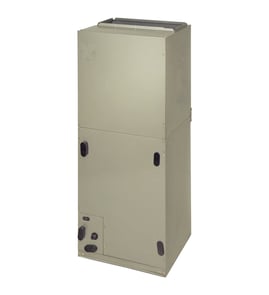
An air handler is the indoor HVAC cabinet that conditions and moves air; the blower is the fan assembly inside it that actually pushes air through your ductwork. On a Payne PF1MNC019000 air handler, the blower is one component among others like controls and wiring.
- Air handler: The full indoor unit that houses the blower, electrical controls, and (in many systems) an electric heat kit.
- Blower: The motor and blower wheel that move air across the coil and into the ducts.
- Blower assembly (common term): Blower wheel plus motor plus mounting hardware.
Most air handlers like the Payne PF1MNC019000 include:
- Blower motor and blower wheel
- Control board(s) that manage fan speeds and safety logic
- Transformer that supplies low-voltage power to controls
- Wiring harnesses, door/safety switches, and access panels
- Optional electric heat elements (if your system uses electric heat)
| Part | What it affects | Common symptom when failing |
|---|---|---|
| Wheel LA22LA026 | Airflow volume | Weak airflow, vibration, noise |
| Central air conditioner air handler transformer HT01CN241 | 24V control power | No response to thermostat, intermittent operation |
| Central air conditioner air handler fan control board HK61EA010 | Fan operation and speeds | Blower won’t run, wrong speed, runs nonstop |
| Element L99H008 | Electric heat output | No heat (electric heat systems), burning smell, trips breaker |
Knowing the difference helps you troubleshoot faster: if you have no airflow, you focus on the blower (wheel, motor, fan control). If you have broader issues like no 24V power or multiple functions failing, you troubleshoot the air handler controls and power components.
Last updated: February 2026
Do I have an air handler?
Yes, if your home has a central heating and cooling system with a ducted blower, you have an air handler. For a Payne PF1MNC019000 setup, the air handler is the indoor unit that moves air through your ducts and typically contains the blower and electrical controls.
- Turn the thermostat to Fan: ON; you should hear a steady indoor blower sound.
- Look for a large indoor metal cabinet connected to ductwork (often in an attic, closet, basement, or garage).
- Check for a filter slot or filter door on the indoor cabinet.
- Follow the return air grille; the return duct usually leads back to the air handler.
- If you have an outdoor condenser (AC unit) and indoor ducts, the indoor blower section is your air handler.
| Home type | Common air handler locations | What you’ll notice |
|---|---|---|
| Slab or crawlspace | Hall/utility closet, garage | Return grille nearby, filter access |
| Basement home | Basement mechanical area | Duct trunk lines overhead |
| Two-story home | Attic or upstairs closet | Condensate drain line, insulated ducts |
An air handler is the indoor “air-moving” unit. It is different from the outdoor condenser (AC) and different from a gas furnace (which burns fuel). Some systems pair an air handler with an electric heat kit.
Knowing you have an air handler helps you match the right replacement parts and troubleshoot correctly, especially for airflow and low-voltage electrical issues.
If the blower will not run, the issue is often electrical control or power conversion. For this model, common related parts include:
- Central air conditioner air handler transformer HT01CN241 (low-voltage power)
- Central air conditioner air handler fan control board HK61EA010 (blower control)
- Pcb HK61EA001 (system control)
Last updated: February 2026
Does a gas furnace need an air handler?
No. A typical gas furnace does not need a separate air handler because the furnace cabinet already includes its own blower to move air through the ductwork. An air handler like the Payne PF1MNC019000 is usually paired with an air conditioner or heat pump system, not a gas furnace-only setup.
- Gas furnace + AC (split system): the furnace blower usually handles airflow; no separate air handler is used.
- Heat pump system: commonly uses an air handler (indoor coil + blower) as the indoor unit.
- Electric heat (air handler with heat strips): uses an air handler with an electric heating element.
- Dual-fuel systems: may use a furnace with a heat pump; the furnace still provides the blower.
- No ductwork (ductless): no air handler in the traditional sense.
| Feature | Gas furnace | Air handler (like PF1MNC019000) |
|---|---|---|
| Primary heat source | Gas burners | Heat pump coil and or electric heat strips |
| Blower included | Yes | Yes |
| Typical pairing | Gas heat (often with AC coil) | Heat pump or AC indoor unit |
| Common service parts | Igniter, flame sensor, gas valve | Transformer, control board, blower wheel, heat element |
Knowing whether you have a furnace or an air handler helps you buy the right parts and troubleshoot correctly. For example, low-voltage power issues in an air handler often point to the central air conditioner air handler transformer HT01CN241, while airflow problems can involve the blower wheel or controls.
If you are servicing a Payne PF1MNC019000 air handler, these parts are often involved in airflow and control issues:
- Central air conditioner air handler transformer HT01CN241 (24-volt control power)
- Central air conditioner air handler fan control board HK61EA010 (blower control)
- Pcb HK61EA001 (main control board, when used)
- Wheel LA22LA026 (blower wheel)
- Element L99H008 (electric heat element assembly, when equipped)
Last updated: February 2026
Do air handlers come in different sizes?
Yes. Air handlers come in different sizes and capacities, and the “right size” depends on your home’s airflow needs, ductwork, and the matched outdoor unit. For a Payne PF1MNC019000 air handler, sizing is typically based on tonnage/CFM and physical cabinet dimensions.
Air handlers vary in both capacity (how much air they move) and physical size (how much space they take up).
- Capacity (tons and CFM): Most systems are set up around about 350 to 450 CFM per ton of cooling.
- Cabinet dimensions: Height, width, and depth change by model family and installation orientation.
- Blower strength: Larger units usually support higher static pressure and longer duct runs.
- Heat options: Some air handlers accept electric heat kits; others are cooling-only.
- Electrical requirements: Voltage and control transformer ratings can differ.
| What changes | Smaller air handler | Larger air handler |
|---|---|---|
| Airflow | Lower CFM | Higher CFM |
| Duct compatibility | Smaller trunks/returns | Larger trunks/returns |
| Noise potential | Often quieter at low airflow | Can be louder if oversized |
| Comfort | Can struggle if undersized | Can short-cycle if oversized |
Correct sizing helps your system maintain steady temperatures, manage humidity, and avoid issues like coil freeze-ups (too little airflow) or noisy ducts and short cycling (too much capacity for the space).
- Match the model number PF1MNC019000 exactly when looking up parts.
- Confirm the blower airflow setting (tap/board setting) if your unit has multiple speeds.
- Inspect the filter and return air path for restrictions.
- Verify low-voltage power; a failing transformer can mimic “wrong size” symptoms (no stable control power). Consider the central air conditioner air handler transformer HT01CN241 if you are troubleshooting 24V issues.
- If the blower is not responding correctly, the control board can be involved; check the central air conditioner air handler fan control board HK61EA010.
If you are checking voltage, continuity, or control signals, follow safe meter practices from our how to use a multimeter to test electrical parts video.
Last updated: February 2026