 Installation guide
 Owner’s manual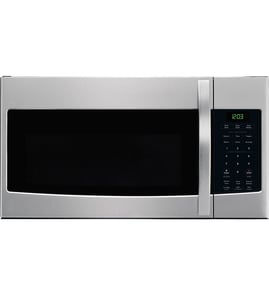



How big is a Kenmore microwave model 66568610991 in inches?
Most Kenmore over-the-range microwave/hood combos like model 66568610991 are built to fit a 30-inch-wide cabinet opening and maintain about 13 1/2 inches of clearance to the cooktop. For the exact overall width, height, and depth for your unit, we recommend confirming the spec table in the 66568610991 owner's manual.
The installation instructions for Kenmore model 66568610991 specify these key fit and clearance dimensions:
- 30-inch minimum opening width (typical over-the-range fit)
- 13 1/2-inch minimum clearance between the bottom of the microwave and the cooktop
- At least one wall stud must be within the cabinet opening
- The mounting location must support up to 150 lb (microwave plus items in the cabinet)
These measurements help you verify cabinet fit even if you are mainly looking for the exterior size.
When you are measuring for trim, backsplash, or cabinet alignment, most 30-inch over-the-range microwaves fall into this general range:
- Width: about 29 7/8 inches to 30 inches
- Height: about 16 inches to 17 1/4 inches
- Depth: about 15 inches to 17 inches (not including handle on some designs)
Use these as planning numbers, then match them to the exact specs listed in the manual for model 66568610991.
Measure in inches with the door closed:
- Width: left outer edge to right outer edge (not the cabinet opening)
- Height: top of case to bottom of case
- Depth: back wall to front-most point (often the door or handle)
- Clearance: cooktop surface to bottom of microwave
| What you are checking | What to expect for 66568610991 installs | Why it matters |
|---|---|---|
| Cabinet opening width | 30 inches minimum | Confirms it fits standard OTR spaces |
| Bottom-to-cooktop clearance | 13 1/2 inches minimum | Helps prevent heat damage and improves usability |
Getting the size right prevents cabinet interference, ensures proper venting alignment (recirculating, top, or rear discharge), and keeps safe clearance above the range. The 66568610991 installation guide is the best reference when you are replacing an older unit.
Last updated: February 2026
What is the life expectancy of a Kenmore microwave?
Most Kenmore microwaves, including the Kenmore 66568610991 microwave/hood combo, typically last 9 to 10 years with normal household use. Heavy daily use, poor ventilation, and skipped cleaning can shorten lifespan; consistent care and prompt repairs help you get the full service life.
- Usage frequency: multiple long cook cycles per day wear components faster.
- Heat and grease exposure: common for over-the-range units; clogged filters trap heat.
- Power quality: repeated surges can stress the control board and high-voltage parts.
- Door wear: slamming the door can damage interlock switches and mounts.
- Cleaning habits: grease buildup can restrict airflow and cause overheating.
| Symptom | Common cause | What to do next |
|---|---|---|
| Runs but does not heat | High-voltage component issue | Use why is my microwave not heating to narrow likely causes; service is often required |
| Dead display, no response | Blown fuse, thermal protection, power issue | Check outlet and breaker first; then follow 66568610991 owner's manual troubleshooting |
| Stops mid-cycle | Overheating, failing thermostat/fuse | Clean vents and filters; inspect airflow and fan operation |
| Door must be pushed to start | Worn door switch or bracket | Have door interlock system checked; replace worn parts |
- Keep the grease filters clean and replace the charcoal filter on recirculating setups.
- Wipe the cavity and door seals regularly to prevent arcing and odor.
- Ensure the vent path is clear and the fan is working at all speeds.
- Avoid running the microwave empty; it stresses the magnetron.
- Use cookware and covers recommended in the 66568610991 owner's manual.
A microwave/hood combo works in a hot, greasy environment above the range. Good airflow and clean filters reduce heat stress on the magnetron, thermal fuse, and door interlock system, which are common failure points as units age.
Last updated: February 2026
What size fuse for Kenmore microwave?
For Kenmore microwave/hood combo model 66568610991, the electrical supply should be 120-volt, 60 Hz, AC-only on a 15- or 20-amp fused circuit; we recommend a time-delay fuse or circuit breaker and a dedicated circuit. For exact requirements and wiring details, follow the 66568610991 installation guide.
This refers to the house circuit that powers the microwave, not necessarily an internal microwave fuse.
- Use a properly grounded 3-prong outlet in the upper cabinet (typical over-the-range setup)
- Use a separate circuit for the microwave/hood combo when possible
- Choose a time-delay fuse or breaker to reduce nuisance trips
- Do not use an extension cord or adapter
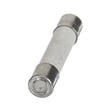
Many over-the-range microwaves use an internal line fuse (often ceramic) that opens if there is a short, overheating, or a door-interlock problem. Common symptoms include:
- Microwave is completely dead (no display)
- Unit runs but stops suddenly
- Blows the house breaker/fuse when starting
- Intermittent power loss when opening or closing the door
Because internal fuse ratings and styles vary by build, we use the model-specific wiring and parts information in the 66568610991 owner's manual to confirm the correct internal fuse and safe access steps.
| Item | What it protects | Typical rating for this setup | Where it is |
|---|---|---|---|
| House fuse/breaker | Home wiring and outlet circuit | 15A or 20A (time-delay recommended) | Electrical panel |
| Internal microwave fuse | Microwave components | Model-specific | Inside microwave cabinet |
Using the correct 15A or 20A dedicated supply helps prevent nuisance trips and overheating. If an internal fuse keeps blowing, the root cause is usually a failed door switch/interlock, wiring issue, or a high-voltage component, not the fuse itself.
Last updated: February 2026


