Owner’s manual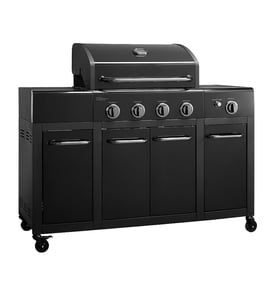



How do I find my Kenmore Grill model number?
Your Kenmore gas grill model number is printed on the grill’s rating label; on model 14623766310, it appears in the Use and Care Guide as 146.23766310. Check the label on the back of the grill base or inside the cabinet area, then write it down exactly as shown.
Where to look on a Kenmore grill
Most Kenmore grills place the rating label in one of these spots:
- Back panel of the grill base (rear of the cabinet)
- Inside the cabinet (open the doors and look on the inner side panels)
- Side panel near the propane tank mounting area
- Under the control panel area (less common)
Use the 14623766310 owner's manual to confirm the exact model format and match it to the correct parts diagram.
What the model number looks like (and what to record)
Kenmore grill model numbers are typically a long number with a decimal point in printed materials.
| Where you see it | Example format for this grill | What to write down |
|---|---|---|
| Rating label on the grill | 146.23766310 | 14623766310 (or exactly as printed) |
| Manual cover | 146.23766310 | 14623766310 |
Also record the serial number if it’s on the same label; it helps when ordering parts like a control knob or gas hose.
Why it matters
The model number ensures you get parts that fit your exact Kenmore grill configuration (burners, manifold, lighting components, and cabinet panels can vary by model). Using the correct model number helps avoid ordering the wrong part.
Last updated: January 2026
What is the average lifespan of a gas grill?
A gas grill typically lasts 5 to 15 years. For the Kenmore 14623766310, lifespan depends most on how often you cook, how well you clean grease and burner ports, and whether you keep the grill protected from weather; replacing wear parts can extend service life.
Typical lifespan ranges (what most owners see)
- Budget grills: 2 to 5 years
- Mid-range grills: 5 to 10 years
- Higher-end or well-maintained grills: 10 to 15 years (sometimes longer)
| Grill condition | What you’ll notice | What it usually means |
|---|---|---|
| Heats evenly and lights quickly | Stable flame, consistent temps | Normal wear, good maintenance |
| Uneven heat or low temps | Hot spots, weak flame | Burners or ports may be clogged or worn |
| Frequent ignition trouble | Clicking but no flame | Ignition parts, gas flow, or burner alignment issue |
| Heavy rust or firebox damage | Flaking metal, warped parts | End-of-life is approaching |
What shortens a gas grill’s life
- Leaving the grill uncovered in rain, snow, or salty air
- Grease buildup (can cause flare-ups and corrosion)
- Running burners on high for long periods every cook
- Skipping routine cleaning of grates, burners, and grease tray
- Storing an LP cylinder improperly or operating with incorrect gas setup (follow the 14623766310 owner's manual)
How to make your Kenmore grill last longer
- Clean cooking grates and heat zones after each cook; empty the grease tray after the grill cools
- Keep burner ports clear; address uneven heating early (see how to fix uneven heating on a gas grill video)
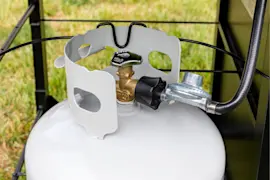
- Use the correct fuel setup (LP propane with the supplied regulator/valve assembly, as specified in the manual)
- Protect the grill from the elements; keep it dry and covered when not in use
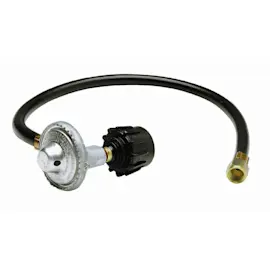
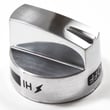
- Replace common wear items as needed (for example, a damaged gas hose 61300030 should be replaced promptly)
Why it matters
Most “dead grill” complaints are really maintenance or wear-part issues, not a failed grill body. Regular cleaning and timely replacement of parts like burners, igniters, and hoses usually restores safe, consistent heating and extends the grill’s usable life.
Last updated: January 2026
Is it worth fixing a gas grill?
Yes, it’s usually worth fixing a Kenmore gas grill model 14623766310 when the firebox and frame are solid and the problem is limited to serviceable parts (controls, hose, burners, or lighting). Replace the grill when structural rust-through, warping, or repeated gas-safety issues make repairs impractical.
Quick decision checklist
- Fix it if the grill body is sturdy and the issue is isolated (ignition, uneven heat, worn knobs, smoker burner problems).
- Fix it if you can restore safe operation with normal maintenance (cleaning, leak test, burner inspection).
- Replace it if the firebox has holes, the base is badly warped, or the cabinet structure is failing.
- Replace it if you have recurring gas leaks you cannot stop by tightening connections and replacing the correct hose/regulator assembly.
- Replace it if multiple major components fail at once and the total cost approaches a comparable new grill.
Safety comes first (what we follow on this model)
The 14623766310 manual emphasizes using the grill only in a well-ventilated outdoor area, keeping clearances (3 ft from walls and 10 ft from ignition sources), and performing leak testing before use. Use the 14623766310 user manual for the exact leak-test steps and operating guidance.
If you suspect a gas leak
- Close the LP tank valve immediately.
- Check connections with an ammonia-free soap and water solution.
- If bubbles grow, retighten; if it continues, replace the hose/regulator assembly rather than trying to patch it.
Common “worth fixing” repairs on this model
Many repairs are straightforward because parts are available for this grill.
| Symptom | Likely area | Typical fix |
|---|---|---|
| Knob cracked or slipping | Controls | Replace a worn knob such as control knob 61300013 |
| Smoker not heating well | Smoker burner | Clean ports; replace the smoker burner if corroded |
| Low/erratic gas flow | Hose/regulator path | Inspect and replace the gas hose 61300030 if damaged |
Why it matters
A properly repaired grill heats more evenly, lights more reliably, and operates safely. On LP models, the manual also specifies using the supplied regulator/valve assembly and a 20-lb LP tank, so correct parts and leak testing protect both performance and safety.
Last updated: January 2026