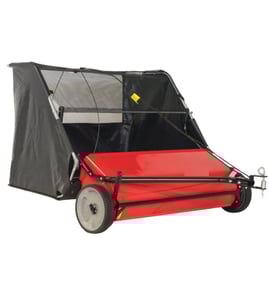

How to adjust a lawn sweeper?
To adjust a Craftsman lawn sweeper model 180260990, we set the brush height so the bristles just touch the grass and then fine-tune for your lawn conditions. The right setting improves pickup, reduces clogging, and prevents premature brush wear.
Brush height adjustment (most important)
Most tow-behind sweepers use a brush height knob, lever, or indexed handle. Adjust it on a flat surface with the sweeper hitched to the tractor for the most accurate setting.
- Park on level ground; stop the tractor and set the parking brake.
- Lower the brush until the bristles just contact the grass.
- For heavier debris (wet leaves, thatch), lower slightly for more aggressive sweeping.
- For short turf or uneven ground, raise slightly to avoid scalping and bouncing.
- Make a short test pass; re-adjust until pickup is consistent across the full width.
Quick “starting point” settings
Use this as a practical baseline, then adjust based on results.
| Lawn/debris condition | Brush contact goal | What you should see |
|---|---|---|
| Dry leaves on normal turf | Light contact | Leaves roll into the hopper without streaks |
| Damp leaves or thatch | Medium contact | Better lift, fewer clumps left behind |
| Uneven lawn | Light contact | Less hopping, more even pickup |
| Gravel/driveway edges | Minimal contact | Less stone pickup, less brush damage |
Other adjustments that affect performance
If brush height is correct but pickup is still poor, these checks usually fix it.
- Hopper fill level: Empty before it gets packed; overfilling reduces airflow and pickup.
- Tow speed: Use a steady, moderate pace; too fast can cause skipping and blow-by.
- Overlap passes: Overlap slightly to avoid a strip of missed debris.
- Tire pressure and wheel condition: Uneven wheels change brush-to-ground contact.
- Brush and drive wear: Worn brushes, slipping drive, or loose hardware reduce sweeping power.
Why it matters
Correct adjustment protects the brush system, improves debris pickup, and helps the sweeper track smoothly behind your tractor. It also reduces the chance of jams and uneven sweeping lines.
For help confirming the exact model number before ordering parts, use how to find your appliance model number (and what it means for parts).
Last updated: February 2026
What is a Craftsman lawn sweeper?
A Craftsman lawn sweeper (including model 180260990) is a tow-behind yard tool that uses rotating brushes to pick up dry lawn debris like leaves, grass clippings, and pine needles, then drops that material into a rear hopper bag for easy dumping.
What it does (and what it does not)
A lawn sweeper is designed for routine yard cleanup after mowing or during leaf season.
- Picks up light, dry debris from turf (leaves, clippings, small twigs)
- Collects debris in a hopper so you can dump it in fewer trips
- Works best on relatively flat lawns and at a steady towing speed
- Does not “vacuum” like a powered leaf vac; it relies on brush contact and ground speed
- Does not pick up wet, matted leaves or heavy thatch as effectively
How a lawn sweeper works
Most Craftsman sweepers use a simple mechanical system:
| Component | What it does | Common symptom if it’s not working |
|---|---|---|
| Brush assembly | Sweeps debris up and back | Leaves debris behind, uneven pickup |
| Drive wheels/gears | Spin the brushes as you tow | Brushes do not rotate |
| Hopper bag | Holds collected debris | Debris falls out, bag won’t stay attached |
| Height adjustment | Sets brush-to-ground contact | Scalping grass or poor pickup |
Why it matters
Using the right tool saves time and protects your lawn. A sweeper like the Craftsman 180260990 is ideal when you want fast, low-effort cleanup without raking, especially for dry leaves and clippings.
Helpful tip for getting the best pickup
Set the brush height so the bristles just touch the grass tips; too high leaves debris behind, too low can wear brushes faster and drag.
For help confirming you have the correct model number before ordering parts, use how to find your appliance model number (and what it means for parts).
Last updated: February 2026
What is the average lifespan of 180260990?
A Craftsman lawn sweeper like model 180260990 typically lasts 8 to 12 years with normal seasonal use and basic maintenance (cleaning, lubrication, and proper storage). Heavy use on rough ground or running it with worn brushes and gears shortens that lifespan.
What affects lifespan most
- Storage: keeping it dry and covered prevents rust in the hopper, frame, and hardware
- Brush wear: worn brush bristles reduce pickup and increase strain on the drive system
- Drive components: gears, wheels, and bushings wear faster if debris binds the brushes
- Operating habits: sweeping wet leaves, sticks, or gravel accelerates wear
- Maintenance: periodic lubrication and bolt checks prevent premature failures
Quick maintenance checklist (seasonal)
- Rinse or brush off packed debris after each use; let it dry before storing
- Check brush height and contact; adjust so it sweeps without digging into turf
- Inspect wheels/tires for wobble, cracks, or loose fasteners
- Lubricate pivot points and any exposed moving joints (light oil works well)
- Tighten loose nuts/bolts on the hitch, handle, and hopper supports
Typical lifespan by use level
| Use pattern | What we see most often | Expected lifespan |
|---|---|---|
| Light (small yard, occasional leaves) | Minimal wear on brushes and gears | 10 to 12 years |
| Moderate (weekly in season) | Brushes and wheels wear gradually | 8 to 10 years |
| Heavy (large property, frequent debris) | Faster brush and drive wear | 5 to 8 years |
Why it matters
A lawn sweeper is mostly mechanical; when brushes, wheels, or the drive mechanism wear out, performance drops quickly (poor pickup, uneven sweeping, or binding). Replacing worn parts early usually prevents secondary damage and extends the life of the sweeper.
For help confirming you have the correct model number before ordering, use [how to find your appliance model number (and what it means for parts)].
Last updated: March 2026