



What is the life expectancy of a KitchenAid oven?
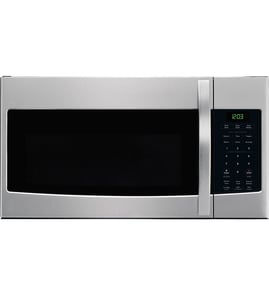
KitchenAid ovens typically last 10 to 15 years with normal household use and basic maintenance. If you are comparing it to your KitchenAid KMLS311HSS09 microwave/hood combo, expect a similar overall service life range, with longevity driven most by heat exposure, ventilation, and electronic control use.
Typical lifespan ranges (what to expect)
Most customers see these timeframes before major repair decisions come up:
- Electric ovens: 10 to 15 years
- Gas ovens: 12 to 18 years
- Microwave/hood combos (like KMLS311HSS09): 8 to 12 years
- Heavy daily use: subtract 2 to 4 years from typical ranges
- Light use and good airflow: often reaches the high end of the range
| Appliance type | Typical life expectancy | What usually ends the run |
|---|---|---|
| Wall oven / range oven | 10 to 15 years | Control board, bake element, igniter (gas) |
| Microwave/hood combo | 8 to 12 years | Magnetron, door switches, control panel |
What shortens oven life fastest
These are the most common “wear accelerators” we see across KitchenAid cooking products:
- Frequent high-heat cycles (especially long self-clean cycles)
- Poor ventilation or blocked airflow around the unit
- Slamming or forcing the door (stresses hinges and switches)
- Power surges (stresses electronic controls)
- Grease buildup in venting areas (for microwave/hood combos)
Why it matters
Knowing the typical lifespan helps you decide whether to repair or replace. For example, if your KMLS311HSS09 is heating poorly or making a loud hum, a high-voltage failure can be involved; the magnetron W11402082 is one of the key heating components in this style of microwave.
Quick “repair vs. replace” rule of thumb
- Under 8 years: repairs usually make sense if the cabinet and door are solid
- 8 to 12 years: compare repair cost to replacement cost
- Over 12 to 15 years: prioritize safety, reliability, and parts availability
Last updated: February 2026
What are the common KitchenAid problems?
For the KitchenAid KMLS311HSS09 microwave/hood combo, the most common problems are no heat, unit not powering on, turntable not rotating, door not latching or opening correctly, and vent fan issues. These symptoms usually trace back to a failed high-voltage component, a blown fuse, a door-interlock problem, or a vent control issue.
Common problems and what they usually mean
- Microwave runs but does not heat: magnetron, high-voltage diode, or capacitor problem.
- Dead display or no power: blown internal fuse, loose power connection, or control issue.
- Turntable not turning: turntable driver issue, coupler/drive problem, or obstruction.
- Door won’t open or won’t latch: door eject motor issue, latch alignment, or switch mount problem.
- Vent fan not working right: hood control board or vent motor capacitor issue.
Quick checks we recommend first
- Confirm power: verify the outlet works and the breaker is not tripped.
- Check for a simple door issue: close the door firmly; a misaligned door can prevent operation.
- Listen for clues:
- Loud hum with no heat often points to a high-voltage component.
- No sound at all with no display often points to a fuse or power feed.
- Inspect the turntable area: make sure the tray is seated and nothing is binding.
- If you smell burning or see arcing: stop using the microwave and have it serviced.
Parts that commonly fix these symptoms (when testing confirms failure)
| Symptom | Common part involved | Example part for KMLS311HSS09 |
|---|---|---|
| No power | Fuse | Microwave fuse W11707984 |
| No heat | Magnetron | Magnetron W11402082 |
| No heat | High-voltage diode | Microwave high-voltage diode W11256462 |
| No heat | Capacitor | Capacitor W10850446 |
| Door won’t open | Door eject motor | Motor, door eject W11545873 |
Why it matters
Microwave/hood combos like the KMLS311HSS09 use a high-voltage circuit to heat food. When a heating or power problem shows up, the safest and fastest path is to match the symptom to the likely circuit, then confirm with proper electrical testing before replacing parts.
For electrical diagnosis basics, we use guides like how to use a multimeter to test electrical parts video and how to tell if a fuse is blown.
Last updated: February 2026
What are the features of KMLS311HSS09?
The KitchenAid KMLS311HSS09 compact microwave/hood combo is built for a low-profile over-the-range fit and everyday cooking convenience; common highlights include a multi-speed vent fan, LED cooktop lighting, quick-access exterior buttons, hidden controls, and sensor-style cooking options.
Common feature set you can expect
These are the features most often associated with the KMLS311HSS09 platform and similar KitchenAid low-profile microwave/hood combos:
- Low-profile design to save space over the range
- 4-speed vent fan control (hood ventilation)
- Dual-fan ventilation system (often listed as 500 CFM motor class)
- LED task lights with a night-light setting
- Exterior quick-access buttons plus hidden microwave controls
- 1000-watt class cooking power and about 1.1 cu. ft. capacity
How to confirm the exact configuration on your unit
Because feature sets can vary by production run and trim, we recommend confirming what your specific KMLS311HSS09 has by checking the rating label and control panel layout.
- Verify the full model number: KMLS311HSS09
- Compare the keypad labels to the cooking modes you use most (sensor reheat, soften/melt, etc.)
- Check whether your installation is vented outside or set to recirculate (this affects hood performance expectations)
- If lighting or vent behavior seems off, inspect related electrical components before assuming a control issue
Quick reference: microwave vs. hood features
| Area | What it controls | What you notice day to day |
|---|---|---|
| Microwave cooking | Power levels, sensor programs, time cook | Heating speed, doneness consistency |
| Hood ventilation | Fan speeds, airflow path | Smoke/steam capture, noise level |
| Cooktop lighting | LED task and night light | Visibility over burners |
Why it matters
Knowing the intended features helps you troubleshoot correctly. For example, weak heating points to high-voltage components, while a dead unit or intermittent power points to basic power protection.
If you are diagnosing a symptom, these model-matched parts are commonly involved:
Last updated: February 2026