


Can an over the range microwave be used as a countertop?
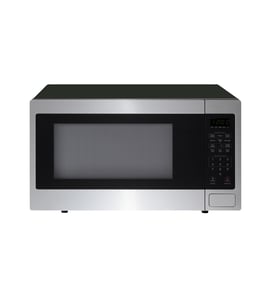
No. An over-the-range microwave is built to be mounted to a cabinet and wall (and typically vented); it is not designed or safety-listed to sit on a countertop like the KitchenAid KCMS2055SSS1 countertop microwave.
Why we don’t recommend it
Over-the-range (OTR) microwaves differ from countertop models in how they’re supported, cooled, and installed.
- The chassis and mounting points are designed for a wall bracket and upper cabinet bolts
- Airflow is engineered for an installed position; countertop placement can block intake or exhaust
- The cord length and plug location are intended for an above-range outlet
- The bottom surface and feet are not designed for stable countertop use
- Clearances around the unit are different than a true countertop microwave
What to do instead (safe options)
If you need a microwave to sit on the counter, use a countertop-rated model (like KCMS2055SSS1) and keep it on a flat, stable surface with open space around the sides and top.
If your current microwave is an OTR unit and you want it on the counter anyway, the practical path is to switch to a countertop model rather than trying to adapt the OTR unit.
Quick comparison: OTR vs countertop
| Feature | Over-the-range microwave | Countertop microwave |
|---|---|---|
| Primary support | Wall bracket + cabinet bolts | Feet on counter |
| Venting | Often integrated (recirculating or ducted) | Not designed to vent a range |
| Typical placement | Above a cooktop/range | Counter or shelf |
| Clearance needs | Installation-specific | Open airflow around unit |
Why it matters
Using the wrong microwave type in the wrong location commonly leads to poor ventilation, unstable placement, and installation problems. Choosing the correct style protects the appliance and helps it run at normal temperatures.
Parts note for KCMS2055SSS1
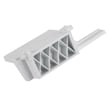
If your KCMS2055SSS1 is sliding or rocking on the counter, replacing a worn foot can restore stability; see the foot base 8184385.
Last updated: February 2026
What is the average life of a countertop microwave?
Most countertop microwaves, including KitchenAid model KCMS2055SSS1, typically last 7 to 10 years with normal household use. Heavy daily use, slamming the door, poor ventilation, and skipped cleaning can shorten lifespan; good habits and timely small repairs can extend it.
Typical lifespan and what changes it
- Light to normal use: 7 to 10 years
- Heavy use (multiple cycles daily): often 4 to 7 years
- Good care and quick fixes: can reach 10+ years
Signs your microwave is near end of life
- Food heats unevenly or takes much longer than it used to
- Loud humming, buzzing, or arcing sounds during operation
- Burning smell, smoke, or repeated sparking (stop using it)
- Door won’t latch consistently or the unit only runs when you push on the door
- It goes completely dead or blows power intermittently
Quick care steps that help KCMS2055SSS1 last longer
- Keep the cavity clean; grease and food splatter can cause hot spots and odors
- Never run it empty; it stresses internal components
- Use microwave-safe cookware only (no metal, foil, or twist ties)
- Make sure vents are not blocked; leave space around the cabinet
- Close the door gently; the latch and interlock system is safety-critical
Repair vs. replace: a simple rule of thumb
| If your microwave is... | Usually makes sense to... |
|---|---|
| Under ~7 years old with a simple failure (no power, door won’t start) | Repair first |
| 7 to 10 years old with repeated electrical issues | Compare repair cost to replacement |
| Any age with severe arcing, burning smell, or overheating | Stop using it and have it serviced |
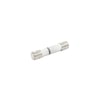
If your KCMS2055SSS1 is dead or intermittently loses power, a common first check is the internal fuse; the correct replacement listed for this model is the fuse WP8183507.
Why it matters
Microwaves rely on door interlocks, fusing, and high-voltage components to operate safely. When performance drops or electrical symptoms start, addressing the root cause quickly helps prevent bigger failures and reduces downtime.
Last updated: February 2026
Who makes the KitchenAid microwave?
KitchenAid is a brand owned by Whirlpool Corporation, so KitchenAid countertop microwaves like model KCMS2055SSS1 are typically designed and sourced under Whirlpool’s umbrella. That means parts, engineering standards, and service components often align with other Whirlpool-family appliances.
What that means for parts and repairs
When you’re shopping parts for a KitchenAid microwave, the most important detail is the exact model number (KCMS2055SSS1). Whirlpool-owned brands often share similar components, but the correct fit still depends on the model’s parts list.
Common part types you may see for this model include:
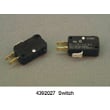
- Door safety and interlock components (switches and levers)
- Power protection parts (fuses)
- Hardware and mounting pieces (screws, brackets)
- High-voltage components (capacitors)
If you’re troubleshooting a “won’t start” or “dead display” symptom, we often begin by checking the door-interlock circuit and the internal fuse, then confirming wiring connections.
Parts on this model that relate to “who makes it”
These examples show the kind of Whirlpool-sourced service parts used on KCMS2055SSS1:
| Part type | Example part on this model | What it affects |
|---|---|---|
| Fuse | Fuse WP8183507 | No power, intermittent power loss |
| Door release | Microwave door release lever WP8205451 | Door won’t open smoothly, latch issues |
| High-voltage | Microwave high-voltage capacitor WP8184813 | Heating performance (service-level repair) |
Why it matters
Knowing KitchenAid is under Whirlpool helps set expectations for parts availability, part numbering, and repair approach, but the model number still controls the exact match. Using the KCMS2055SSS1 parts list prevents ordering a similar-looking part that does not fit.
Last updated: February 2026


