Error Codes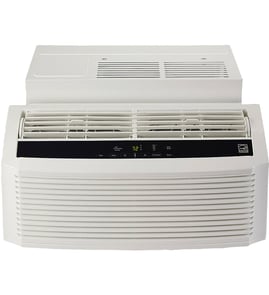




Does 5 star AC really save electricity?
Yes. A higher-efficiency (often marketed as “5-star”) room air conditioner typically uses less electricity to deliver the same cooling, so it lowers operating cost when you run it for long hours. For a Haier HWF05XCL room air conditioner, the real savings come from correct sizing, installation, and maintenance.
Efficiency ratings only translate into savings when the unit is used and installed correctly.
- Run time: The more hours per day you cool, the more you save versus a lower-efficiency unit.
- Room size and heat load: Oversized units short-cycle; undersized units run nonstop.
- Setpoint and fan mode: Higher set temperatures and “auto” fan usually reduce kWh.
- Seal and insulation: Air leaks around the window frame can erase efficiency gains.
- Maintenance: Dirty filters and coils increase power draw.
These steps usually deliver bigger savings than chasing a rating label.
- Set the thermostat to 76°F to 78°F when home.
- Use Eco/Energy Saver mode if your unit has it.
- Keep blinds closed during peak sun.
- Clean the air filter regularly; rinse and fully dry before reinstalling.
- Make sure the unit tilts slightly outward so it drains correctly.
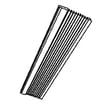
- Replace damaged side panels so hot outdoor air does not leak in (see room air conditioner accordion filler WJ86X23745).
Actual savings vary by electricity rate, climate, and usage pattern.
| Scenario | Lower-efficiency unit | Higher-efficiency (“5-star”) unit |
|---|---|---|
| 8 hours/day during hot season | Higher kWh use | Lower kWh use |
| Poor window sealing | Savings shrink | Savings shrink |
| Clean filter and good airflow | Normal kWh use | Best-case savings |
A room air conditioner’s efficiency affects both monthly electric bills and comfort. When airflow is restricted or the window opening leaks, the compressor runs longer, which increases energy use and can shorten component life.
For more practical setup and usage tips, use room air conditioner installation and operation tips.
Last updated: January 2026
How many sq ft will a 5 ton AC cool?
A 5-ton central AC system typically cools about 2,000 to 3,500 sq ft, depending on climate, insulation, ceiling height, sun exposure, and duct design. Your Haier HWF05XCL is a room (window) air conditioner, so it is sized for a single room, not whole-home “tonnage.”
“5 ton” is a common size for central air conditioners (about 60,000 BTU/hr). Most room air conditioners are rated in BTU, not tons.
- 1 ton = 12,000 BTU/hr
- 5 tons = 60,000 BTU/hr
- Window units are commonly 5,000 to 24,000 BTU/hr (roughly 0.4 to 2 tons)
Use these as planning ranges, then confirm with a load calculation.
- Mild climates, excellent insulation: up to ~3,500 sq ft
- Average conditions: ~2,400 to 3,000 sq ft
- Hot climates, poor insulation, high ceilings: closer to ~2,000 to 2,400 sq ft
| Home conditions | Typical 5-ton coverage (sq ft) |
|---|---|
| Mild climate, tight/insulated home | 3,000 to 3,500 |
| Average insulation and layout | 2,400 to 3,000 |
| Hot climate or leaky/poor insulation | 2,000 to 2,400 |
Oversizing can cause short cycling and poor humidity control; undersizing can run constantly and still not keep up. For whole-home sizing, a Manual J load calculation is the right way to match tonnage to your home.
If you are actually sizing or troubleshooting a window unit like the Haier HWF05XCL, use these practical guides:
- How to figure out which room air conditioner you need
- Room air conditioner installation and operation tips
Last updated: January 2026
Is Haier a good brand of AC?
Haier room air conditioners, including model HWF05XCL, are a solid choice for many homes: they’re typically dependable, reasonably efficient, and priced competitively versus brands like LG and Samsung. Long-term satisfaction usually comes down to correct sizing, installation, and routine maintenance.
A “good” window or room air conditioner consistently cools, drains water correctly, and runs without excessive noise or icing. For Haier units, the biggest wins usually come from setup and upkeep.
- Choose the right capacity for the room (oversizing can cause short cycling and humidity issues).
- Install level side-to-side with a slight tilt to the outside for proper drainage.
- Keep the air filter clean to prevent weak airflow and evaporator icing.
- Keep the side panels sealed to stop hot air leaks.
- Clean the coils and check for blocked airflow each season.
| What to compare | What to look for | Why it matters |
|---|---|---|
| Cooling performance | Steady cold air, no icing | Comfort and efficiency |
| Noise | Fan and compressor sound level | Bedroom usability |
| Controls | Simple knobs vs. electronic controls | Ease of use and repairability |
| Fit and sealing | Tight window fit, sealed side panels | Better cooling, lower bills |
Most “brand problems” customers experience are actually installation, airflow, or drainage problems. A well-installed Haier room air conditioner can perform just as reliably as many higher-priced options.
If you feel warm air leaking around the unit or the installation looks loose, the side panel components are often the fix:
- Room air conditioner accordion filler WJ86X23745
- Room air conditioner accordion filler frame, right WJ65X23747
- Frame, left WJ65X23746
For general best practices that apply to Haier window units, use room air conditioner installation and operation tips.
Last updated: January 2026