
How many square feet will a 120000 BTU furnace heat?
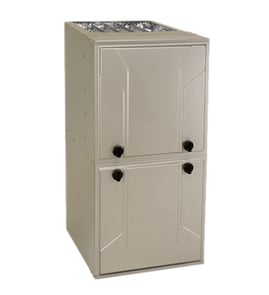
A 120,000 BTU furnace can typically heat about 2,000 to 3,500 square feet, but the real number depends on your climate zone, insulation, air leakage, ceiling height, and duct losses. For a Thermal Zone GU120M20C gas furnace, sizing is best confirmed with a room-by-room load calculation.
Quick sizing ranges (rule-of-thumb)
Use these as a starting point; tighter homes need fewer BTUs per square foot.
- Warm climates: ~25 to 35 BTU per sq ft
- Mixed climates: ~35 to 45 BTU per sq ft
- Cold climates: ~45 to 60 BTU per sq ft
- High ceilings or lots of glass: plan toward the higher end
- Older, leaky homes: plan toward the higher end
What that means for 120,000 BTU
This table shows approximate coverage using common BTU-per-sq-ft ranges.
| Home heat loss level | BTU per sq ft | Approx. sq ft at 120,000 BTU |
|---|---|---|
| Tight, well-insulated | 30 | ~4,000 |
| Average insulation | 40 | ~3,000 |
| Drafty or very cold climate | 55 | ~2,180 |
Why the “right size” matters
Oversizing can cause short cycling (frequent on/off), uneven temperatures, and higher wear on parts like the blower motor and controls. Undersizing can run constantly and still leave rooms cold.
How we recommend confirming the correct size
- Identify your climate zone and typical winter lows
- Check insulation levels (attic, walls) and window type
- Note ceiling heights and open floor plans
- Inspect ductwork for leaks, crushed runs, or poor returns
- Have a technician perform a Manual J load calculation
Parts note for performance issues
If your furnace struggles to start the blower or the motor hums and shuts off, a weak run capacitor is a common cause. For this model, you can check the capacitor 12908 listed for the GU120M20C.
Last updated: February 2026
How much does it cost to install a 100,000 BTU furnace?
Installing a 100,000 BTU gas furnace typically costs $4,500 to $10,000 total (equipment plus labor), depending on efficiency level, venting changes, and whether ductwork or gas line work is needed. For a Thermal Zone GU120M20C, the final price is driven mostly by installation scope, not the brand name.
What drives the price most
- Furnace efficiency (AFUE): higher-efficiency units usually cost more and may require different venting.
- Venting and combustion air: PVC vs. metal venting, new intake piping, or chimney liner changes.
- Ductwork modifications: resizing supply/return, adding returns, sealing, or replacing damaged ducts.
- Electrical and controls: new disconnect, wiring cleanup, thermostat upgrade, condensate pump.
- Permits and code items: permit fees, gas shutoff placement, sediment trap, drain routing.
- Labor complexity: tight attic/crawlspace installs and long vent runs increase labor time.
Typical cost breakdown (ballpark)
| Cost item | Typical range | Notes |
|---|---|---|
| Furnace equipment | $2,000 to $6,000 | Varies by efficiency and features (staging, ECM blower) |
| Labor (remove and install) | $1,500 to $4,000 | Access and complexity matter most |
| Venting/condensate updates | $300 to $2,000 | Common with high-efficiency replacements |
| Ductwork repairs/changes (if needed) | $500 to $3,000+ | Not always required |
| Permits/inspection | $100 to $500+ | Varies by area |
Quick checks to get a more accurate estimate
- Confirm the furnace size is appropriate (100,000 BTU is common, but not always correct for every home).
- Note whether your current system is 80% or 90%+ efficiency; switching often changes venting.
- Look for signs ductwork needs work (hot/cold rooms, noisy airflow, weak returns).
- Check if the existing electrical whip, shutoff, and drain routing meet current code.
Why it matters
A 100,000 BTU furnace that is installed with the right venting, airflow, and duct sizing runs safer, heats more evenly, and avoids nuisance shutdowns that can be mistaken for bad parts. If you are troubleshooting a no-start or weak-blower issue on the GU120M20C, a failed run capacitor can be part of the problem; see the capacitor 12908.
Last updated: February 2026
Should a 25 year old furnace be replaced?
Yes. A 25-year-old Thermal Zone gas furnace like model GU120M20C is at the end of a typical furnace lifespan (15 to 25 years), so replacement is the practical choice for reliability, efficiency, and avoiding a mid-winter breakdown.
Quick replacement checklist (what we look at)
- Frequent repairs in the last 1 to 2 heating seasons
- Trouble keeping steady heat (short cycling, uneven rooms)
- Rising heating bills compared to prior winters
- Excessive noise at startup or while running
- Visible rust, soot, or water damage around the cabinet or venting
- Blower issues (hard starts, humming, slow ramp-up)
Repair vs. replace: a simple way to decide
If the furnace is 25 years old, we treat most major repairs as a replacement trigger.
| Situation | What it usually means | Best next step |
|---|---|---|
| Minor electrical issue (loose wire, weak connection) | Low-cost fix possible | Diagnose and repair |
| Blower struggles to start or runs hot | Motor or capacitor may be failing | Test components, then decide |
| Repeated lockouts or unreliable ignition/heat | High risk of no-heat event | Plan replacement |
| Multiple expensive repairs piling up | Money is going into an aging platform | Replace |
If you are trying to get one more season out of it
We focus on preventing the most common no-heat failures and catching them early.
- Shut off power before inspecting any wiring or components
- Check the air filter and replace it if dirty (restricted airflow stresses the blower)
- Listen for a humming blower that will not start; that often points to a weak run capacitor
- Inspect wiring for heat damage or loose spade connectors
- If you have a meter, test safely using guidance like how to use a multimeter to test electrical parts video
If testing shows a failed run capacitor and you are repairing (not replacing yet), use the exact match listed for this model: capacitor 12908.
Why it matters
At 25 years, the risk is not just “it might stop.” Older furnaces also tend to run less efficiently and can turn a single part failure into a bigger repair because other components are already worn.
Last updated: February 2026