


Are commercial walks behind mowers worth it?
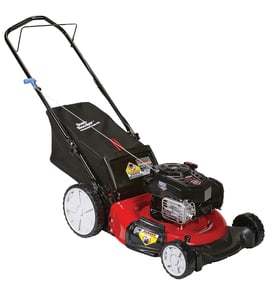
Yes, commercial walk-behind mowers are worth it when you mow frequently, handle slopes, or need a durable machine that’s easier to transport than a rider. For a Craftsman model 53679820 walk-behind setup, the biggest value is stability on uneven ground and a smaller footprint for storage and trailering.
When a commercial walk-behind is the better buy
- You mow hills, ditches, or uneven terrain and want better control than a riding mower
- You need a mower that’s gentler on turf than heavier zero-turns (less rutting and scuffing)
- You transport equipment often and want more units per trailer
- You have tight gates, narrow paths, or landscaping obstacles
- You want serviceable, long-life components and a frame built for frequent use
When it’s not worth it
- Your yard is mostly flat and you mow once a week or less
- You need maximum speed on large, open acreage (a zero-turn usually wins)
- You prefer a lighter-duty homeowner mower for occasional trimming
Quick comparison
| Feature | Commercial walk-behind | Zero-turn rider |
|---|---|---|
| Slope handling | Strong (low center of gravity) | Varies; can be less stable on steep slopes |
| Turf impact | Typically lower | Typically higher due to weight |
| Productivity on big flats | Moderate | High |
| Transport and storage | Easier, smaller footprint | Harder, larger footprint |
Why it matters
Choosing the right mower type affects safety on slopes, how your turf looks after mowing, and your total cost over time (repairs, downtime, and replacement cycle).
Parts and upkeep that protect your investment
Even the best commercial mower only performs well if it stays tight and properly fastened. If you’re refreshing hardware during maintenance, match parts by model and diagram to avoid fit issues.
- Replace worn fasteners instead of reusing stripped hardware
- Keep handles and controls secure to reduce vibration-related wear
- Use exact-fit parts for your Craftsman 53679820
Helpful examples of common hardware you may see listed for this model include the knob (black) 1501260MA and washer 783000MA.
Last updated: February 2026
How do I find my lawn mower model number?
For your Craftsman 53679820 (26" lawn valet), the model number is on the mower’s ID label or stamped plate on the frame or deck. Use that exact number to match diagrams and order the correct hardware and attachments.
Where to look on a Craftsman walk-behind mower
Check these common spots first (wipe dirt and grass off the area so the label is readable):
- Rear of the deck near the discharge opening
- Top of the deck near the engine mounting area
- Back of the mower frame between the rear wheels
- Handle support brackets or the lower handle mount area
- Under the rear flap or bagging/valet attachment mounting area
What to write down (and why)
Record the information exactly as shown on the label.
| What you see on the label | Example | Why it matters |
|---|---|---|
| Model number | 53679820 | Matches the correct parts list and diagrams |
| Product number (if shown) | Varies | Helps narrow down revisions/variants |
| Serial number | Varies | Useful for service history and exact build run |
Quick tips to avoid ordering the wrong part
- Use the mower model number (not the engine model) for non-engine parts like knobs, washers, and screws.
- If the label is damaged, look for a stamped number on the deck or frame.
- Compare your old part’s shape and measurements to the diagram callouts before ordering.
- For common fasteners on this model, start with items like the knob (black) 1501260MA and confirm fit by location and thread size.
Why it matters
Craftsman mowers often have multiple versions that look similar. Using the exact model number ensures you get the right deck hardware, handle parts, and valet or bagging-related components the first time.
Last updated: February 2026
How many acres can a 72 inch mower cut in an hour?
A 72-inch mower can cut about 2 to 5 acres per hour in typical real-world mowing. Your actual rate depends mostly on ground speed and efficiency losses from turning, overlap, obstacles, and grass conditions. This estimate is general; Craftsman model 53679820 is a 26-inch lawn valet, not a 72-inch mower.
Quick acres-per-hour estimate (simple math)
Use this rule-of-thumb formula for any deck width:
- Theoretical acres/hour = (deck width in feet × mph) ÷ 10
- Real-world acres/hour = theoretical × 0.70 to 0.85 (turns, overlap, slowdowns)
For a 72-inch deck (6 ft):
| Ground speed | Theoretical acres/hr | Typical real-world acres/hr (70% to 85%) |
|---|---|---|
| 5 mph | 3.0 | 2.1 to 2.6 |
| 7 mph | 4.2 | 2.9 to 3.6 |
| 10 mph | 6.0 | 4.2 to 5.1 |
What changes productivity the most
- Ground speed: faster speed increases acres/hour quickly
- Efficiency (overlap and turning): tight areas and lots of obstacles reduce output
- Grass height and moisture: tall or wet grass forces slower passes
- Terrain: slopes and rough ground reduce safe speed
- Stops: bagging, dumping, or clearing clogs lowers acres/hour
If you are estimating for Craftsman 53679820
Because 53679820 is a 26-inch unit, it will cover far less area per hour than a 72-inch mower. Keeping hardware tight and adjustments secure helps maintain consistent cutting and handling; examples include the knob (black) 1501260MA, washer 783000MA, and screw 703868.
Why it matters
Acres per hour helps you plan mowing time and choose the right deck size and speed for your property. A wider deck saves time only when you can maintain speed and minimize turning and overlap.
Last updated: February 2026
Is it cheaper to repair or replace a lawn mower?
For a Craftsman model 53679820 walk-behind mower, it’s cheaper to repair when the fix is routine and the total repair cost stays under about 50% of the price of a comparable new mower. Replacing makes more sense when you’re facing major engine or drive-system problems, repeated breakdowns, or extensive rust and wear.
Quick decision checklist
- Repair if it needs basic maintenance: blade sharpening, oil change, air filter, spark plug, belt, or cable adjustments.
- Repair if the mower still starts reliably and cuts evenly after a tune-up.
- Repair if the issue is a small hardware failure (loose handle, missing fastener, worn knob).
- Replace if the engine has low compression, heavy smoking, or metal-on-metal noise.
- Replace if the drive system slips badly or won’t propel and the repair estimate is high.
- Replace if the deck is cracked through, severely rusted, or the mower is unsafe to operate.
Cost rule of thumb (simple table)
| Situation | Usually the better choice | Why |
|---|---|---|
| Repair estimate is under ~50% of a new mower | Repair | You keep a working machine for less money |
| Multiple major issues at once | Replace | Costs stack up fast and reliability stays low |
| Minor parts and hardware only | Repair | Fast, low-cost fixes restore function |
Parts that often make a repair worthwhile
Small, inexpensive parts can solve annoying problems without replacing the mower. For example, if a control or handle assembly won’t stay tight, replacing a worn knob can be a practical first step: knob (black) 1501260MA.
Why it matters
A mower that’s mechanically sound but needs normal wear items is usually a good repair candidate. Once you start paying for major powertrain work or chasing repeated failures, replacement typically delivers better reliability per dollar.
Last updated: February 2026
What are the common problems with Craftsman lawn mowers?
Common problems we see on Craftsman walk-behind mowers like model 53679820 include hard starting, rough running, poor cutting quality, and drive or control issues caused by wear, loose hardware, or neglected maintenance. Most fixes start with a quick inspection, cleaning, and tightening fasteners.
Most common symptoms (and what they usually point to)
- Won’t start or starts then dies: stale fuel, dirty carburetor, fouled spark plug, clogged air filter
- Runs rough or surges: partially clogged carburetor, air leak, old fuel
- Cuts uneven or leaves strips: dull/bent blade, deck buildup, incorrect cutting height, loose handle controls
- Excess vibration: bent blade, loose blade bolt, loose fasteners
- Self-propelled won’t pull (if equipped): worn belt/cable, misadjusted drive control, debris in drive area
Quick checks we recommend first (10 minutes)
- Shut the engine off and disconnect the spark plug wire before touching the blade or underside.
- Check for loose or missing fasteners on the handle, deck, and guards; replace stripped hardware as needed.
- Inspect controls and knobs; a cracked or missing handle knob can let controls slip. If yours is damaged, match it to the knob (black) 1501260MA.
- Clean packed grass from the deck and discharge area (a plastic scraper works well).
- If it has been sitting, drain old fuel and refill with fresh fuel; then check spark plug and air filter.
Common problems and typical fixes
| Problem | What you’ll notice | Typical fix |
|---|---|---|
| Fuel system varnish | Surging, won’t stay running | Clean carburetor, replace fuel, check filter/lines |
| Blade/deck issues | Uneven cut, vibration | Sharpen/replace blade, clean deck, tighten hardware |
| Loose hardware | Rattles, shifting handle | Tighten, replace worn screws/washers |
| Drive wear (if equipped) | No pull or weak pull | Inspect belt/cable, adjust control |
Why it matters
Catching small issues early (like loose screws or a slipping handle control) prevents bigger problems such as excessive vibration, poor cut quality, and premature wear on the deck and drive components.
Last updated: February 2026
What year is my Craftsman mower serial number lookup?
On a Craftsman model 53679820 (26-inch lawn valet), the year is usually encoded in the serial number or date code, but the format depends on who manufactured the unit. We match the year by locating the ID tag and decoding the date segment (often MMDDYY or similar).
Where to find the serial number and date code
Look for a sticker or stamped tag in one of these common spots:
- Rear of the deck near the discharge opening
- Under the handle mounting area
- On the frame near the wheels
- Near the engine mounting plate (deck side)
- On the bagger or valet attachment frame (if equipped)
How to decode the year (most common patterns)
Craftsman outdoor power equipment can use different serial formats. These are the most common ways we see the year shown:
- MMDDYY: first 2 digits month, next 2 digits day, last 2 digits year (example: 072811 = July 28, 2011)
- YYWW: year plus production week (example: 1128 = 2011, week 28)
- YYMMDD: year first, then month, then day (example: 110728 = July 28, 2011)
Quick decode table
| If your code looks like | Example | The year is |
|---|---|---|
| MMDDYY | 072811 | 2011 |
| YYWW | 1128 | 2011 |
| YYMMDD | 110728 | 2011 |
What to do if the serial number is hard to read
If the label is faded or damaged, these steps usually get you a clean read:
- Wipe the tag with mild soap and water; dry fully
- Use a flashlight at a low angle to highlight stamped numbers
- Take a close-up photo and zoom in
- Write down every character, including dashes
If you need replacement hardware while you’re working on the tag area, the knob (black) 1501260MA is one of the common fasteners listed for this model page.
Why it matters
The build year helps us match the correct Craftsman diagrams and ensure you get the right parts (especially when a model has mid-year design changes).
Last updated: February 2026