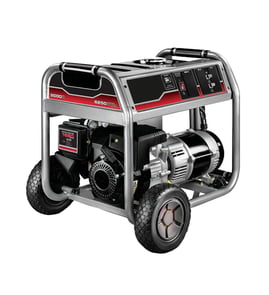




Can I run my house on a 5500 watt generator?
A 5,500-watt generator can power essential circuits in a typical home, but it will not run an entire house like utility power. With a Briggs 030592-01 generator, plan to run a few high-priority loads (refrigerator, some lights, internet, a sump pump) and avoid stacking large motor and heating loads at the same time.
What a 5,500-watt generator can usually handle
Most homes do best when you treat 5,500 watts as “critical loads only,” not “whole-home.” Prioritize items with moderate running watts and manage motor start-up surges.
- Refrigerator or freezer (cycles on and off)
- A few LED lights
- TV, modem/router, phone chargers
- Sump pump (if the starting surge fits)
- Small microwave or coffee maker (one at a time)
Loads that usually push you over the limit
These either have very high wattage, high starting surge, or both.
- Central air conditioning or large well pumps
- Electric water heater
- Electric range/oven or electric dryer
- Space heaters (they consume watts continuously)
Quick planning table (typical watt ranges)
Use this to estimate what you can run at once; always add starting watts for motors.
| Load type | Typical running watts | Typical starting surge | Notes |
|---|---|---|---|
| LED lighting (several rooms) | 50 to 300 | Low | Easy to support |
| Refrigerator/freezer | 150 to 800 | 1,200 to 2,500 | Surge matters most |
| Sump pump (1/3 to 1/2 HP) | 800 to 1,500 | 1,300 to 3,000+ | Varies by pump |
| Microwave | 900 to 1,500 | Low | Run alone if needed |
| Space heater | 1,000 to 1,500 | None | Continuous heavy load |
Safe way to connect power (why it matters)
Backfeeding a panel through an outlet is dangerous and can damage equipment. The safe approach is a properly installed transfer switch or interlock with an inlet, so you can select only the circuits your 5,500-watt generator can support.
If your generator bogs down or trips breakers
This usually means you exceeded available watts or hit a motor start surge.
- Turn off large loads, then add loads back one at a time
- Start motor loads one at a time (fridge, then sump pump, etc.)
- Check for loose or damaged cords and connections
- If you suspect an electrical issue, test with a meter using how to use a multimeter to test electrical parts video
Last updated: February 2026
Where to check generator model number?
On a Briggs generator like model 030592-01, the model number is typically printed on the equipment ID label (data plate) attached to the generator frame or engine shroud. We use that exact model number to match the correct parts list and diagrams for your generator.
Common places to look on model 030592-01
Check these spots first; the label is usually a sticker or metal tag:
- On the generator frame rail near the engine
- Near the control panel housing (side or back of the panel)
- On the engine blower housing (recoil starter side)
- Near the fuel tank mounting area
- On a lower crossmember where it is protected from heat
What you should write down (and why)
We recommend recording the full ID information so you get the right Briggs & Stratton generator parts.
| What to capture | Example | Why it matters |
|---|---|---|
| Model number | 030592-01 | Identifies the correct parts breakdown |
| Type / trim code (if shown) | Varies | Separates similar versions of the same model |
| Code / serial (if shown) | Varies | Helps confirm production run and compatible parts |
Tips if the label is dirty or hard to read
- Wipe the label gently with a damp cloth; avoid soaking it
- Use a flashlight at an angle to make faint printing stand out
- Take a close-up photo and zoom in
- If the sticker is scratched, look for a second label on another side of the frame
Why it matters
Generators often have multiple versions that look the same but use different gaskets, fuel lines, or electrical parts. Using the exact model number helps you avoid ordering the wrong replacement part.
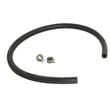
If you are tracking down a fuel leak while identifying the model, a common maintenance item is the Briggs & statton husqvarna lawn & garden equipment fuel line kit 791745.
Last updated: February 2026
What is the 20 20 20 rule for generators?
The generator 20-20-20 rule is a simple safety reminder for using your Briggs 030592-01 generator during an outage: keep the generator at least 20 feet from the home, let it cool about 20 minutes before refueling, and use a CO alarm (often around $20) to help detect carbon monoxide.
What each “20” means
- 20 feet away: Place the generator outdoors at least 20 feet from doors, windows, soffit vents, crawlspace vents, and garage doors.
- 20-minute cooldown: Shut the generator off and wait about 20 minutes before adding gasoline.
- $20 CO alarm: Use a battery-powered carbon monoxide alarm in the home (and replace batteries as needed).
Quick placement and refueling checklist
- Run the generator outside only, never in a garage, shed, basement, or enclosed porch.
- Point the exhaust away from the house and away from neighbors.
- Shut the unit down before refueling; wipe up any spilled fuel before restarting.
- Store gasoline in an approved container, away from ignition sources.
- Use heavy-duty outdoor-rated cords sized for the load.
Why it matters
Carbon monoxide can build up quickly and is dangerous even when you cannot smell it. Refueling a hot engine can also ignite fuel vapors. Following the 20-20-20 rule reduces CO exposure risk and helps prevent fires.
Helpful reference table
| “20” | What to do | What it helps prevent |
|---|---|---|
| 20 feet | Keep generator away from openings | CO entering the home |
| 20 minutes | Cool down before refueling | Fuel ignition and burns |
| $20 CO alarm | Use a battery CO alarm | Undetected CO exposure |
Parts that commonly come up during generator upkeep
If you are troubleshooting fuel delivery or doing a refresh on the Briggs 030592-01, these parts on our page are common starting points:
Last updated: February 2026