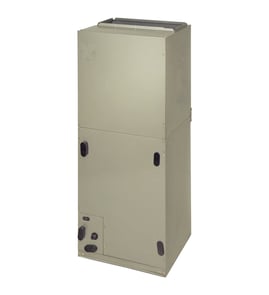

Is an air handler the same as a blower?
No. On the Mortex 88-1008, the air handler refers to the whole indoor air-moving assembly (cabinet, blower section, and often coils and controls), while the blower is just the fan and motor inside that assembly that pushes air through the ductwork.
- Air handler: The complete indoor unit that moves and conditions air; it can include a blower, evaporator coil (for AC/heat pump), filter rack, and electrical controls.
- Blower: The air-moving component inside the air handler; typically a blower wheel (squirrel-cage style) plus a motor.
- Blower cabinet: The housing that supports the blower assembly and directs airflow.
- Evaporator coil (if equipped): The coil that cools and dehumidifies air when the AC runs.
- Ductwork: The supply and return pathways the blower uses to circulate air.
Because this Mortex model is listed under blower cabinets, many customers use “air handler” and “blower cabinet” interchangeably. Use these checks to confirm what you are servicing:
- Look for refrigerant lines entering the cabinet; that usually indicates an evaporator coil is part of the indoor unit.
- Check for a filter slot or filter grille near the return side.
- Identify whether you have a control board/relays in the cabinet or if controls are located elsewhere.
- Confirm whether the cabinet is paired with a gas furnace (then the “air handler” term is less common, and “furnace blower” is more common).
Using the right term helps you order the right replacement and troubleshoot faster. “Blower” problems usually point to airflow and motor issues; “air handler” problems can include airflow plus cooling, electrical, or cabinet-related issues.
| Symptom | More likely the blower | More likely the air handler (overall) |
|---|---|---|
| Weak airflow | Yes | Sometimes (filter/coil restriction) |
| Loud rattling or scraping | Yes | Sometimes (cabinet/duct vibration) |
| No air movement at all | Yes | Sometimes (controls/power) |
| Water around indoor unit | No | Yes (drain/coil area) |
For safe electrical checks during HVAC troubleshooting, use how to use a multimeter to test electrical parts video.
Last updated: February 2026
Is the air handler separate from the furnace?
Yes. In most HVAC setups, the air handler (like the Mortex 88-1008 blower cabinet) is a separate piece of equipment from the furnace. The furnace creates heat; the air handler’s blower and controls move conditioned air through the ductwork.
An air handler and a furnace can be installed as separate cabinets that connect through ducting and wiring. Depending on your system type, the air handler may pair with different heat sources.
- Furnace: burns fuel or uses electric heat to produce heat
- Air handler/blower cabinet: uses a blower motor to circulate air
- Evaporator coil (often above the air handler): supports air conditioning and heat pump operation
- Ductwork: distributes air to rooms and returns air back to the system
- Controls/relays: coordinate blower operation with heating or cooling calls
| System type | Where the heat is made | What the air handler does |
|---|---|---|
| Gas or oil furnace + AC | In the furnace heat exchanger | Moves air across the coil (cooling) and through ducts |
| Heat pump + air handler | In the outdoor unit (heat pump) | Moves air across the indoor coil for heating/cooling |
| Electric air handler | In electric heat strips inside the air handler | Moves air across heat strips and through ducts |
Use these quick checks to identify whether your air handler is separate from a furnace:
- Look for a burner compartment and flue/exhaust vent (typical of a furnace)
- Check for an outdoor heat pump unit (often paired with an air handler)
- Listen for the blower running even when heat is not actively firing
- Inspect the cabinet labels to confirm brand and model (for this unit: Mortex 88-1008)
Knowing whether the air handler is separate from the furnace helps you order the right replacement parts, troubleshoot airflow problems (weak airflow, noisy blower, no fan), and understand which component is responsible for heating versus air circulation.
For help locating the correct model tag before ordering, use how to find your appliance model number (and what it means for parts).
Last updated: February 2026
How much does a commercial air handling unit cost?
A commercial air handling unit typically costs about $1,300 to $4,300 for the unit, with price driven mainly by capacity, airflow (CFM), cabinet size, and whether it’s a simple blower cabinet or a more complex modular air handler. For Mortex model 88-1008, confirm sizing and electrical requirements before pricing.
- Tonnage and airflow (CFM): higher capacity units cost more
- Configuration: basic blower cabinet vs. modular air handler sections
- Motor type: PSC vs. ECM (variable-speed ECM usually costs more)
- Heat options: electric heat kits or hydronic coils add cost
- Controls: basic relay controls vs. integrated control boards
- Installation complexity: curb/stand, duct transitions, and electrical work
| System type | Common size range | Typical unit cost range |
|---|---|---|
| Light commercial air handler | ~5 to 10 tons | $1,300 to $3,000 |
| Mid-size commercial air handler | ~10 to 25 tons | $2,500 to $4,300 |
| Large modular AHU systems | 25+ tons (multiple sections) | Often quoted as a system, not a single “unit price” |
Air handlers are often selected to match duct static pressure, coil size, and building load. If the unit is undersized, you can get low airflow and comfort issues; if it’s oversized, you can waste energy and create noise and control problems.
- Match the model number and data plate specs (voltage, phase, motor HP)
- Confirm required airflow (CFM) and external static pressure
- Identify whether you need cooling coil compatibility or heat kit support
- Compare cabinet dimensions to avoid ductwork rework
- Use our model search on Sears PartsDirect if you’re cross-referencing parts or looking up related components by model
Last updated: February 2026
Do I need an air handler if I have a furnace?
In most homes with a forced-air furnace, you do not need a separate air handler because the furnace cabinet already contains the blower that circulates air through the ductwork. You typically use an air handler with a heat pump or AC-only system, not a furnace.
Check what equipment is connected to your ducts and thermostat:
- Furnace present (gas or oil burner section plus blower): the furnace is the air-moving unit
- Heat pump or straight-cool AC with an indoor blower cabinet: that indoor cabinet is the air handler
- Electric heat strips inside an indoor cabinet: common in air handlers
- No combustion vent/flue at the indoor unit: often an air handler, not a furnace
The Mortex 88-1008 is listed as a blower cabinet (air handler style). It is used when the indoor unit’s job is primarily to move air across an evaporator coil and, in some systems, electric heat strips.
| Your heating setup | Indoor air-moving equipment | Separate air handler needed? |
|---|---|---|
| Gas furnace + central AC | Furnace blower | No |
| Heat pump | Air handler or fan coil | Yes |
| Electric furnace/air handler with heat strips | Air handler cabinet | Already is the air handler |
Choosing the wrong indoor unit can cause airflow problems, comfort issues, and mismatched controls (thermostat wiring, blower speeds, and safety limits). Confirming whether you have a furnace or an air handler helps you buy the right replacement parts and avoid unnecessary equipment.
- Verify the indoor unit type (furnace vs. air handler) by looking for a burner compartment and flue
- Match the model number on the data plate to 88-1008
- Note your system type (heat pump vs. furnace) and thermostat wiring (especially O/B and AUX/E)
- If you are troubleshooting electrical issues, use a meter and follow safe testing practices
For help with safe electrical testing during troubleshooting, use our guide: how to use a multimeter to test electrical parts video.
Last updated: February 2026
