Owner’s manual
 Error Codes
What is the average cost of a 50 gallon electric water heater?
A typical 50-gallon electric water heater averages about $600 to $1,200 for the unit alone, with many homeowners landing near the middle of that range. Total installed cost is usually higher because electrical, plumbing, and code-related accessories can add significant labor and materials.
What changes the price most
- Brand and efficiency level (higher efficiency usually costs more up front)
- Electrical requirements (circuit, wiring, breaker, junction box condition)
- Local code upgrades (common when replacing an older tank)
- Accessories such as a drain pan, thermal expansion tank, or pressure reducing valve
- Labor and disposal (removal of the old heater and haul-away)
Typical cost ranges (unit vs. installed)
| Cost item | Typical range | What it includes |
|---|---|---|
| Water heater (50-gal electric) | $600 to $1,200 | Tank and factory controls |
| Installation labor and materials | $500 to $2,000 | Plumbing and electrical hookup, fittings |
| Common add-ons (as needed) | $50 to $600+ | Drain pan, expansion tank, valves |
Model-specific notes for Ao Smith E6-50H45DV
For the Ao Smith E6-50H45DV, we recommend using the checklist and safety guidance in the owner's manual before planning a replacement or install. The manual highlights common code-related accessories (for example, a thermal expansion tank, pressure reducing valve, and drain pan) that can affect your total cost.
Why it matters
A water heater price is not just the tank. The biggest surprises come from bringing plumbing and electrical connections up to current standards and adding protection items that help prevent leaks, pressure problems, and premature component failures.
Last updated: February 2026
What is the life expectancy of an A. O. Smith electric water heater?
An A. O. Smith electric water heater like model E6-50H45DV typically lasts 10 to 12 years. With consistent maintenance (especially flushing sediment and checking the anode rod), it can reach 15 years; hard water, heavy hot-water use, and skipped maintenance shorten lifespan.
Typical lifespan and what changes it
Most residential electric tank water heaters fall into a predictable range.
- Typical: 10 to 12 years
- Well-maintained: up to about 15 years
- Often shorter when: hard water causes heavy sediment, thermostats are set too high, or the tank is rarely flushed
Quick lifespan factors
| Factor | What it does | What we recommend |
|---|---|---|
| Hard water/sediment | Insulates elements, increases heat time and wear | Flush at least yearly (more often with hard water) |
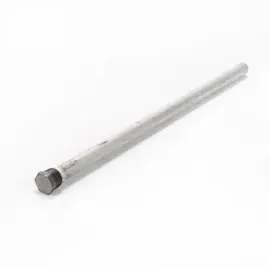
| Anode rod condition | Protects the tank from corrosion | Inspect after 6 months, then at least annually |
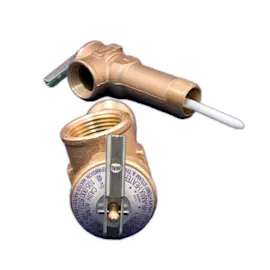
| T&P relief valve condition | Safety device; problems can signal maintenance issues | Operate annually; inspect every 2 to 4 years |
| Temperature setting | Higher temps increase scaling and scald risk | Target about 120°F for most homes |
Maintenance that most extends life
Your Use & Care Guide calls out these routine tasks as key to long service life:
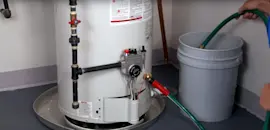
- Drain and flush the tank after the first 6 months, then at least annually
- Inspect the anode rod after the first 6 months, then at least annually
- Operate the T&P (temperature and pressure) relief valve annually
- Inspect the T&P valve every 2 to 4 years (follow the valve label schedule)
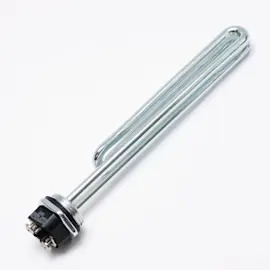
- Replace wear items as needed (common examples are heating elements and thermostats)
For the model-specific procedure and safety steps, follow the owner's manual.
Why it matters
A tank that is full of sediment or running with a depleted anode rod usually costs more to operate and is more likely to fail early. Routine flushing and anode checks are the most direct way to protect the tank and keep recovery time consistent.
Last updated: February 2026
Are A. O. Smith electric water heaters any good?
Yes. Ao Smith electric water heaters like model E6-50H45DV are a solid, mainstream choice for reliable hot water when they’re installed correctly and maintained regularly. In our experience, performance and longevity depend most on proper electrical setup, correct plumbing connections, and routine maintenance outlined in the owner's manual.
What “good” looks like for an electric water heater
A good electric water heater delivers consistent hot water, heats efficiently for its size, and stays dependable with basic upkeep.
Common signs your heater is performing well:
- Hot water recovers in a reasonable time after showers
- Temperature stays steady (no sudden cold bursts)
- No tripped breaker or repeated reset trips
- No leaking at fittings or the tank
- Minimal popping or rumbling noise (sediment can cause noise)
What affects reliability the most
For the E6-50H45DV, the manual emphasizes safe installation and ongoing maintenance. The biggest real-world factors are:
- Correct installation and wiring (loose connections and wrong voltage cause problems)
- Avoiding “dry firing” (energizing elements before the tank is full can burn out an element)
- Water pressure control (a pressure reducing valve and thermal expansion tank are often needed)
- Thermostat settings (120°F is a common target for comfort and scald prevention)
- Routine tank care (flushing sediment and checking the anode rod)
Maintenance schedule we recommend
The manual’s guidance is straightforward: after the first six months, drain and flush the tank and inspect the anode rod; then repeat at least annually (more often with hard water).
- After 6 months: drain and flush; inspect anode rod
- Yearly: repeat drain and flush; re-check anode rod
- As needed: test/replace a heating element or thermostat
Quick comparison: “good heater” vs “good setup”
| Item | What it impacts | What to do |
|---|---|---|
| Heating elements | Recovery time, hot water output | Fill tank fully before powering on; replace if failed |
| Thermostats/ECO reset | Safety shutoff, no-hot-water events | Verify wiring and settings; reset only after diagnosing |
| Water pressure/expansion | Leaks, valve dripping, stress on tank | Add pressure control and expansion tank if required |
| Sediment/anode rod | Noise, efficiency, tank life | Flush and inspect on schedule |
Why it matters
Most “bad water heater” experiences come from installation issues (power, reversed connections, dry-fired elements) or skipped maintenance (sediment buildup, worn anode rod). When those are handled correctly, an Ao Smith electric unit is a dependable, long-term appliance.
Last updated: February 2026
What are the signs of a failing hot water heater?
Common signs your Ao Smith E6-50H45DV electric water heater is failing include no hot water, hot water that is not warm enough, or running out of hot water faster than normal. These symptoms often point to power issues, a tripped safety cutoff, thermostat problems, or a failing heating element.
Most common symptoms to watch for
- No hot water at all (often electrical supply, upper element, or upper thermostat related)
- Water is lukewarm at multiple faucets (thermostat setting, mixing valve issue, or lower element issue)
- Hot water runs out quickly (undersized capacity for demand, plumbing leak, or lower element wearing out)
- Sudden change after a new install (reversed inlet and outlet connections, or a damaged dip tube)
- Breaker trips or power seems intermittent (wiring, thermostat, or element problems)
Quick checks we recommend (safe, homeowner-level)
- Confirm the symptom at more than one faucet to rule out a single bad shower or faucet mixing valve.
- Check the water heater circuit breaker; a tripped breaker can cause “no hot water.”
- Look for hot water plumbing leaks (even small leaks can mimic low hot water output).
- If the unit is newly installed, verify the hot and cold connections are not reversed.
- Use the troubleshooting steps in the owner's manual to match your symptom to likely causes.
What the symptom usually means
| Symptom | Most likely causes | What to do next |
|---|---|---|
| No hot water | No power, tripped energy cut off, burned out upper element, upper thermostat/wiring | Check breaker; follow manual troubleshooting; service if electrical testing is needed |
| Not warm enough | Thermostat set low, faulty mixing valve, low voltage, lower element/thermostat | Check multiple faucets; verify settings; test components if needed |
| Runs out too fast | High demand, plumbing leak, lower element wearing out | Check for leaks; consider element/thermostat diagnosis |
Why it matters
Electric water heaters commonly fail in predictable ways: the upper element/thermostat issues often show up as no hot water, while the lower element typically wears first and causes reduced hot water capacity. Catching these signs early helps prevent repeated cold showers and unnecessary part swaps.
Last updated: February 2026
What is the most common issue on an AO Smith Corporation hot water heater?
On the Ao Smith E6-50H45DV electric water heater, the most common problem is no hot water or not enough hot water caused by an electrical supply issue (tripped breaker), a tripped Energy Cut Off (ECO) reset, or a failed heating element or thermostat. See the owner's manual for the model’s troubleshooting steps and safety warnings.
Most common symptoms and what they usually mean
- No hot water at all: power problem, tripped ECO (red reset button), failed upper element (often after dry-firing)
- Some hot water, then it runs out fast: lower heating element (or lower thermostat) not working
- Very hot water or T&P valve dumping hot water: shorted heating element or thermostat issue; shut off power until fixed
- Low hot-water pressure only: partially closed supply valve, melted dip tube or heat traps (often after soldering on connected pipes)
- “Seems like no hot water” but heater is working: hot-side plumbing leak exceeding heating capacity
Quick checks we recommend (electric model)
- Turn off power at the breaker before removing access covers.
- Confirm the water heater breaker is on and not tripped.
- Check whether the ECO reset on the upper thermostat has tripped.
- If you have no hot water, suspect the upper element/upper thermostat first.
- If you have limited hot water, suspect the lower element first (it does most of the work).
Troubleshooting guide: symptom-to-likely-cause
| Symptom | Most likely cause | Typical next step |
|---|---|---|
| No hot water | No power, tripped ECO, burned-out upper element | Verify breaker, reset ECO, test element/thermostat |
| Not enough hot water | Lower element failing | Test lower element; replace if failed |
| Low pressure only on hot side | Dip tube/heat traps restriction or supply valve not fully open | Fully open valve; inspect dip tube/heat traps |
| Drips from T&P discharge | High water pressure or expansion issue; overheating if heavy flow | Address pressure/expansion; investigate overheating |
Why it matters
These issues affect both comfort and safety. Electrical faults and overheating can create shock and scald risks, and restrictions like a damaged dip tube can make a healthy tank act like it is failing.
Last updated: February 2026