Owner’s manual

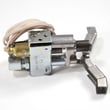
Why is my wall furnace not igniting?
If your Williams 3509612 Monterey top-vent home furnace is not igniting, the most common causes are a pilot that will not stay lit, the gas valve not set to ON, a thermostat not calling for heat, or a safety shutoff triggered by a blocked or disconnected vent. Use the troubleshooting steps in the owner's manual to pinpoint the exact failure.
Quick checks we recommend first
- Confirm the gas valve knob is turned to ON after lighting the pilot.
- Set the temperature dial or wall thermostat to a setting that calls for heat.
- Verify the pilot is lit and the pilot flame is steady.
- Make sure the pilot and burner access door is closed properly.
- Check for a blocked vent or a disconnected vent (vent safety shutoff can stop ignition).
- If your unit has an optional blower, confirm it has power (the furnace itself does not require electric power unless equipped with a blower).
Match the symptom to the likely cause
| What you see | Most likely cause | What to do next |
|---|---|---|
| Pilot will not stay lit | Weak thermocouple/generator output, loose/dirty connections, or defective safety in the gas valve | Check that the pilot flame hits the thermocouple/generator; clean and tighten connections at the gas valve; test millivolts if you have a meter |
| Pilot is burning but main burner will not light | Gas valve not on, thermostat not calling, plugged burner orifice, miswired/broken thermostat wires, or defective valve | Turn valve to ON; raise thermostat setting; inspect wiring; clean burner orifice |
| Pilot keeps going out | Vent safety shutoff issue, blocked flue/venting, access door not sealed | Inspect venting path and connections; ensure access door is seated correctly |
Safe troubleshooting notes (gas furnace)
- If you smell gas: open windows, avoid touching electrical switches, extinguish open flames, and contact your gas supplier.
- Do not attempt to adjust gas pressure; that requires proper test equipment.
Why it matters
Ignition problems are often caused by a safety-related issue (pilot safety, vent safety shutoff, or improper flame on the thermocouple/generator). Correcting the root cause restores reliable heat and helps prevent nuisance shutdowns.
Last updated: February 2026
How much to replace a furnace burner?
Replacing a burner in a Williams model 3509612 monterey top-vent home furnace typically costs $300 to $1,200 total (parts plus labor), depending on whether it is a simple burner swap or a larger burner pan or gas-train service. Because this is a gas repair, we recommend using a qualified service technician.
What drives the price
Costs vary mainly by the scope of work and what the tech finds once the burner compartment is opened.
- Burner type and design: some models use welded formed steel burners; the manual notes these typically do not require flame adjustment.
- How many burners: multi-burner setups can raise parts and labor.
- Related parts: burner service often overlaps with the pilot burner, thermocouple, or main burner orifice work.
- Cleaning vs. replacement: heavy lint, dust, or corrosion can require deeper service.
- Access and venting conditions: restricted access or vent issues add time.
What we recommend before approving a burner replacement
In many cases, the symptom is caused by airflow, dirt, or pilot issues rather than a failed burner.
- Inspect the burner flame after 10 minutes of operation; it should be soft and blue.
- Check the pilot flame; it should surround about 1/2 to 5/8 inch of the thermocouple tip.
- Vacuum lint and dust from the burner compartment carefully (avoid bumping the pilot).
- If flames are yellow, noisy, or lifting, stop and have the system serviced.
- Use the step-by-step procedures in the owner's manual for safe access and checks.
Typical cost ranges (parts and labor)
| Repair scenario | What it usually includes | Typical total cost |
|---|---|---|
| Burner cleaning and tune-up | Cleaning burner area, checking flame pattern, basic adjustments | $150 to $400 |
| Replace a burner assembly | Burner replacement plus setup and combustion check | $300 to $900 |
| Burner pan or multiple burners plus related service | More disassembly, possible orifice or pilot-related work | $700 to $1,200 |
Why it matters
A correct burner flame pattern protects the heat exchanger, improves efficiency, and reduces soot and odor issues. The manual also warns that abnormal flames require immediate professional attention.
Last updated: February 2026
What is the most common part to fail on a furnace?
On a Williams 3509612 monterey top-vent home furnace, the most common “failure” we see is not a single part, but a safety shutdown caused by restricted airflow or a pilot/ignition safety issue. Start with the basics: clear the louvers, confirm the pilot stays lit, and follow the lighting and shutdown steps in the owner's manual.
Most common failure points (and what they look like)
- Restricted airflow at the front louvers: furnace runs, then shuts off early; warm air discharge is blocked by furniture, drapes, or dust buildup.
- Pilot safety system issue: pilot will not stay lit, or the burner will not come on even though the pilot is lit.
- Thermostat or sensing bulb problems: short cycling, won’t shut off, or won’t reach set temperature (depends on whether your unit uses a wall thermostat or bulb control).
- Dirty burner compartment (lint and dust): weak or unstable flame; more common each heating season.
- Venting problems: flue/vent outlet blockage can cause poor operation and repeated shutdowns.
Quick checks we recommend first
- Make sure the furnace louvers are not blocked (doors, drapes, furniture) and vacuum dust from the front and around the cabinet.
- Verify the pilot and access door: a pilot and burner access door that is not closed properly can affect operation.
- Look at the burner flame:
- Mostly blue cones with slight orange tips is normal.
- Lazy yellow flame points to not enough air.
- Noisy blue flame that lifts can mean too much air.
- Check venting: confirm the vent system is not blocked or rusted.
- If it uses a wall thermostat: confirm the thermostat is not in the path of warm air discharge or near heat sources (lamps, TV, stereo).
Symptom-to-likely-cause guide
| Symptom | Most likely cause | What to do next |
|---|---|---|
| Runs then turns off too soon | Airflow restriction or thermostat location | Clear louvers; verify thermostat placement |
| Pilot won’t stay lit | Pilot safety/connection issue | Follow lighting steps; check connections per manual |
| Not enough heat | Furnace undersized or not burning at full rate | Check gas pressure/orifice guidance in manual |
| Won’t shut off | Sensing bulb location or control calibration | Check bulb placement; follow valve instructions |
Why it matters
This Williams furnace is designed to shut down gas flow if the pilot is not burning properly, and it can also cycle off when airflow or venting is restricted. Fixing the root cause prevents repeated shutdowns and keeps heating consistent.
Last updated: February 2026
What is the most expensive part to fix on a furnace?
On a Williams 3509612 top-vent gravity wall furnace, the most expensive repair is the heat exchanger or combustion chamber assembly work because it involves major disassembly and combustion-safety checks. On this style of furnace, gas control components are also among the highest-cost fixes.
Biggest “high-cost” repairs for this type of furnace
Total cost is usually driven by labor time plus safety testing, not just the part price.
- Heat exchanger or combustion chamber assembly service or replacement
- Gas valve or gas control assembly replacement and leak testing
- Venting and draft hood related repairs when parts are rusted, blocked, or improperly drafted
- Thermostat or sensing bulb issues that require diagnosis and control replacement
- Electrical troubleshooting (limit switch, wiring, connections) when the fault is intermittent
What the 3509612 manual points to (and why it affects cost)
The 3509612 owner's manual emphasizes combustion setup and venting: keeping the vent system clear, maintaining proper burner flame appearance, and shutting off the gas supply before removing panels. Repairs tied to these areas take longer and require careful verification after the work is done.
Typical cost impact comparison
| Repair area | Typical cost impact | What makes it expensive |
|---|---|---|
| Heat exchanger or combustion chamber area | Highest | Major teardown; combustion safety verification |
| Gas valve or gas control assembly | High | Gas piping work; leak testing; proper operation checks |
| Venting or draft hood | Medium to high | Access, corrosion, and draft verification |
| Limit switch, thermostat, wiring | Low to medium | Parts are smaller; diagnosis time varies |
Why it matters
The most expensive furnace repairs are usually the ones tied to safe combustion and proper venting. If the furnace is not drafting correctly or the flame is not burning properly, it can short-cycle, underheat, or shut down repeatedly.
Practical ways to avoid “big ticket” repairs
- Keep the vent outlet and vent path clear; remove blockage and address rusted sections
- Keep furnace louvers unobstructed (doors, drapes, furniture)
- Vacuum lint and dust from the burner compartment each heating season (with gas off)
- Watch burner flame characteristics during operation; correct airflow only as the manual directs
- If the pilot goes out repeatedly or the burner operation seems abnormal, stop using the furnace and have it serviced
Last updated: February 2026