 Owner’s manual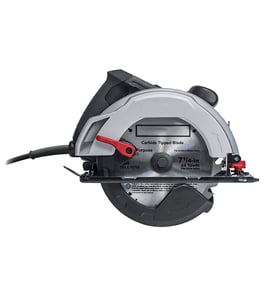

Are circular saw blade nuts reverse thread?
On many circular saws, the blade bolt or nut is reverse-threaded so it tightens itself during normal blade rotation. For the Craftsman 11210872 circular saw, use the blade-change directions in the 11210872 owner's manual to confirm the exact loosening direction for your saw.
How to tell which way to loosen (without guessing)
Before you apply force, we recommend these quick checks:
- Unplug the saw (or remove the battery on cordless models).
- Engage the spindle lock (if your saw has one) so the arbor cannot spin.
- Look for an arrow or “LOOSEN” marking near the arbor bolt, guard, or flange.
- Note the blade rotation arrow on the upper guard; many saws loosen the bolt in the same direction the blade rotates.
- Use the correct wrench size so you do not round the bolt head.
Typical thread direction by saw design
Most handheld circular saws are designed so the arbor fastener resists loosening while cutting.
| Saw setup (common) | Typical arbor fastener thread | Typical “loosen” direction |
|---|---|---|
| Blade on right side (common) | Left-hand (reverse) | Clockwise |
| Blade on left side (common) | Right-hand (standard) | Counterclockwise |
Why it matters
Turning the wrong direction can strip threads, damage the blade washers/bolt, or crack the flange. The Craftsman manual also stresses using the correct blade hardware and only blades designated for the saw for safe operation.
Blade-change safety reminders
These steps prevent injuries and reduce damage to the arbor parts:
- Wait for the blade to stop completely before servicing.
- Keep the lower guard working freely; do not tie it back.
- Support the saw securely on a bench, not on your lap.
- Never use damaged or incorrect blade washers or bolts.
- Tighten firmly, but do not overtighten.
Last updated: February 2026
What is a 140 tooth circular saw blade used for?
A 140-tooth circular saw blade is a fine-finish blade used to make very smooth cuts with minimal tear-out in thin materials (such as plywood, veneers, and laminates). For the Craftsman 11210872 circular saw, blade choice is limited by the saw’s 3-inch maximum blade capacity and the designated blades listed in the owner's manual.
Best uses for a 140-tooth blade
A very high tooth count is mainly for clean edges, not fast cutting.
- Finish cuts in thin plywood and veneered panels
- Laminates and other splinter-prone sheet goods
- Trim-style cuts where you want a near “ready-to-paint” edge
- Light-duty crosscuts where surface quality matters most
- Cuts where you are using a straightedge guide for accuracy
Important fit and safety limits for model 11210872
This Craftsman saw is a plunge-action 3-inch circular saw, and the manual calls out strict blade requirements.
| What to check | What it means for you |
|---|---|
| Blade diameter | 3-inch is the maximum; larger blades can contact the guard |
| Blade thickness | Too-thick blades can prevent the outer washer from seating correctly |
| Arbor hole and blade type | Use only blades designated for this saw to prevent erratic running |
| Guard design | The lower guard is part of the base; when plunged, the blade is exposed under the workpiece |
Why it matters
A 140-tooth blade can improve cut quality, but on the 11210872 the bigger issue is compatibility. Using a blade that is the wrong size, too thick, or not designated for the saw increases binding and kickback risk, and this model’s guard design means extra attention to hand placement and workpiece support.
Quick tips for cleaner cuts (without forcing the saw)
- Clamp the workpiece so it cannot shift during the cut
- Use steady, even feed pressure; do not force the tool
- Support the workpiece to reduce blade binding
- Keep the cord routed away from the cutting path
- Keep blades clean and sharp; pitch buildup slows cutting and increases load
Last updated: February 2026
Is a 6 1/2 or 7 1/4 circular saw better?
A 7-1/4 in. circular saw is the better all-around choice for versatility and cut capacity, especially for framing and angled cuts through 2x lumber. A 6-1/2 in. saw is better when you want lighter weight and easier handling for general cutting and sheet goods.
Quick comparison
| Feature | 6-1/2 in. saw | 7-1/4 in. saw |
|---|---|---|
| Best for | Portability, overhead work, quick cuts | Framing, remodel work, widest range of jobs |
| Typical max depth at 90° | About 2-1/8 in. | About 2-7/16 in. |
| Typical max depth at 45° | About 1-5/8 in. | About 1-13/16 in. |
| Blade availability | Good | Best (most common size) |
How to choose (what matters most)
- Cut depth needs: If you regularly cut 2x material at a bevel (like 45°), the 7-1/4 in. size gives you more margin.
- Weight and control: If you do a lot of one-handed positioning, ladder work, or long sessions, the 6-1/2 in. size is easier to manage.
- Blade selection: 7-1/4 in. blades typically offer the widest selection of tooth counts and specialty blades.
- Power expectations: Many 7-1/4 in. saws are built for heavier-duty work; many 6-1/2 in. saws prioritize compactness.
- Your actual saw model: Some saws are specialty designs and do not match standard blade-size expectations.
Important note for Craftsman model 11210872
Craftsman model 11210872 is a compact plunge-action circular saw design; the manual describes it as a 3-in. circular saw and notes it uses only blades designated for that saw (correct size, shape, and arbor hole). For safe operation and the correct blade type, follow the blade and accessory guidance in the owner's manual.
Why it matters
Choosing the right blade diameter affects maximum cut depth, bevel-cut capability, and how hard the motor has to work. Using the correct blade type and size also reduces binding and kickback risk.
Last updated: February 2026
What brand of circular saw is best?
There is no single “best” circular saw brand for everyone; the best choice depends on how you cut (framing vs. finish work), how often you use the saw, and whether you want corded or cordless. If you already own the Craftsman 11210872, the best “brand” for you is the one that keeps your saw safe, accurate, and properly maintained using the owner's manual.
How we recommend choosing the best brand
Use these factors to narrow it down quickly:
- Power source: corded for steady power; cordless for portability and jobsite convenience
- Cut capacity: blade size and max depth (common sizes are 7-1/4 in. for general carpentry and smaller blades for compact saws)
- Safety features: guard design, trigger control, and how the saw behaves during plunge cuts
- Accuracy features: bevel adjustment, base rigidity, and line-of-cut visibility (laser or LED worklight)
- Ecosystem: if cordless, pick the battery platform you already own
What matters specifically for Craftsman 11210872
This Craftsman 11210872 is a compact 3-in. plunge-action circular saw with Laser Trac and an LED worklight. Its guard system is different from a standard retractable lower blade guard: the blade can be exposed under the workpiece during a plunge cut until it cuts through, then the base and guard drop and enclose the blade above the base.
Practical implications
- Clamp and support the workpiece before cutting
- Keep hands away from the underside of the cut path
- Unplug the saw before adjustments (depth, angle, blade changes)
- Turn the laser on only when the saw is on the workpiece; shut it off when finished
Quick comparison: “best” by user type
| User type | Best fit | Why |
|---|---|---|
| Occasional DIY | Value-focused brand | Lower cost, plenty of capability for home projects |
| Frequent DIY | Midrange pro-style | Better ergonomics, smoother adjustments, longer service life |
| Professional | Pro-grade system | Highest durability, strongest performance, best accessory ecosystem |
Why it matters
The “best” brand is the one that matches your work and keeps cuts controlled. With compact plunge saws like the 11210872, safe technique and correct setup matter as much as brand reputation.
Last updated: February 2026
Can a 4.5 circular saw cut a 2x4?
Yes, a 4-1/2 inch circular saw can cut a 2x4; the deciding factor is maximum cutting depth at 90 degrees. For your Craftsman 11210872, set the blade depth correctly and follow the cutting and safety steps in the owner's manual.
What determines whether it cuts in one pass
A 2x4 is 1-1/2 in. thick (actual). Your saw cuts it in one pass only when the max depth at 90 degrees is greater than 1-1/2 in.
Check these items before you cut:
- Set depth so the blade tips extend about 1/8 to 1/4 in. below the board
- Use a blade designated for the saw (correct size, shape, and arbor hole)
- Clamp the 2x4 securely; do not hold the workpiece in your hand
- Keep your body to either side of the blade path to reduce kickback risk
- Use a straightedge guide or rip fence when ripping for a straighter cut
If it will not cut through in one pass
Do not force the saw. Use a method that keeps the blade from binding.
Safer options:
- Cut from both sides: cut one face, flip the 2x4, finish the cut on the line
- Make a shallow scoring pass first, then deepen the cut to full depth
- Use a larger saw with more depth capacity for frequent framing cuts
Quick depth guide
| Material | Actual thickness | One-pass requirement at 90 degrees |
|---|---|---|
| 2x4 | 1-1/2 in. | Max depth greater than 1-1/2 in. |
| 1x lumber | 3/4 in. | Max depth greater than 3/4 in. |
| 1/2 in. plywood | 1/2 in. | Max depth greater than 1/2 in. |
Why it matters
When the blade cannot clear the full thickness, the cut binds more easily and kickback becomes more likely. Correct depth setting, clamping, and using the specified blade improve cut quality and safety.
Last updated: February 2026
