
Why is my wall furnace not igniting?
If your Williams wall furnace model 450 is not igniting, the most common causes are a gas supply problem, a pilot/igniter issue, or a safety control (like a limit switch) preventing ignition. Start by confirming gas is available and the thermostat is calling for heat, then check ignition components.
Quick checks to do first (safe, no disassembly)
- Make sure the thermostat is set to HEAT and the setpoint is above room temperature.
- Confirm the manual gas shutoff valve is fully open (handle parallel to the gas pipe).
- If other gas appliances are also not working, the issue is upstream (gas supply to the home).
- Verify the furnace has power if it uses an electronic ignition or blower (check the breaker/fuse).
- If you smell gas, stop and have a qualified technician inspect the heater and gas line.
Common causes of no ignition on a wall furnace
| What you notice | Likely cause | What to do next |
|---|---|---|
| No click/spark, no attempt to light | No power, bad thermostat signal, failed control | Check breaker/fuse and thermostat wiring; test voltage if qualified |
| Spark/click happens but no flame | Gas shutoff closed, low gas pressure, clogged orifice | Confirm gas valve open; technician should check pressure and burner/orifice |
| Pilot won’t stay lit (standing pilot models) | Dirty pilot, weak thermocouple/thermopile | Clean pilot area; replace the sensing component if needed |
| Lights briefly then shuts off | Flame sensor dirty, overheating/limit trip, venting issue | Clean sensor (if equipped); check airflow and venting |
Why a “clogged gas line” can stop ignition
Wall furnaces need steady gas flow to the gas valve and burner. Debris, corrosion, or a partially closed valve can reduce flow enough that the burner never lights or the pilot will not stay stable. A technician can safely check gas pressure and inspect the burner orifice.
Helpful DIY guidance for electrical checks
If your model uses electrical ignition or a blower circuit, a quick continuity/voltage check often pinpoints the problem (switches, wiring, transformer, control). Our guide on how to use a multimeter to test electrical parts video shows the basic process and safety approach.
Getting the right replacement parts
Use the parts list for your Williams 450 to match the exact ignition and gas-control components used on your heater. If you need to search by model number or browse related parts, we also support model lookup on Sears PartsDirect.
Last updated: February 2026
How long do Williams wall heaters last?
Most Williams wall heaters, including the Williams model 450 wall furnace, typically last 15 to 20 years with normal use and basic maintenance. Units that are kept clean, properly vented, and correctly adjusted often run longer before major components wear out.
Typical lifespan and what affects it
A wall heater’s service life depends less on the cabinet and more on heat and safety components like the gas valve, thermocouple/thermopile, igniter, and limit switch.
- Run time and cycling: heavy winter use shortens life faster than occasional use
- Dust and lint buildup: restricts airflow and overheats the heat exchanger area
- Vent and combustion air: poor draft or blocked openings increases stress and shutdowns
- Gas quality and pressure: incorrect pressure can cause sooting and overheating
- Maintenance history: annual cleaning and inspection extends life
Signs your wall heater is nearing end of life
If you see these patterns, it usually means repair frequency and cost are rising.
- Burner flames are yellow or produce soot
- Pilot will not stay lit (repeatedly)
- Heater short-cycles (turns on and off rapidly)
- Frequent safety shutoffs or overheating symptoms
- Unusual odors that persist after initial seasonal startup
Repair vs. replace: a quick decision guide
| Situation | What we recommend |
|---|---|
| Minor ignition issue (pilot/igniter/thermocouple type parts) | Repair is usually worthwhile |
| Repeated shutdowns tied to airflow or dirty burner | Clean and tune first |
| Multiple failures in one season | Price out parts and labor before investing more |
| Visible corrosion, heavy sooting, or chronic performance problems | Plan for replacement evaluation |
Why it matters
A wall heater that’s past its prime can become less efficient and less reliable, which often shows up as uneven heat, nuisance shutdowns, and more frequent service calls. Staying ahead with cleaning and correct adjustments helps you get the full 15 to 20 years.
For model-specific replacement parts and diagrams, start with the parts list for Williams 450, or search by model on Sears PartsDirect.
Last updated: February 2026
Where is the reset button on a wall heater?
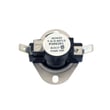
Most wall heaters (including many Williams wall furnaces like model 450) do not have a single, obvious “reset button” on the front. The reset is usually a high-limit safety switch located inside the cabinet near the burner/heat exchanger area; access typically requires removing the front panel. For parts and diagrams for your Williams 450 wall heater, start with the model parts list, or search by model at Sears PartsDirect.
Where the “reset” is usually located
On many wall furnaces, the resettable safety is positioned where it can sense overheating.
Common locations include:
- Behind the front grille/cover on the heater cabinet
- On or near the high-limit switch (overheat safety)
- Near the burner compartment or heat exchanger area
- Occasionally near the fan/airflow path (on fan-assisted models)
Before you press anything: quick safety checks
A tripped limit is usually a symptom (overheating), not the root problem.
- Turn the heater OFF and let it cool at least 20 to 30 minutes
- Confirm the front grille and louvers are not blocked by rugs, furniture, or dust
- Make sure the room air path is clear so the heater can pull in and push out air
- If the heater is hardwired, switch power OFF at the breaker before removing panels
What typically causes the limit to trip (and why it matters)
If the high-limit trips repeatedly, the heater is protecting you from unsafe temperatures.
Typical causes:
- Restricted airflow from dust buildup or blocked grille
- A failing fan motor (if equipped) or weak airflow
- A dirty burner/combustion area causing poor heat transfer
- Incorrect gas/air combustion conditions (needs professional service)
Troubleshooting guide (what to do next)
Use this as a simple decision path.
| What you see | What it usually means | What we recommend |
|---|---|---|
| Heater runs, then shuts off and later restarts | Limit is cycling from heat buildup | Clean airflow path; check for blockage |
| Heater won’t restart after cooling | Limit may be tripped or another safety is open | Power off; inspect internal safeties; service if needed |
| Limit trips repeatedly | Ongoing overheating condition | Stop using heater until corrected |
Helpful DIY skill for this type of repair
If you’re checking electrical safeties (like a limit switch), a meter test is the right approach: how to use a multimeter to test electrical parts video.
Last updated: February 2026
How to relight a Williams wall heater?
To relight your Williams wall furnace model 450, turn the gas control to PILOT, press and hold it while lighting the pilot, keep holding it to heat the safety sensor, then turn the control back to ON and set the thermostat.
Before you relight (safety)
- Turn the thermostat to the lowest setting (or OFF).
- If you smell gas: do not light it; wait for the odor to clear.
- Let the heater sit 5 minutes with the gas control set to OFF.
- Open the pilot access or observation door (if equipped).
- Use a long match or long-reach lighter.
Relighting steps (typical standing-pilot procedure)
- Turn the gas control knob to OFF.
- Wait 5 minutes.
- Turn the knob to PILOT.
- Press and hold the knob in.
- While holding it in, light the pilot at the pilot burner.
- Keep holding the knob 30 to 60 seconds, then release.
- If the pilot stays lit, turn the knob to ON.
- Set the thermostat to call for heat; confirm the main burner ignites.
If the pilot will not stay lit
- Hold the knob in longer (up to 60 seconds) to fully heat the sensor.
- Retry a few times if the heater has been off a long time (air in the gas line).
- Make sure the pilot flame is steady and contacting the sensor tip.
- Carefully remove dust and lint around the pilot area (heater off and cool).
Quick checks
| Check | Normal | If not normal |
|---|---|---|
| Pilot flame | Steady blue | Dirty pilot or restricted gas flow |
| After release | Pilot stays lit | Weak flame, dirty pilot, or failed safety sensor |
| Heat call | Main burner lights | Thermostat or gas valve issue |
Why it matters
The pilot flame must heat the safety sensor so the gas valve stays open; if it does not, the heater shuts gas off for safe operation.
For diagrams and replacement parts lookup by model number, use the model page first, or search on Sears PartsDirect.
Last updated: February 2026
What to do when a wall heater is not working?
If your Williams wall furnace model 450 is not working, start by confirming the thermostat is calling for heat, the gas shutoff valve is open, and any required electrical power (for controls/ignition) is on. Then check ignition/pilot operation and safety shutoffs.
Safety first
- Turn the thermostat to OFF before removing any cover.
- If you smell gas, stop and ventilate the area.
- Let the heater cool before touching internal parts.
- If you are not comfortable working around gas or live flame, use a qualified technician.
Quick checks that solve many “no heat” problems
- Thermostat: Set to HEAT; raise the setpoint 5 to 10 degrees.
- Power (if equipped): Check the breaker, wall switch, or service switch.
- Gas supply: Confirm the shutoff valve is fully open; verify other gas appliances work.
- Pilot/ignition: Standing pilot: verify the pilot is lit. Electronic ignition: listen for clicking/ignition attempts.
- Airflow: Make sure the front grille and surrounding area are not blocked by dust, lint, or furniture.
What to check next (common causes)
| Symptom | Most likely area to inspect | What it means |
|---|---|---|
| Pilot will not stay lit | Thermocouple/thermopile | Gas valve is not being held open |
| Ignition tries but no flame | Igniter, gas valve, gas supply | Fuel or ignition failure |
| Runs briefly then shuts off | High-limit switch, airflow | Overheating or flame-proving issue |
| Completely dead | Power to controls, wiring | No control power or open circuit |
Tool-based troubleshooting
- Check for a tripped breaker or blown fuse; use how to tell if a fuse is blown.
- Test voltage and continuity safely with how to use a multimeter to test electrical parts video.
- Inspect and repair damaged wiring using how to repair broken or damaged wires video.
Why it matters
Wall heaters often stop heating because a safety device senses overheating or the burner is not proving flame. A step-by-step check prevents repeat shutdowns and helps you target the failed component.
For diagrams and replacement parts lookup by model number, search 450 on Sears PartsDirect.
Last updated: February 2026