 Owner’s manual
 Error Codes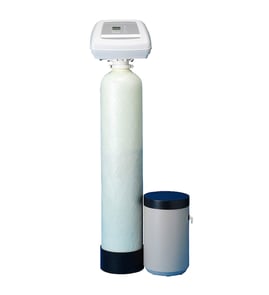



Do iron filters really work?
Yes. A properly sized and maintained Kenmore iron filter like model 625349225 works by oxidizing dissolved (clear-water) iron into a solid form and then trapping it in the mineral bed; during recharge, the unit flushes the captured iron to the drain and restores the media using potassium permanganate (as described in the 625349225 owner's manual).
What an iron filter removes (and what it does not)
Kenmore explains that iron in water is commonly either ferrous (clear at the faucet, then turns yellow/brown after standing) or ferric (rusty coming out of the faucet). This filter is designed to handle both types.
- Removes ferrous (clear-water) iron by oxidizing it first, then filtering it
- Removes ferric (red-water) iron by filtering it in the mineral bed
- Rated to remove up to 20 ppm of ferrous and/or ferric iron (when set up and maintained correctly)
- Requires recharge/regeneration to keep working effectively
- Does not remove bacterial iron (stringy, mud-like clumps); water testing is the right next step
How the Kenmore 625349225 iron filter works (simple overview)
The manual describes a manganese-coated mineral media that both oxidizes and filters iron.
| Stage | What happens | What you may notice |
|---|---|---|
| Service (normal use) | Water flows down through the mineral bed; iron is oxidized and trapped | Clearer water, fewer rust stains |
| Recharge (regeneration) | Potassium permanganate solution is drawn through the media, then backwashed and rinsed | Water goes to drain; avoid using water |
Maintenance that makes the biggest difference
Iron filters “work” best when the media can recharge fully and the valve can cycle correctly.
- Avoid using household water during regeneration; bypassed iron water can enter plumbing during parts of the cycle
- Keep the potassium permanganate supply maintained so the unit can restore the media’s oxidizing ability
- If iron staining returns quickly, check for a restricted nozzle/venturi or screen
- If you see leaks at the valve area, worn seals are a common cause
Helpful parts for common performance issues on this model include the iron filter nozzle and venturi assembly 7085247 and the water softener filter screen 7146043.
Why it matters
Iron can stain fixtures and laundry, discolor water, and create taste/odor complaints. When the filter is matched to your water chemistry and kept in good working order, it reduces those problems and helps protect downstream equipment.
Last updated: January 2026
What are common problems with iron filters?
Common problems with the Kenmore 625349225 iron filter include the unit not recharging, iron still showing up in “filtered” water, and low water pressure at faucets. Most issues trace back to bypass settings, power/timer programming, restricted backwash or drain flow, or a dirty nozzle and venturi (see the 625349225 owner's manual).
Common symptoms and what they usually mean
- Filter will not recharge: Bypass valve left in bypass, no power to the transformer/control, timer set to VAC, timer not programmed, or a flow restriction (backwash flow washer or drain hose).
- Filter recharges but water still has iron: Potassium permanganate is empty or set too low, nozzle and venturi are dirty/plugged, recharge frequency is too low, or iron level increased.
- Low water pressure at faucets: The system needs a recharge/backwash, or there is a restriction in the filter’s flow path.
- Rust staining or bad taste returns: Often points to incomplete regeneration, insufficient oxidizer feed, or higher iron than before.
- Stringy “mud” clumps (bacterial iron): This filter is not designed to remove bacterial iron; water testing is the right next step.
Quick checks we recommend before replacing parts
- Confirm the manual bypass valve(s) are in the service (not bypass) position.
- Verify power to the control (outlet, breaker, transformer connection).
- Review timer programming and ensure it is not in VAC mode.
- Inspect the drain hose for kinks, clogs, or restrictions.
- If iron is getting through, clean/inspect the nozzle and venturi; if worn, consider replacing the iron filter nozzle and venturi assembly 7085247.
Parts that commonly solve performance issues
| Symptom | Common cause | Part that often helps |
|---|---|---|
| Iron in filtered water | Dirty/plugged nozzle and venturi | Iron filter nozzle and venturi assembly 7085247 |
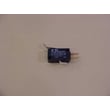
| Won’t complete cycles or position errors | Switch not sensing rotor position | Water softener rotor position switch 7030713 |
| Internal leakage, poor sealing | Worn seals | Water softener seal kit 7129716 |
Why it matters
An iron filter works by oxidizing dissolved (ferrous) iron into a filterable form and then trapping it in the media bed. If recharge/backwash flow is restricted or the nozzle and venturi cannot draw properly, iron removal drops quickly and staining and pressure problems return.
Last updated: January 2026
How long should an iron filter last?
A Kenmore iron filter like model 625349225 typically lasts 15 to 20 years as a complete system when it’s installed correctly and maintained. The filtration media inside the tank usually needs attention sooner; higher iron (ppm), sediment, and infrequent regeneration shorten media life.
Typical lifespan (what to expect)
- Complete iron filter system: 15 to 20 years
- Filtration media (mineral bed): commonly 4 to 6 years before performance drops enough to justify replacement
- Valve seals and moving parts: often need service sooner than the tank, especially with heavy iron or grit
Quick guide: what wears out first
| What’s wearing | Common symptom | What you do next |
|---|---|---|
| Filtration media (mineral bed) | Iron “bleed”, staining returns, taste/odor issues | Confirm settings, then plan media service/replacement |
| Nozzle/venturi and screens | Slow or failed draw, poor regeneration | Clean or replace the affected parts |
| Seals/rotor components | Leaks, weak performance, erratic cycling | Rebuild the valve with a seal kit or rotor parts |
What most affects lifespan on 625349225
Your manual ties regeneration frequency to household size and iron level (ppm), and it notes that high turbidity (sand, silt, sediment) or iron bleed means you should regenerate more often. Use the 625349225 owner’s manual to set the correct recharge schedule.
- Iron level (ppm): higher ppm means more frequent recharges and faster media wear
- Sediment/turbidity: can foul the bed and restrict flow
- Water pressure and flow rate: incorrect conditions can reduce treatment effectiveness
- Maintenance habits: sanitizing and correct programming help prevent performance loss
Signs it’s time to service the filter (not just reprogram it)
- Rust staining returns on fixtures or laundry
- Water turns yellow/brown after sitting (ferrous iron) or is rusty at the tap (ferric iron)
- Regeneration seems weak (poor draw or slow drain flow)
- Flow rate drops through the system
Parts that commonly restore performance
If the valve is leaking or not cycling correctly, these model-compatible parts are common fixes:
- Kenmore water softener seal kit 7129716 (valve seal rebuild)
- Kenmore elite water softener rotor and disc 7199232 (rotary valve wear)
- Iron filter nozzle and venturi assembly 7085247 (draw and regeneration performance)
Why it matters
An iron filter can still “run” while removing less iron. Keeping recharge settings matched to your iron ppm and household demand helps protect plumbing, reduce staining, and extend the life of the mineral bed and valve components.
Last updated: January 2026
What size iron filter do I need?
For Kenmore model 625349225, the right iron filter size is based on your water test results and your home’s peak gallons-per-minute demand. This system is rated to remove up to 20 ppm of ferrous and/or ferric iron; confirm operating limits and setup details in the 625349225 owner’s manual.
What to measure to size an iron filter correctly
Use real numbers from your home and water supply.
- Iron level (ppm or mg/L) and whether it is ferrous (clear-water) or ferric (red-water)
- Peak flow rate (GPM) when multiple fixtures run at once
- Household water use (typical planning: 80 to 100 gallons per person per day)
- Other water conditions (hardness, manganese, sediment, sulfur odor)
- Bacterial iron: this model is not designed to remove bacterial iron
Quick sizing targets (typical whole-home flow)
Match your peak GPM to the equipment’s service flow capability.
| Home size (typical) | Peak flow target | What to do |
|---|---|---|
| 1 to 2 baths | 8 to 10 GPM | Size for moderate peak use |
| 2 to 3 baths | 10 to 15 GPM | Common target range for many homes |
| 3+ baths | 15+ GPM | Consider higher-capacity equipment or staged treatment |
How this model’s design affects “size”
The 625349225 uses a manganese-coated mineral bed to oxidize dissolved iron and filter it; the bed is cleaned during recharge using potassium permanganate and backwashing. Higher iron levels and higher peak GPM require more treatment capacity and consistent recharge performance.
When performance issues look like a sizing problem
If iron removal drops, check for restrictions or recharge issues before upsizing.
- Clogged screen or reduced flow
- Weak suction during recharge
- Internal leaking or bypassing
A common part involved in recharge suction is the iron filter nozzle and venturi assembly 7085247.
Why it matters
Sizing to both ppm and peak GPM prevents iron from slipping through during heavy use and helps reduce staining, taste issues, and plumbing buildup.
Last updated: January 2026