Error Codes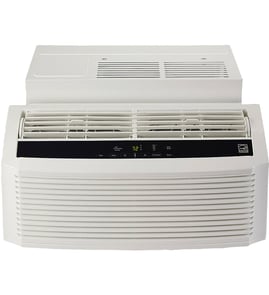



What is the 20 rule for air conditioning?
The “20-degree rule” is a comfort and efficiency guideline: we typically recommend setting your GE AWFS12WWL1 room air conditioner so the indoor temperature is no more than about 20°F cooler than the outdoor temperature. It helps reduce nonstop run time, high energy use, and icing risk during extreme heat.
What the “20-degree rule” means in real life
This rule is about reasonable expectations and load on the system, not a hard limit.
- If it’s 95°F outside, a common target is 75°F indoors.
- If it’s 90°F outside, a common target is 72°F to 75°F indoors.
- If it’s 85°F outside, many homes can hold 68°F to 72°F indoors if insulation and airflow are good.
Why your room AC may not hold a bigger temperature drop
Several factors can make a window or room air conditioner struggle even when it is running normally:
- Dirty or restricted air filter (reduced airflow)
- Heat gain from sun-facing windows or poor insulation
- Undersized BTU capacity for the room
- Blocked front grille or discharge vents
- Iced evaporator coil from low airflow or very low setpoint
- High humidity load (the unit spends more time dehumidifying)
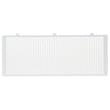
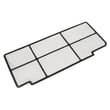
If your unit is not cooling well, start with the air filter; for this model, check and clean or replace the filter WJ85X27953.
Quick settings guide (practical targets)
| Outdoor temp | Typical indoor setpoint range | What to expect |
|---|---|---|
| 80°F to 85°F | 68°F to 74°F | Usually achievable with good airflow |
| 86°F to 95°F | 72°F to 78°F | Longer run times are normal |
| 96°F to 105°F | 75°F to 80°F | May run nearly continuously |
Why it matters
Pushing for an extreme setpoint during very hot weather can increase run time and reduce airflow if the coil starts to ice. Staying near the 20°F guideline helps your GE room air conditioner cool more steadily and can prevent “running but not cooling” symptoms.
Helpful troubleshooting info: GE error codes.
Last updated: February 2026
What size room will a 12000 BTU air conditioner cool?
A 12,000 BTU room air conditioner like the GE AWFS12WWL1 typically cools about 450 to 550 sq. ft. in average conditions. If the space is very sunny, poorly insulated, or has high ceilings, plan closer to 300 to 400 sq. ft. for comfortable cooling.
Quick sizing guide (12,000 BTU)
- Best fit: large bedroom, studio apartment, large living room
- Typical coverage: 450 to 550 sq. ft.
- Hot sun or weak insulation: 300 to 400 sq. ft.
- High ceilings (over ~8 ft): reduce coverage estimate
- Many occupants or heat sources: reduce coverage estimate
What changes the real-world coverage?
Cooling capacity is only part of the story. These factors often decide whether 12,000 BTU feels “just right” or “not enough”:
- Sun exposure: south or west facing windows add heat load
- Insulation and air leaks: older windows and doors reduce performance
- Ceiling height: more air volume needs more cooling
- Room layout: open floor plans need more BTUs than closed rooms
- Heat sources: kitchens, gaming PCs, and appliances add load
Rule-of-thumb table
| Room conditions | Expected coverage for 12,000 BTU |
|---|---|
| Shaded, well-insulated, standard ceilings | 500 to 550 sq. ft. |
| Average insulation and mixed sun | 450 to 500 sq. ft. |
| Sunny, poorly insulated, or high ceilings | 300 to 400 sq. ft. |
Why it matters
Oversizing can cause short cycling (less humidity removal and more temperature swings), while undersizing can run constantly and still feel warm. If your AWFS12WWL1 is running but not cooling well, start with airflow basics like cleaning the filter and confirming the front intake is not blocked; the correct replacement is the filter WJ85X27953.
Last updated: February 2026
Which AC is best for a 12 * 12 room?
For a 12 ft x 12 ft room (about 144 sq ft), we recommend a room air conditioner in the 5,000 to 6,000 BTU range for efficient, steady cooling. If the room gets strong afternoon sun, has high ceilings, or poor insulation, stepping up to 6,000 to 8,000 BTU usually performs better.
Quick sizing guide (what to buy)
Use this as a practical target when choosing a window or room air conditioner.
- 144 sq ft (12x12): 5,000 to 6,000 BTU (typical)
- Hot/sunny room or top floor: 6,000 to 8,000 BTU
- Two people often in the room: add about 600 BTU
- Kitchen or heat-producing equipment nearby: consider the next BTU size up
- Undersizing: runs constantly and struggles with humidity
- Oversizing: short-cycles, feels clammy, and can leave humidity behind
Why installation and airflow matter as much as BTUs
Even the right BTU unit will cool poorly if warm air leaks in or airflow is blocked.
- Seal side panels and gaps so outdoor air cannot leak in
- Keep the front grille and return air path clear (no curtains or furniture blocking it)
- Clean the air filter regularly to maintain airflow and prevent icing
- Make sure the unit tilts slightly outward so condensate drains correctly
Common “wrong size” symptoms
| What you notice | Most likely cause | What to do |
|---|---|---|
| Runs nonstop, still warm | Too few BTUs, dirty filter, blocked airflow | Clean filter, improve sealing, consider higher BTU |
| Cools fast but feels damp | Too many BTUs (short cycling) | Choose a smaller BTU size or use a dehumidify mode |
| Ice on indoor coil | Low airflow or very low set temp | Clean filter, raise set temp, check for airflow restrictions |
Helpful troubleshooting resource
If your GE unit shows a code or is acting up after installation, use our GE error codes guide to match the display to the most likely cause and fix.
Why it matters
Correct BTU sizing helps your air conditioner remove heat and humidity efficiently, which improves comfort and reduces energy waste.
Last updated: February 2026