Owner’s manual
 Error Codes



What is the average lifespan of a gas water heater?
A tank-style gas water heater typically lasts 8 to 12 years. With consistent maintenance, many units reach 12 to 15 years. For your American FG1H4040T3NV, regular tank flushing and scheduled anode-rod inspections in the FG1H4040T3NV owner's manual are the biggest factors that extend tank life.
Typical lifespan and what changes it
Most failures come from tank corrosion, sediment buildup, or combustion and venting issues.
- Water quality: hard water and corrosive water shorten tank life
- Maintenance: flushing sediment and inspecting the anode rod extends life
- Water softeners: softened water can be more corrosive to the tank
- Temperature setting: higher temps increase stress and scale formation
- Usage: heavy daily demand wears components faster
Replacement timing: a practical guide
Use age plus symptoms to decide whether to repair or replace.
| If your heater is... | And you notice... | Plan to... |
|---|---|---|
| Under 8 years | minor issues (pilot problems, small leaks at fittings) | repair and maintain |
| 8 to 12 years | rumbling, inconsistent hot water, frequent relighting | evaluate repair vs. replacement |
| Over 12 years | rusty water, tank seepage, recurring shutdowns | replace soon |
Signs the tank is near end of life
These symptoms usually point to internal corrosion or heavy sediment.
- Rusty or discolored hot water
- Banging or rumbling during burner operation
- Moisture or pooling at the base of the tank
- Hot water runs out faster than it used to
- Frequent pilot outages or burner ignition trouble
Maintenance that most improves lifespan
Your manual calls out anode-rod inspection as a key corrosion-control step; inspecting about every 3 years and replacing when heavily depleted helps protect the tank.
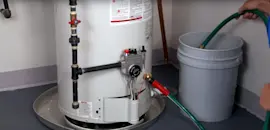
- Flush a few gallons periodically to reduce sediment
- Inspect and replace the anode rod on schedule (a common life-extender)
- Keep the burner area clean and ensure proper combustion air
- Verify venting is intact and drafting correctly
Helpful parts and resources
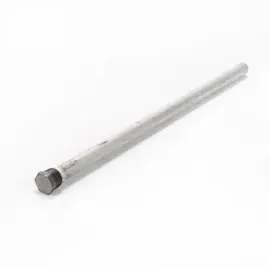
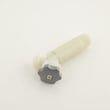
- If you are addressing corrosion protection, see water heater anode rod 100109594.
- For broader DIY maintenance and repair planning, see water heater common questions.
- To shop all replacement parts by model number, use the parts list for FG1H4040T3NV or search on Sears PartsDirect.
Why it matters
Aging tanks can fail without much warning; planning around the 8 to 12 year window helps you avoid water damage and unexpected loss of hot water, while maintenance (especially anode-rod care) can push service life closer to 15 years.
Last updated: February 2026
What is the average cost to install a 40 gallon gas water heater?
Installing a 40-gallon gas water heater like the American FG1H4040T3NV typically runs about $900 to $3,000+ total (heater plus labor). Costs rise when the job needs venting changes, gas piping work, a drain pan, or other code-required updates; we follow the requirements in the FG1H4040T3NV owner's manual.
Typical installed cost breakdown
Here is a realistic range we see for a standard tank replacement.
| Cost item | Typical range | What changes the price most |
|---|---|---|
| 40-gallon gas tank (unit only) | $400 to $1,000 | Brand, efficiency, warranty tier |
| Labor (remove and replace) | $500 to $1,800 | Access, location, time on site |
| Permits and inspection | $50 to $500 | Local requirements |
| Materials and upgrades | $0 to $1,500+ | Venting, gas line sizing, shutoff valves, drain pan |
What makes gas installs cost more
Gas water heater replacements often cost more than electric because the installer must address combustion air, venting, and gas supply details.
Common add-ons that increase the total:
- Venting changes (draft hood, vent connector, chimney/vent condition)
- Gas piping work (line sizing, sediment trap, shutoff valve placement)
- Drain pan and drain line to protect the structure from leaks
- Relief valve discharge piping routing and termination
- Haul-away of the old tank and any disposal fees
Why it matters
A correct installation protects your home and helps the heater run efficiently. The FG1H4040T3NV is a Category I, non-direct vented gas water heater; placement, combustion air, and vent routing all affect safety and performance. We also recommend planning for leak protection (a drain pan is commonly used) as part of a full replacement.
Parts that are commonly replaced during installation
If your installer recommends replacing worn or corroded safety and service parts, these are common on many tank installs:
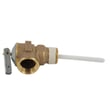
- T&p valve 100108279 (temperature and pressure relief valve)
- Drain valve 100109106 (used for draining and flushing the tank)
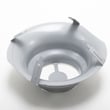
- Draft hood 100111362 (supports proper venting on many setups)
For broader part shopping by model number, we also support searching on Sears PartsDirect.
Last updated: February 2026
What is the most common problem with gas water heaters?
The most common gas water heater problem is ignition failure, meaning the pilot will not light or will not stay lit. On American FG1H4040T3NV units, this is often tied to the pilot/ignition components, gas supply conditions (especially LP gas), or safety shutoffs that stop gas flow.
What to check first (safe, high-impact checks)
- Confirm the gas type and supply are correct; LP gas is heavier than air and can collect near the floor, so always check at floor level before lighting.
- Follow the exact lighting steps and viewing instructions in the FG1H4040T3NV owner's manual.
- If the unit has been under water or the gas controls or burner area were submerged, the manual calls for replacement of the water heater.
- If the pilot lights but will not stay lit, inspect and service the pilot/ignition assembly.
- If hot water temperature seems erratic after short, repeated draws, “stacking” can raise outlet temperature; consider an anti-scald device.
Parts that commonly relate to “pilot will not stay lit”
If your symptoms match ignition trouble, these model-listed parts are the right place to start:
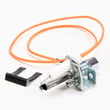
- Water heater pilot igniter 100110927
- Water heater pilot igniter 100110936
- Water heater piezo igniter bracket 100093718
| Symptom | Most likely area | What we recommend |
|---|---|---|
| Pilot will not light | Ignition procedure, igniter, gas supply | Use the manual lighting steps; then check igniter parts |
| Pilot lights then goes out | Pilot/ignition assembly, safety shutoff | Inspect/replace pilot igniter components |
| Water too hot after short draws | Stacking | Reduce short draws; add anti-scald protection |
| Drips or discharge at relief line | Temperature/pressure relief | Test/replace the T&P valve |
Why it matters
Ignition and safety systems on a gas water heater are designed to shut off gas when conditions are unsafe. Getting the pilot system and lighting procedure right prevents nuisance shutdowns and helps avoid overheating and scald risk.
When a leak or pressure issue is the “common problem”
If the complaint is leaking or water at the discharge pipe, the temperature and pressure relief valve is a frequent culprit. For this model, use the correct replacement: t&p valve 100108279.
You can order replacement parts for American FG1H4040T3NV from the parts list for this model, or search by model number on Sears PartsDirect.
Last updated: February 2026
Can you replace parts on a hot water heater?
Yes. On the American FG1H4040T3NV gas water heater, we can replace many service parts (such as the T&P relief valve, drain valve, anode rod, and ignition components) to restore safe operation and extend service life; a leaking tank or flood-damaged gas controls means replacement, not repair.
Parts you can commonly replace on FG1H4040T3NV
These are typical, field-serviceable items that wear out or get damaged:
- Temperature and pressure relief valve (T&P valve)
- Drain valve (for draining and flushing)
- Anode rod (corrosion protection)
- Pilot/ignition components (when the pilot will not stay lit)
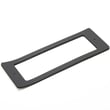
- Manifold door gasket (to help seal the burner access area)
Model-specific examples from our parts list include the t&p valve 100108279, drain valve 100109106, and water heater anode rod 100109594.
When you should not “just replace a part”
Some conditions require a different plan because they affect safety or the tank itself:
- Any part has been under water: the manual directs replacement of the entire water heater when gas controls, main burner, or pilot have been submerged.
- Tank is leaking (not a fitting or valve): replacing parts will not stop a tank leak.
- Relief valve is incorrect or reused: the manual specifies using only a new T&P relief valve and not installing any valve between the relief valve and the tank.
Quick maintenance schedule (what we recommend)
Following a simple schedule prevents many “no hot water” and leaking complaints.
| Task | Typical interval | Why it matters |
|---|---|---|
| Drain and flush tank | Every 6 months | Reduces sediment buildup and noise; helps efficiency |
| Inspect anode rod | Every 3 years | Protects the tank from corrosion |
| Replace anode rod | When more than 50% depleted | Extends tank life |
| Check T&P discharge line | During routine checks | Helps prevent scalding and pressure hazards |
For model-specific procedures and safety steps, use the owner's manual.
Why it matters
A gas water heater combines fuel, flame, hot water, and pressure. Replacing the right part (for example, a worn drain valve or depleted anode rod) can prevent bigger failures; replacing the wrong part or skipping safety steps can create a serious hazard.
Ordering the right part
We match parts to FG1H4040T3NV so you get the correct fit and function. Order from the parts list for this model, or search by model number on Sears PartsDirect.
Last updated: February 2026
Is it cheaper to repair or replace a water heater?
For an American FG1H4040T3NV gas water heater, it’s cheaper to repair when the problem is limited to serviceable components (pilot/ignition parts, a leaking drain valve, or a relief valve). It’s time to replace when the tank is leaking, the unit has flood damage, or multiple major safety controls have failed; those conditions drive higher cost and risk. See the owner's manual for model-specific safety guidance, and shop parts on this model’s parts list or through Sears PartsDirect.
Quick decision checklist (repair vs replace)
- Repair when the tank is sound and the issue is isolated (no tank leak).
- Replace when you see water leaking from the tank body or seams.
- Replace if the heater has been under water; the manual states flood-submerged gas controls/burner/pilot require replacing the entire water heater.
- Repair for common external leaks at fittings or valves (after confirming the source).
- Repair when routine maintenance is overdue (anode inspection, flushing) and the tank is still intact.
- Replace when repeated shutdowns point to multiple safety-control failures and repairs are stacking up.
Typical cost logic (simple rule)
If the repair is a single, accessible part and the tank is healthy, repairing is usually the lower-cost path. If the repair involves major gas controls plus additional parts, replacement usually wins.
| Situation | Usually cheaper | Why |
|---|---|---|
| Leaking drain valve | Repair | External valve replacement is straightforward and contained. |
| T&P valve weeping or dripping | Repair | Often a single-part fix if pressure/temperature causes are addressed. |
| Pilot won’t stay lit (pilot/ignition issue) | Repair | Common service item; parts-based repair is typical. |
| Tank leak or flood-submerged components | Replace | Tank replacement is the durable fix; flood guidance requires full replacement. |
Parts that commonly make a repair worthwhile
If your FG1H4040T3NV is otherwise in good shape, these model-matched parts are often involved in cost-effective repairs:
- Drain valve 100109106 (leaks at the drain outlet)
- T&p valve 100108279 (relief valve dripping or not reseating)
- Water heater pilot igniter 100110936 (ignition/pilot problems)
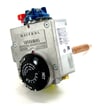
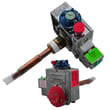
- Water heater propane gas control valve 100093749 (gas control issues on propane setups)
Why it matters
A gas water heater has built-in safety shutoffs (for example, high temperature limit/ECO and flame-safety components). When the tank is compromised or the unit has been submerged, replacement protects your home and avoids repeated breakdowns.
Last updated: February 2026