
Can I cut a 2x4 with a circular saw?
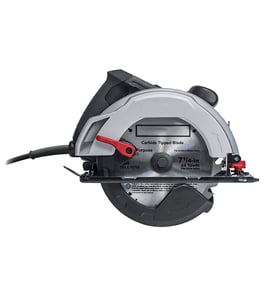
Yes. A Craftsman circular saw like model 31510960 is a standard tool for cutting 2x4 lumber; you can make accurate crosscuts and rip cuts by using the right blade, setting proper blade depth, and supporting the board so it cannot pinch the blade.
Best setup for clean, straight cuts
- Use a sharp wood-cutting blade (more teeth for smoother crosscuts; fewer teeth for faster ripping).
- Set blade depth so the teeth extend about 1/4 inch below the 2x4.
- Mark your cut line clearly; darken it with a pencil for visibility.
- Clamp the 2x4 and use a straightedge or speed square as a guide.
- Support both sides of the cut so the offcut cannot drop and bind the blade.
Crosscut vs. rip cut: what changes
| Cut type | Direction | What helps most | Common mistake |
|---|---|---|---|
| Crosscut | Across the 2x4 | Speed square or miter guide | Letting the saw wander off the line |
| Rip cut | Along the 2x4 | Straightedge guide, steady feed | Forcing the saw and burning the wood |
Quick safety checklist (worth doing every time)
- Unplug the saw before changing blades or adjusting the base.
- Keep the cord clear of the cut path.
- Start the saw before the blade touches the wood.
- Let the blade stop completely before setting the saw down.
- Stand slightly to the side of the blade line to reduce kickback risk.
Why it matters
Most rough cuts on 2x4s go wrong because of blade depth, poor support, or a dull blade. When the wood pinches the blade, the saw can bind and the cut will drift. A simple guide and solid support usually fixes the problem.
If you need replacement parts for your Craftsman 31510960 circular saw, start with the parts list for this model, or search by model number on Sears PartsDirect.
Last updated: February 2026
What are the parts of a circular saw machine?
A Craftsman circular saw such as model 31510960 is built around a motor that spins a circular blade, plus controls and guards that help you cut accurately and safely. Most saws share the same core components, even when the exact layout varies by model.
Main parts you will see on most circular saws
- Blade: The cutting disc (size and arbor hole vary by saw).
- Blade guard (upper and lower): Covers the blade; the lower guard retracts during a cut.
- Shoe (base plate): The flat plate that rides on the workpiece.
- Depth-of-cut adjustment: Sets how far the blade extends below the shoe.
- Bevel adjustment: Tilts the shoe for angled cuts (commonly up to 45 degrees).
- Motor and housing: Provides power and supports internal components.
- Handle and trigger: Main grip and on/off control.
- Trigger lock (safety): Helps prevent accidental starts.
- Front grip (auxiliary handle/knob): Second hand position for control.
Quick “what it does” guide
| Part | What it controls | Why you use it |
|---|---|---|
| Shoe (base plate) | Saw stability | Straighter cuts, less kickback risk |
| Depth adjustment | Blade exposure | Cleaner cuts, less binding |
| Bevel adjustment | Cut angle | Bevels, miters, trim work |
| Lower blade guard | Blade coverage | Reduces accidental contact |
Why it matters
Knowing the names of the blade guard, shoe, bevel, and depth controls helps you troubleshoot common issues (blade won’t retract smoothly, cuts are not square, saw binds) and identify the right replacement parts for your Craftsman 31510960.
Finding the right replacement parts
- Match parts to the exact model number: 31510960.
- Use the parts diagrams to identify assemblies like the guard, shoe, switch, or motor housing.
- Replace damaged guards, cracked shoes, and sticky switches promptly.
- For electrical issues, test safely with proper tools and techniques.
For ordering, start with the parts list for your model and search by model number on Sears PartsDirect.
Last updated: February 2026
Why is my Craftsman circular saw not spinning?
If your Craftsman circular saw model 31510960 won’t spin, the most common causes are worn motor brushes, a power-supply problem (cord or switch), or a mechanical bind at the blade or guard. Start with quick safety checks, then test the brush and switch circuit.
Quick safety checks first
- Unplug the saw before inspecting anything.
- Remove the blade and check that the blade guard moves freely.
- Verify the arbor nut is not overtightened and the blade isn’t pinched.
- If the saw has a lock-off button, confirm it’s being fully depressed while pulling the trigger.
Most likely causes (and what to look for)
- Worn motor brushes: Brushes can wear down, chip, or burn; when they lose contact with the armature, the motor won’t run.
- Bad trigger switch: A failed switch can prevent power from reaching the motor even if the cord is good.
- Damaged power cord: Cuts, kinks near the handle, or intermittent power when you wiggle the cord point to a cord issue.
- Overload/thermal protection tripped: Some saws stop until the motor cools after heavy cutting.
- Seized bearings or jammed guard: A bind can keep the motor from starting or cause it to hum without turning.
Simple troubleshooting flow
- Confirm power: Try a known-good outlet; avoid long, undersized extension cords.
- Check for binding: With the blade removed, spin the arbor by hand; it should turn smoothly.
- Inspect brushes: Look for very short brushes, cracking, heavy burning, or a stuck brush spring.
- Electrical test (if you have a meter): Check cord continuity and switch continuity.
What the symptoms usually mean
| Symptom | Most common cause | What to do next |
|---|---|---|
| Nothing happens (no sound) | Cord or switch open | Test cord and trigger switch continuity |
| Hums but won’t spin | Binding or weak brushes | Check arbor/bearings; inspect brushes |
| Runs only when cord is moved | Broken cord conductor | Replace cord/strain relief |
| Stops after heavy cut | Overload/heat | Let cool; reduce feed rate; check blade sharpness |
Why it matters
A saw that won’t spin is often an electrical contact issue (brushes or switch) or a mechanical bind. Fixing the root cause prevents repeated overheating, arcing at the commutator, and premature motor failure.
For replacement parts for model 31510960, use the parts list for this model first, or search by model number on Sears PartsDirect.
Last updated: February 2026
Are circular saw blade nuts reverse thread?
Yes, many circular saw blade nuts are reverse-thread (left-hand), but it depends on the saw’s blade rotation and arbor design. On a Craftsman circular saw like model 31510960, the safest rule is to loosen the blade nut in the same direction the blade rotates so normal cutting forces do not keep tightening it.
How to tell which way to loosen the blade nut
Use these quick checks before you force anything:
- Look for an arrow on the upper blade guard or housing showing blade rotation.
- Check the nut or flange for an “L” or arrow marking (some are stamped).
- Match the loosening direction to rotation: loosen in the same direction the blade turns.
- Use the spindle lock (if equipped) before applying torque.
- Use the correct wrench so you do not round the nut.
Common thread direction patterns (what you will usually see)
This is a practical guide that fits many circular saws; use it with the rotation arrow on your saw.
| Saw setup (typical) | Blade rotation (viewed from blade side) | Nut thread (often) | Loosen direction (often) |
|---|---|---|---|
| Blade on right side (many corded saws) | Clockwise | Left-hand (reverse) | Clockwise |
| Blade on left side (many cordless saws) | Counterclockwise | Right-hand (standard) | Counterclockwise |
Safe removal steps we recommend
- Unplug the saw or remove the battery.
- Set the saw on a stable surface and retract the lower guard.
- Engage the spindle lock (or brace the blade with a scrap wood block against the teeth).
- Turn the wrench in the blade’s rotation direction to loosen.
- Remove the outer flange, swap the blade, then tighten firmly (do not overtighten).
Why it matters
Turning the wrong direction can strip threads, crack the flange, or damage the arbor. Following the rotation rule protects the spindle, blade flanges, and guard hardware.
For parts diagrams and replacement hardware for your Craftsman 31510960, start with the parts list for this model; for broader model searches and ordering, use Sears PartsDirect.
Last updated: February 2026
