
When did Craftsman stop making radial arm saws?
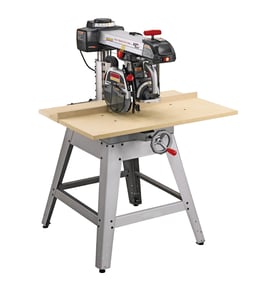
Craftsman radial arm saws were primarily produced and sold through Sears from the late 1950s through 1992; after that, new Craftsman-branded radial arm saw offerings largely ended, with only limited carryover of certain smaller models into the mid-1990s. For parts and model identification help, start with the model listing for Craftsman 9-29013 and search by model on Sears PartsDirect.
What “stopped making” usually means for Craftsman radial arm saws
In most cases, customers mean one of these milestones:
- Stopped selling new units through Sears (most models): around 1992
- Some smaller versions lingered: into the mid-1990s
- Support shifted to parts and guard updates: continued after new saw sales slowed
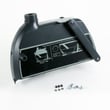
Because your page is for Craftsman 9-29013 (guard kit), it is common to see this model referenced in the context of blade guard updates and safety improvements rather than as a complete saw model.
Why the early 1990s is the key cutoff
Several market forces converged around that time:
- Increased focus on blade guarding and kickback prevention
- More consumer demand for miter saws and other alternatives
- Reduced retail emphasis on radial arm saws as a mainstream DIY tool
Quick timeline (practical reference)
| Time period | What you typically see | What it means for parts |
|---|---|---|
| 1958 to 1992 | Most Craftsman radial arm saw production and sales | Many legacy parts and accessories remain in circulation |
| 1993 to 1995 | Limited continuation of some smaller models | Parts availability becomes more model-specific |
| After mid-1990s | Radial arm saws become less common in big-box retail | Guard kits and maintenance parts become the main need |
Why it matters when you are buying a guard kit
Knowing the approximate era helps you match the right guard components and mounting hardware:
- Older saws often have different yokes, arbors, and guard mounting points
- The correct guard kit depends on exact model identification, not just “Craftsman radial arm saw”
- A mismatched guard can interfere with blade clearance and return action
Last updated: February 2026
What are the common problems with radial arm saws?
Common radial arm saw problems include inaccurate cuts from misalignment, rough or noisy operation from worn bearings, and unsafe cutting conditions when the blade guard or anti-kickback parts are missing, damaged, or out of adjustment. For the Craftsman 9-29013 guard kit, the most common issue is incomplete or incorrect guard coverage.
Most common issues we see
- Cut accuracy problems: arm or yoke not square to the fence, loose locks, or a worn carriage track.
- Blade-related issues: dull blade, wrong blade type for the material, blade installed backward, or blade wobble.
- Kickback and climbing: feeding too fast, using the wrong blade geometry, or missing/incorrectly set anti-kickback features.
- Motor symptoms: slow start, overheating, burning smell, or excessive sparking at brushes (on brush-type motors).
- Guarding problems: cracked guard, missing hardware, guard rubbing the blade, or guard not returning to the safe position.
Quick safety checks before troubleshooting
Unplug the saw before you touch the blade area, guard, or motor. Then verify these basics:
- Blade is tight on the arbor and spins freely by hand (no rubbing).
- Guard fully covers the blade path and is secured.
- Fence is straight and firmly clamped.
- Arm, yoke, and bevel locks hold solidly when tightened.
- Workpiece is supported flat; no rocking or twisting.
Symptom-to-cause guide
| Symptom | Most likely cause | What to do first |
|---|---|---|
| Cut is not square | Arm/yoke alignment off | Re-square arm to fence; verify yoke detents |
| Saw feels like it “pulls” forward | Blade type/feed technique | Use correct blade; slow feed; keep carriage controlled |
| Loud grinding or rumble | Bearings or carriage wear | Inspect for play; service worn components |
| Guard contacts blade | Guard misinstalled or bent | Reinstall/adjust guard; replace damaged pieces |
| Motor bogs down | Dull blade or electrical issue | Try a sharp blade; inspect cord/switch |
Why it matters
Radial arm saws can self-feed and kick back when alignment, blade choice, or guarding is wrong. Keeping the guard kit installed correctly and the saw aligned reduces binding, improves cut quality, and lowers the risk of contact with the blade.
Parts and diagrams help
For Craftsman model 9-29013, use the parts diagrams on this model page to confirm the correct guard components and hardware for your setup. If you need to search beyond the model page, we recommend using Sears PartsDirect and searching by the full model number.
Last updated: February 2026
Are radial arm saws worth anything?
Yes. Radial arm saws can still be worth owning and selling because they excel at accurate, repeatable crosscuts and dadoes on wide stock; older, heavier Craftsman-style saws often hold value when they are complete, tuned, and safe to use. For parts and model lookups, start with the model listing and search tools on Sears PartsDirect.
What affects a radial arm saw’s value
- Condition: smooth carriage travel, tight arm and column locks, minimal rust
- Completeness: guard, anti-kickback parts, table/fence pieces, and hardware included
- Accuracy potential: can it be aligned to cut square and stay aligned
- Motor health: starts cleanly, no burning smell, no excessive sparking, steady speed
- Local demand: these are heavy tools; pickup-only markets often price lower
Typical used-price ranges (what we see most often)
| Condition | What it usually includes | Typical range (USD) |
|---|---|---|
| As-is / needs work | missing guard or table parts, rough bearings, unknown motor | $0 to $75 |
| Working, basic setup | cuts, but needs tuning and a fresh table | $50 to $150 |
| Clean, complete, tuned | guard installed, smooth travel, accurate crosscuts | $150 to $350 |
| Collector-grade / rare | exceptional condition or uncommon variants | $300+ |
Why it matters (utility vs. resale)
A radial arm saw earns its keep when you need wide crosscuts, repeatable stop cuts, and dado work without wrestling long boards across a table saw. Resale value rises sharply when the saw is complete and safe, especially with the correct guard kit for your setup.
Quick safety and setup checks before you buy or sell
- Verify the guard assembly is present and secure
- Confirm the return spring brings the carriage back smoothly
- Check the blade rotation direction and install the correct blade type for crosscutting
- Test for play in the arm, yoke, and carriage bearings
- Make a few test cuts to confirm square crosscuts and consistent depth
Last updated: February 2026
What has replaced the radial arm saw?
For most homeowners and many shops, the compound miter saw largely replaced the radial arm saw for crosscuts and miters; for ripping and sheet-goods work, a table saw or track saw setup typically fills the gap. For Craftsman model 9-29013 (guard kit), the “replacement” is usually a different saw type, not a direct swap.
Common replacements and what they do best
- Compound miter saw: fast, accurate crosscuts and miter/bevel cuts on trim and framing
- Table saw: rip cuts, repeatable sizing, and many joinery setups
- Track saw (plunge saw + guide rail): straight cuts in plywood and panels with easier handling than a table saw
- Sliding miter saw: miter-saw convenience with wider crosscut capacity
- Circular saw + straightedge: budget-friendly panel cutting and jobsite versatility
Quick comparison
| Tool type | Best for | What it does not replace well |
|---|---|---|
| Compound miter saw | Crosscuts, miters, bevels | Long rip cuts, sheet goods breakdown |
| Table saw | Rip cuts, repeatability | Large panels without infeed/outfeed support |
| Track saw | Sheet goods, straight cuts | Small repetitive cuts without a bench setup |
| Sliding miter saw | Wider crosscuts | Ripping and panel sizing |
Why it matters
Radial arm saws were valued for versatility, but modern shops usually split those tasks across specialized tools. That improves accuracy and safety for the specific cut you are making, especially for repetitive crosscuts versus long rip cuts.
Parts and accessory help for Craftsman 9-29013
Because 9-29013 is a radial saw accessory (guard kit), the most important step is matching the exact model and the saw it fits before ordering. We recommend:
- Confirming the saw model the guard kit is intended for
- Comparing mounting points and guard style (upper guard, lower guard, anti-kickback features)
- Using our model search to locate the correct diagrams and compatible parts
You can search by model number and shop parts and accessories through Sears PartsDirect.
Last updated: February 2026