Owner’s manual
 Error Codes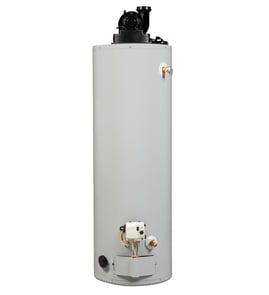



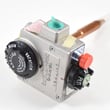
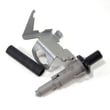

What is the average cost to replace a gas hot water heater?
Replacing an American BFG1J5040T3NOV gas water heater typically costs about $1,000 to $6,000 installed. The wide range comes from the heater type (standard tank vs. high-efficiency), venting changes, gas line work, permits, and labor rates in your area; labor is often a major share of the total.
What drives the price up or down
- Tank size and efficiency level: higher-efficiency units and specialty venting cost more
- Venting and combustion air: reusing an existing vent is cheaper than reworking the vent run
- Gas piping changes: upsizing pipe, adding shutoff valves, or extending the line adds labor and materials
- Code and permit requirements: varies by city and state
- Disposal and access: tight closets, attic installs, or stairs increase labor time
Typical installed cost ranges (what most homeowners see)
| Replacement scenario | Typical installed cost | Notes |
|---|---|---|
| Basic like-for-like tank swap | $1,000 to $2,500 | Minimal vent and gas line changes |
| Mid-range upgrade (efficiency/vent updates) | $2,500 to $4,000 | Common when venting needs rework |
| Complex install (major venting, gas line, relocation) | $4,000 to $6,000 | More materials, more labor, more permitting |
Model-specific planning tips for BFG1J5040T3NOV
Your manual emphasizes safe installation practices such as indoor, vertical placement on a level surface, proper venting with minimal elbows, and following applicable fuel gas codes. Use the BFG1J5040T3NOV owner's manual to confirm location, venting, and gas supply requirements before you request quotes.
Why it matters
A gas water heater replacement is not just a tank swap; venting, combustion air, and gas supply sizing directly affect safety, performance, and whether the install passes inspection. Getting quotes that include these items helps prevent surprise add-on charges.
Last updated: January 2026
What is the most common problem with a gas hot water heater?
The most common gas water heater problem is the burner not staying lit, which usually traces back to the pilot system (pilot flame, thermocouple, or igniter) or restricted combustion air. On American model BFG1J5040T3NOV, start with the lighting and safety checks in the BFG1J5040T3NOV owner's manual.
Most common causes (and what you’ll notice)
- Pilot won’t stay lit: no hot water; burner never fires.
- Weak or dirty pilot flame: pilot lights but drops out when you release the knob.
- Failing thermocouple: pilot goes out and gas shuts off as a safety response.
- Sediment buildup in the tank: popping or rumbling noises, slower recovery, higher gas use.
- Drafting or ventilation problems: burner performance issues; can be affected by exhaust fans, dryers, fireplaces, or other air-moving devices.
Quick checks we recommend (safe, homeowner-level)
- Confirm the gas shutoff valve is fully open.
- Make sure the area around the heater is clear; never store gasoline, solvents, or other flammables nearby.
- If the system has not been used for 2 weeks or more, run hot water at a kitchen faucet for several minutes before using any electrical appliance connected to hot water (hydrogen gas risk).
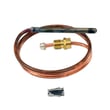
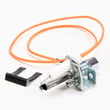
- If the pilot will not hold, inspect and service the pilot assembly; common replacements include the nat gas th 100108267 (thermocouple) and a pilot igniter.
- If overheating occurs or gas will not shut off, turn off the manual gas control valve and have a qualified technician service the unit.
Symptom-to-likely-cause guide
| Symptom | Most likely cause | Common next step |
|---|---|---|
| No hot water; no burner | Pilot out or ignition issue | Relight per manual; inspect pilot/igniter |
| Pilot lights then goes out | Thermocouple or weak pilot flame | Check flame; replace thermocouple |
| Rumbling/popping | Sediment in tank | Flush tank; check drain valve |
| Water too hot | Thermostat setting or stacking | Set to about 120°F; consider anti-scald valve |
Why it matters
Pilot and combustion-air issues stop heating entirely, while sediment reduces efficiency and can shorten tank life. Temperature control also matters for safety; water over 125°F can scald quickly, so 120°F is the preferred starting point.
Last updated: January 2026
What is the typical lifespan of a gas hot water heater?
A typical gas water heater lasts 8 to 12 years. For your American BFG1J5040T3NOV gas water heater, regular draining and flushing, periodic anode-rod inspection, and prompt repair of ignition or gas-control issues help you reach the full expected service life (see the BFG1J5040T3NOV owner's manual).
Typical lifespan (what to expect)
Most residential tank-style water heaters fall into these ranges:
| Water heater type | Typical lifespan |
|---|---|
| Gas tank water heater | 8 to 12 years |
| Electric tank water heater | 10 to 15 years |
What extends the life of a gas water heater
We see the longest-lasting tanks when these basics are done consistently:
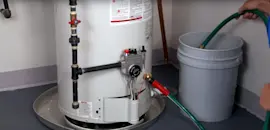
- Drain and flush sediment periodically to reduce rumbling and overheating at the bottom of the tank.
- Inspect the anode rod about every 3 years; replace it when it is more than 50% depleted.
- Keep combustion air and venting clear so the burner runs clean and efficient.
- Fix pilot and ignition problems quickly to prevent repeated shutdowns and soot buildup.
- Address water chemistry issues (odor, discoloration, heavy scale) with appropriate filtration or conditioning.
Model-specific maintenance note (BFG1J5040T3NOV)
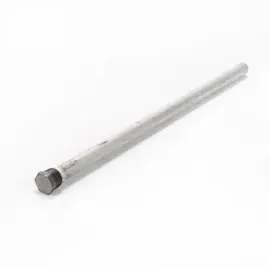
Your manual calls out anode-rod maintenance as a key tank-protection step. It also notes that artificially softened water can be more corrosive and may shorten tank life. Use the anode rod 100108260 when you are due for replacement.
Signs you are near end-of-life
These symptoms usually mean the tank is wearing out or operating under stress:
- Rust-colored hot water or metallic taste
- Water around the base of the heater (tank leak)
- Popping or rumbling sounds from heavy sediment
- Hot water runs out faster than it used to
- Frequent pilot outages or burner problems
Why it matters
Once a tank begins to corrode internally, performance drops and leak risk rises quickly. Staying on top of sediment removal and the anode rod is the most cost-effective way to protect the tank and avoid an unexpected failure.
Last updated: January 2026