 Installation guide
 Owner’s manual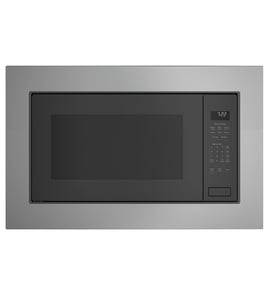



What are people replacing microwaves with?
Many people replace a microwave with a countertop convection toaster oven or air fryer for crisp reheating, or with a combi oven (convection plus microwave) for faster cooking with better browning. If you already own an Electrolux EMBD3010ASB, its convection and combination modes can deliver many of those “microwave alternative” results in one built-in unit; see the owner's manual.
Common replacements (and what they do better)
- Air fryer: best for crisping leftovers (pizza, fries, breaded foods)
- Toaster oven or countertop convection oven: more even browning than a microwave
- Combi oven (convection plus microwave): speed plus browning in one appliance
- Steam or combi-steam oven: excellent for reheating without drying out (rice, vegetables, fish)
- Stovetop reheating: best texture control for soups, sauces, and sautéed foods
How EMBD3010ASB already covers several “alternatives”
Your Electrolux EMBD3010ASB includes convection and combination cooking features, which are the same core idea behind many “speed ovens.” When using combination cooking:
- Use cookware that is both microwave-safe and oven-safe
- Stop immediately if you see arcing (sparks)
- Keep metal or foil from touching oven walls; install racks/shelves correctly
Quick comparison
| Option people switch to | Best for | Tradeoff vs microwave speed |
|---|---|---|
| Air fryer | Crisp texture | Longer preheat and cook time |
| Toaster oven (convection) | Browning, small bakes | Slower for liquids and simple reheats |
| Steam oven | Moist reheating | More planning and cleanup |
| Combi oven | Speed plus browning | Higher cost, more settings |
Why it matters
Microwaves excel at fast heating, but they can soften crusts and dry edges. Convection, air frying, and steam focus on texture and moisture control, which is why many households “replace” a microwave for everyday reheating.
Safety and cookware notes (important for any option)
- Avoid metal items that can cause arcing (twist ties, foil edges, gold-rim dishes)
- For liquids, prevent superheating by stirring before and after heating
- For combination cooking, use oven mitts; interior surfaces get hot
Last updated: February 2026
What are the disadvantages of a microwave oven combo?
A microwave oven combo like the Electrolux EMBD3010ASB trades simplicity for versatility. The main disadvantages are higher purchase and repair cost, more complicated cooking settings, and more parts that can fail (so troubleshooting can take longer). See the owner's manual for combo-cooking cautions and cookware rules.
Common drawbacks to expect
- Higher repair complexity: Combo units add convection and combination modes, which means more controls, sensors, and safety devices to diagnose.
- More cookware restrictions: For combination cooking, cookware must be both microwave-safe and oven-safe; some pans can cause arcing in combo mode.
- Learning curve: You often need to adjust time and settings based on food condition and doneness.
- Hotter exterior and interior in convection/combi: Surfaces get hotter than in microwave-only cooking; you need hot pads for containers.
- Accessory limitations: Racks and trays must be used correctly; incorrect rack use can damage the oven or cause arcing.
Performance trade-offs (what users notice most)
Combo microwaves can cook quickly, but results vary by food:
| Task | Typical combo result | Common downside |
|---|---|---|
| Reheating | Fast and even | More settings than needed for simple jobs |
| Baking/roasting (combi) | Juicy inside, crispier outside | Requires trial-and-error timing adjustments |
| Popcorn | Works well when used correctly | Wrong tray/rack use can cause damage or poor popping |
Why it matters
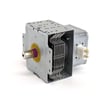
Combo microwaves concentrate multiple cooking systems into one appliance. That saves space, but it also means a single failure can affect multiple functions. For example, a heating problem might involve high-voltage components like the kenmore elite microwave magnetron 5304514250 or a door-interlock issue tied to the switch 5304514266, which increases diagnostic time.
Tips to reduce the downsides
- Follow combo-mode cookware rules closely to prevent arcing.
- Use only the supplied rack and place it correctly; never store it in the oven.
- For combi bake/roast, check doneness at the end and allow brief standing time if needed.
- Keep ventilation openings clear and clean surfaces as directed.
- If you see sparks (arcing), stop the cycle immediately and correct the metal contact issue.
Last updated: February 2026
Is it worth repairing a microwave?
Yes, it’s worth repairing your Electrolux EMBD3010ASB microwave oven when the problem is a lower-cost, external, or mechanical failure (door switch, latch issue, turntable parts). It’s usually not worth it when the repair involves high-voltage heating components or major electronics; those repairs cost more and require specialized service.
Quick decision guide (repair vs. replace)
Use these practical checkpoints before you buy parts or schedule service:
- Repair when the unit is under about 8 to 10 years old and the fix is straightforward.
- Repair when symptoms point to door interlock or latch problems (won’t start, stops when door moves).
- Repair when the issue is turntable-related (tray not rotating, noisy rotation).
- Replace when the failure is likely high-voltage heating (no heat, burning smell, loud hum) or major control problems.
- Replace when the estimate is more than about half the cost of a comparable new unit.
Common repairs for EMBD3010ASB that often make sense
These are typical “good value” repairs because parts and labor are usually more manageable:
| Symptom | Common area to check | Example part on this model |
|---|---|---|
| Won’t start, acts like door is open | Door switch and latch circuit | Switch 5304514266 or latch board 5304515317 |
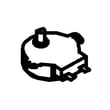
| Turntable not rotating | Coupler, tray, drive components | Microwave turntable motor coupler 5304514229 or microwave metal turntable tray 5304514228 |
| Door won’t close or feels loose | Latch/door alignment components | Latch board 5304515318 |
Repairs that usually do not pencil out
These failures tend to be expensive and involve high-voltage components:
- No heat with normal lights and fan (often points to the magnetron or high-voltage system)
- Loud buzzing/humming while trying to heat
- Repeated tripping of a breaker when starting a cook cycle
- Dead display plus other electrical symptoms (often points to major electrical or control issues)
If you’re diagnosing a “no heat” complaint, the owner's manual includes a basic functional check (light on, turntable rotates, water warms) and emphasizes that internal microwave service is not a DIY repair.
Why it matters (safety and performance)
Microwaves rely on door safety interlocks and sealed door surfaces to prevent harmful exposure to microwave energy. If the door, hinges, latches, or seals are damaged, we treat that as a stop-use condition until it’s corrected.
Last updated: February 2026


