 Owner’s manual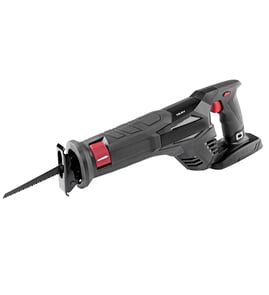

How to cut straight with a reciprocating saw?
To cut straight with your Porter Cable 738 reciprocating saw, keep the pivoting guide shoe firmly against the work, start with the blade aligned to a marked line (not touching), and use a steady, controlled feed so the blade tracks without flexing. For best results, match the blade to the material.
Steps that keep the cut straight
- Mark a clear cut line; for long cuts, extend the line with a straightedge.
- Set the pivoting guide shoe flat on the work and keep it planted through the cut.
- Start the saw with the blade aligned to the line (blade not touching), then ease into the material.
- Use light pressure; forcing the saw bends the blade and makes it wander.
- Let the blade do the work; keep the saw body square to the surface as you advance.
- For plunge cuts in wood or plastic, pivot on the shoe bracket and roll the saw forward until the blade breaks through.
Blade choice and speed tips
A straight cut depends heavily on using the right blade and speed for the material.
- Use a wider, stiffer blade when you need straighter tracking (especially in wood).
- For metal, choose a blade that keeps at least three teeth engaged in the material thickness.
- Use slower, controlled speeds for cleaner cuts; practice on scrap to dial in the best speed.
- For metal cutting, use straight reciprocating motion (orbital action is for faster wood cutting on models that have it).
| Material | What helps you cut straighter | What usually causes wandering |
|---|---|---|
| Wood, plywood | Shoe planted, light feed, wider blade | Forcing the cut, thin blade flex |
| Plastic | Moderate speed, steady feed | Too much speed, melting and grabbing |
| Metal | Correct TPI, straight motion, cutting oil | Too few teeth engaged, pushing too hard |
Why it matters
Reciprocating saw blades naturally want to flex; keeping the guide shoe tight to the work and using the correct blade reduces vibration and deflection, which is what pulls the blade off your line.
Safety and setup reminders
- Disconnect power before installing or removing blades.
- Keep the guide shoe installed; do not operate the saw with the shoe removed.
- Wear eye protection, especially when cutting metal.
For model-specific operating details and blade guidance, follow the owner's manual.
Last updated: February 2026
What does 738 mean?
On a Porter-Cable reciprocating saw, 738 is the model number that identifies the exact tool version (Model 738). We use it to match the correct owner's manual instructions and to ensure any replacement parts or service procedures fit your specific saw.
Why the model number matters
Using the right model number prevents ordering the wrong components and helps you follow the correct safety and blade-install steps.
- Confirms which blade clamp design your saw uses (Model 738 uses a hex-wrench clamp screw)
- Helps match electrical and safety guidance (how to hold the saw, insulation and housing requirements)
- Ensures diagrams and terminology in the manual match your tool
- Speeds up troubleshooting when the saw will not start, cuts poorly, or vibrates
Where to find “738” on the saw
Most Porter-Cable power tools list the model on a rating/specification plate or label.
- Side of the motor housing
- Near the handle or trigger area
- On the nameplate with voltage and amperage markings
- Sometimes stamped into the housing or printed on a decal
Model 738 quick identification: what’s different
The manual calls out a specific blade installation method for Model 738.
| Item | Model 738 detail | What you do |
|---|---|---|
| Blade clamp type | Clamp screw (hex wrench) | Loosen screw 3 to 4 turns, insert blade fully, then tighten |
| Blade alignment | Shank hole aligns with clamp hole | Confirm alignment before tightening |
| Safety step | Power disconnected | Unplug before installing or removing blades |
Why it matters for safe operation
A reciprocating saw can become hazardous if the blade contacts live wiring; the manual emphasizes holding the saw correctly and keeping the rubber front housing cover properly installed and undamaged.
Last updated: February 2026
What is a corded reciprocating saw used for?
A corded reciprocating saw like the Porter-Cable 738 TIGER SAW is used for fast, rough cutting in wood, metal, and other materials during remodeling, demolition, and general construction work. It is built to cut wood up to about 12 inches thick and metal up to about 3/4 inch thick when you use the right blade and technique (see the owner's manual).
Common jobs a corded reciprocating saw handles well
- Demolition cuts in framing lumber, studs, and nails embedded in wood
- Cutting metal pipe, conduit, angle iron, and sheet metal (with a metal-cutting blade)
- Pruning and outdoor cutting (with a pruning blade)
- Cutting plastic, fiberglass, and hard rubber
- Making cutouts in plywood or wallboard using a plunge-cut technique (wood and plastic only)
Material and technique guidelines (what matters most)
The blade choice and how you support the workpiece determine speed, control, and blade life.
- Wood: Higher speeds typically cut faster; keep the shoe planted and use light feed pressure.
- Metal: Use a fine-tooth metal blade and keep at least three teeth engaged in the material.
- Plunge cuts: Use for wood, plywood, wallboard, and plastic; do not plunge cut metal.
- Blind cutting: Check for hidden wiring, plumbing, or other objects before cutting.
Quick reference table
| Task | Recommended approach | Notes |
|---|---|---|
| Fast wood demolition | Coarser wood blade, steady pressure | Shoe against the work helps control vibration |
| Cleaner wood cuts | Finer wood blade, slower and steadier | Finish side faces down because the blade cuts on the up-stroke |
| Metal cutting | Fine-tooth metal blade | Use straight reciprocating motion when applicable; avoid plunge cuts |
| Cutouts in wallboard/plastic | Plunge cut | Start with blade not touching the surface |
Why it matters
Using the correct blade and avoiding unsafe cuts (especially blind cuts and metal plunge cuts) prevents kickback, reduces broken blades, and helps you get controlled cuts without damaging hidden electrical wire or plumbing.
Last updated: February 2026
What's the difference between a reciprocating saw and a saw?
A reciprocating saw (like the Porter Cable 738 TIGER SAW) cuts with a blade that moves back and forth in a straight line, while many other common saws cut with a rotating blade. That back-and-forth action makes it especially useful for demolition, rough cuts, and tight spaces.
Quick comparison
| Tool type | Blade motion | Typical strengths | Typical tradeoffs |
|---|---|---|---|
| Reciprocating saw (Porter Cable 738) | Back-and-forth (reciprocating) | Demo work, pruning, cutting in place, mixed materials | Rougher finish, more vibration |
| Circular saw | Rotating disc | Fast, straight cuts in sheet goods and lumber | Needs clearance, not great for plunge-in-wall demo |
| Jigsaw | Up-and-down short stroke | Curves, cutouts, lighter materials | Slower in thick stock |
| Hand saw | Manual stroke | Control, no power needed | Slow, more effort |
What a reciprocating saw does differently
On the Porter Cable 738, we use variable speed to match the material: lower speeds are typically better for metal, and higher speeds are typically better for wood. The saw also uses a pivoting guide shoe as a rest while cutting; we keep the guide shoe installed for control and safer handling. See the owner's manual for operating and safety details.
Best-use tips (applies to model 738)
- Choose the blade for the material (wood, metal, plastic); use the shortest blade that reaches through the cut.
- Clamp small workpieces securely; don’t try to “chase” the cut with one hand.
- Use light feed pressure; forcing the saw does not make it cut faster.
- Keep hands clear of the cut path; never reach behind or underneath the material while sawing.
- Avoid blind cutting unless you’ve checked for hidden wiring, conduit, or pipes.
Why it matters
Picking the right saw improves cut quality and safety. A reciprocating saw is built for aggressive, in-place cutting where a rotating-blade saw (like a circular saw) is awkward or unsafe, especially around framing, nails, and tight clearances.
Last updated: February 2026