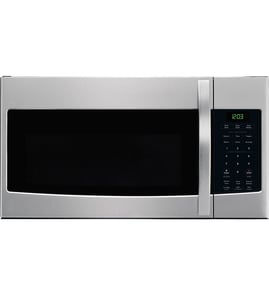

Are all 30 inch microwaves the same size?
No. “30-inch” microwaves are built to fit a standard 30-inch cabinet opening, but they are not all the exact same size. For Whirlpool model WML55011HW07, the overall width is typically close to 30 inches, while height, depth, venting layout, and mounting points can vary by model.
What “30-inch” usually means
Most over-the-range and microwave/hood combo units labeled 30-inch are designed around a similar cabinet cutout width, but manufacturers still vary the cabinet depth, door style, and bottom clearance.
Common differences you should expect:
- Height: low-profile vs standard-height designs
- Depth: how far the unit projects past the cabinets
- Mounting pattern: wall plate hole locations and top cabinet bolt locations
- Venting: recirculating vs outside venting (top or rear discharge)
- Electrical cord location: where the outlet needs to be
What to measure before you replace a microwave/hood combo
Measure your existing unit and the cabinet space so the replacement fits and mounts correctly.
Measure these items:
- Cabinet opening width (left to right)
- Space from cooktop to microwave bottom
- Cabinet depth and front overhang
- Location of the wall studs and vent opening
- Existing mounting hardware condition
Quick fit checklist
| Item to compare | Why it matters | Typical outcome if mismatched |
|---|---|---|
| Width | Fits the cabinet opening | Gaps or interference with cabinets |
| Height | Clears cabinets and meets cooktop spacing | Door hits cabinets or unsafe clearance |
| Depth | Door swing and cabinet alignment | Unit sticks out too far |
| Mounting pattern | Installs without drilling new holes | Extra drilling, poor support |
Why it matters
Even when the width is “standard,” the mounting plate and venting layout are what usually make or break a smooth swap. If your current bracket is bent or missing, replacing it can help the new unit sit level and secure.
Helpful related part for this model: microwave wall mounting plate W11368557.
Last updated: January 2026
What are common problems with whirlpool microwaves?
Common problems on Whirlpool microwaves like model WML55011HW07 include not heating, not powering on, turntable issues, keypad/display glitches, and hood-vent problems (fan or lights). Many symptoms trace back to power supply, door interlocks, or a failed high-voltage component.
Most common symptoms and what they usually mean
- Microwave runs but does not heat: often a high-voltage failure (magnetron, diode, or related high-voltage parts).
- Dead, no display, no response: commonly a blown fuse, power cord/outlet issue, or door switch/interlock problem.
- Turntable not rotating: usually a worn turntable driver, coupler, or the glass tray not seated correctly.
- Buttons do not respond or display acts up: control panel or wiring connection issue.
- Fan runs loud or venting seems weak: grease buildup on filters, blocked ducting, or a vent/fan component issue.
Quick checks we recommend before replacing parts
- Confirm the outlet has power (test with a lamp) and reset the kitchen breaker if needed.
- Open and close the door firmly; a misaligned latch can prevent operation.
- Remove the turntable and re-seat it so it sits flat and centered.
- Clean the hood grease filter and verify airflow is not blocked.
- If the unit is completely dead, check the fuse and wiring connections.
Parts that commonly relate to these problems (WML55011HW07)
| Symptom | Common suspect | Example part for this model |
|---|---|---|
| No power / intermittent power | Fuse | Microwave fuse W11707984 |
| Runs but no heat | Magnetron or diode | Magnetron W11402082, microwave high-voltage diode W11256462 |
| Turntable not turning | Tray/drive issue | Turntable W11367904, driver, turntable W11452278 |
| Hood vent performance issues | Grease filter restriction | Grease filter W11213913 |
Why it matters
Microwave symptoms can look similar even when the root cause is different. Starting with basic power, door, and airflow checks helps avoid replacing expensive parts unnecessarily, especially on high-voltage heating circuits.
Last updated: January 2026
What is the disadvantage of a low profile microwave?
A low-profile over-the-range microwave like Whirlpool WML55011HW07 trades space for a slimmer look: the biggest disadvantages are less interior height for tall dishes, potentially weaker hood performance than a dedicated range hood, and tighter access for cleaning and service.
Common disadvantages (what you will notice day to day)
- Reduced cooking capacity for tall items: large bowls, tall mugs, and some covered casseroles may not fit comfortably.
- Ventilation limits: low-profile designs often move less air than a full-size hood, so heavy frying can leave more lingering smoke or odors.
- More heat and reach issues: because it sits over the cooktop, reaching in to remove hot food can feel awkward for some users.
- More involved installation: cabinet cutouts, vent routing, and mounting alignment can be less forgiving than a countertop microwave.
- Fewer “upgrade” options later: replacing with a different style may require cabinet or duct changes.
Quick comparison: low-profile vs standard OTR vs hood
| Feature | Low-profile microwave/hood combo | Standard OTR microwave | Dedicated range hood |
|---|---|---|---|
| Interior height | Lowest | Higher | Not applicable |
| Venting performance | Moderate | Moderate to good | Best |
| Best for | Saving space, sleek look | General use | Serious cooking/ventilation |
| Installation complexity | Moderate to high | Moderate | Moderate |
When a “disadvantage” points to a repair issue
If your WML55011HW07 seems to vent poorly or runs inconsistently, it can be a maintenance or part problem, not just the low-profile design.
- If the hood is loud or airflow seems weak, clean or replace the grease filter W11213913.
- If the microwave is completely dead or goes dead intermittently, electrical testing may involve the microwave fuse W11707984.
- If heating is weak (food takes much longer than normal), diagnosis can involve high-voltage components such as the microwave high-voltage diode W11256462 (high-voltage testing is best left to a technician).
Why it matters
Low-profile microwaves are a great fit when you want more clearance above the cooktop and a built-in look, but the slimmer cavity and hood design can be limiting if you regularly cook with tall cookware or do high-smoke cooking.
Last updated: January 2026