Owner’s manual
 Error Codes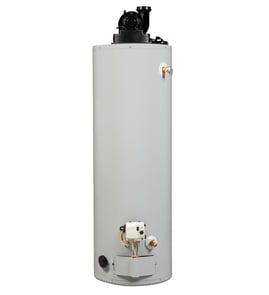



How many years should a gas water heater last?
Most gas water heaters, including the American Water Heaters model BFG1H5040T3NOV, commonly last about 8 to 12 years with normal use. Regular maintenance (especially flushing sediment and checking corrosion protection) can help you reach the higher end of that range; skipped maintenance often shortens it. See the BFG1H5040T3NOV use & care manual for model-specific maintenance and safety guidance.
What affects lifespan the most
A gas water heater’s service life is usually driven by water quality, usage, and maintenance.
- Sediment buildup in the tank bottom (can overheat the tank and reduce efficiency)
- Anode rod condition (the anode protects the tank from corrosion)
- Water pressure and thermal expansion (can stress the tank and fittings)
- Venting and combustion air (poor draft can cause performance and safety issues)
- Installation environment (corrosive air, flooding history, or freezing risk)
Maintenance schedule we recommend
The manual for this model calls out routine draining/flushing and periodic inspections.
| Task | Typical frequency | Why it matters |
|---|---|---|
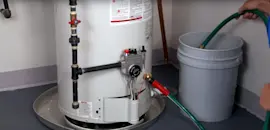
| Drain and flush the tank | Every 6 months | Helps reduce sediment and noise; improves heating efficiency |
| Visual inspection of venting and burner area | Every 3 months | Helps catch soot, blockage, or air supply issues early |
| Inspect anode rod | About every 3 years | Prevents premature tank corrosion and leaks |
If you’re replacing corrosion protection, use the exact compatible part for this model, such as the anode rod 100108260.
Signs it may be near end-of-life
- Rust-colored water or metallic taste (after ruling out plumbing issues)
- Rumbling or popping that persists after flushing
- Water in the drain pan or signs of tank seepage
- Frequent pilot or burner problems that return after service
- Not enough hot water even after temperature and maintenance checks
Why it matters
A water heater that’s past its typical lifespan is more likely to leak unexpectedly and waste energy due to sediment and reduced heat transfer. Staying on top of flushing and anode inspection is the best way to protect the tank and keep hot water reliable.
Last updated: January 2026
What is the average cost to install a 40 gallon gas hot water heater?
We can’t confirm an “average installed price” from the model-specific information for American Water Heaters model BFG1H5040T3NOV, and installed cost is not published in the BFG1H5040T3NOV use & care manual. In practice, your total depends on labor rates and how much venting, gas piping, and plumbing must be updated to meet local code.
What usually changes the installed price
Even for a standard 40-gallon gas replacement, the scope can vary a lot.
- Permits and inspection requirements in your area
- Venting work (vent connector condition, chimney compatibility, draft hood setup)
- Gas line work (adding or replacing a shut-off valve, drip leg, union, leak testing)
- Water piping updates (new shutoff, dielectric connections, rework for clearance)
- Thermal expansion protection if you have a closed water system
- Disposal and haul-away of the old tank
Typical scope comparison (not model-specific pricing)
We use this to help you estimate what your installer is really quoting.
| Install scope | What it usually means | Cost impact |
|---|---|---|
| Like-for-like swap | Same location, minimal piping changes | Lowest |
| Code and safety updates | Adds items required by local code or condition | Medium to high |
| Relocation or major rework | New vent route, gas line reroute, framing changes | Highest |
Questions to ask your installer
These help you compare bids apples-to-apples.
- Are you reusing or replacing the draft hood and vent connector?
- Will you verify gas type and perform a documented leak test?
- Are you adding expansion control for a closed water system?
- What parts and materials are included vs. billed as extras?
Why it matters
Gas water heater installation is a safety-critical job; correct combustion air, venting, and gas leak testing help prevent carbon monoxide and fire hazards. For model-specific venting and safety requirements, follow the BFG1H5040T3NOV use & care manual.
Last updated: January 2026
What is the most common problem with a gas hot water heater?
Sediment buildup in the bottom of the tank is one of the most common issues we see on gas water heaters, including American model BFG1H5040T3NOV. It can cause popping noises, slower hot-water recovery, higher energy use, and premature tank wear if it is not flushed out periodically.
What you will typically notice
- Rumbling, popping, or crackling sounds during burner operation
- Hot water runs out faster than it used to
- Water temperature fluctuates more than normal
- Higher gas bills for the same hot-water usage
- Cloudy water or debris when draining the tank
What to do first (safe, practical checks)
We recommend starting with maintenance steps that address sediment without changing parts.
- Drain and flush the tank on a regular schedule (many owners do this about every 6 months in areas with hard water). Follow the steps in the BFG1H5040T3NOV use & care manual.
- Verify the temperature setting; a common starting point is around 120°F to balance comfort and efficiency.
- Check the drain valve for clogging or leaking; if it will not open, will not close, or seeps after flushing, replacement may be needed.
Parts that are commonly involved (when maintenance is not enough)
If flushing does not improve performance, these model-compatible parts are often the next place we look:
- Drain valve 100109106 (used to drain and flush sediment; can clog or leak)
- Anode rod 100108260 (helps protect the tank from corrosion; can contribute to odor issues when depleted)
- T&p valve 100108279 (safety valve; can drip if pressure is high or the valve is failing)
Quick symptom-to-likely-cause guide
| Symptom | Common cause | Typical next step |
|---|---|---|
| Popping/rumbling | Sediment on tank bottom | Drain and flush tank |
| Not enough hot water | Sediment, low temp setting | Flush; verify thermostat setting |
| Water in drain pan | Valve seepage or piping leak | Inspect fittings; check drain valve and T&P valve |
| Rotten egg smell | Anode rod reaction with water | Inspect anode rod; consider replacement |
Why it matters
Sediment acts like insulation between the burner heat and the water. That makes the heater work harder, increases operating costs, and can shorten the life of the tank and key components.
Last updated: January 2026
What is the average cost of a 50 gallon gas water heater?
For American Water Heaters model BFG1H5040T3NOV, the manual does not list pricing, so we can’t give a model-specific “average cost.” In general, the total cost is usually the heater price plus installation labor and any required venting, gas-line, or plumbing updates; those job-specific items drive most of the variation.
What typically makes the price go up or down
- Venting condition and any needed vent connector or chimney work
- Gas piping updates (shut-off valve, union, drip leg, leak test)
- Local permit and inspection requirements
- Accessibility (tight closet, attic, long piping runs)
- Add-ons often required by code or best practice (drain pan, expansion tank, tempering valve)
For safety and installation requirements that can affect labor and materials, follow the venting, combustion air, and gas supply guidance in the BFG1H5040T3NOV use & care manual.
How to estimate your total cost (practical method)
Instead of relying on a national “average,” we recommend building a quote using these buckets:
| Cost bucket | What it covers | Why it varies |
|---|---|---|
| Water heater (unit) | Tank, burner system, warranty tier | Efficiency/features and local pricing |
| Installation labor | Removal, set-in-place, hookups, start-up checks | Time on site and access |
| Materials and code items | Vent parts, gas fittings, water connectors, pan, expansion tank | Existing setup and local code |
When a repair might be the better spend
If the tank is in good shape and you’re dealing with a specific symptom, repairing can be more cost-effective than replacing the whole unit. Common examples for this model include:
- Pilot or ignition issues: water heater pilot igniter 100110927
- Relief valve dripping or leaking: t&p valve 100108279
- Odor or corrosion protection maintenance: anode rod 100108260
Why it matters
BFG1H5040T3NOV is a gas water heater; safe operation depends on correct combustion air, venting, and gas piping. Those site-specific requirements are why installed costs can’t be averaged accurately without seeing the setup.
Last updated: January 2026