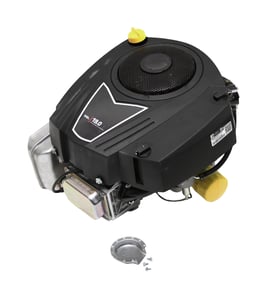
 Owner’s manual
How many horsepower is a 110000 Briggs and Stratton engine?
Briggs model series 110000 is a 190 cc single-cylinder lawn and garden engine family; horsepower varies by the exact type and trim code on your engine, so there is not one fixed HP rating for every 110000-SERIES engine. Use the owner's manual specs and your engine ID to match the correct rating and parts.
How to identify the correct horsepower for your exact engine
On Briggs engines, the model series (110000) groups many variants. To pin down the correct HP, match the full engine identification:
- Find the Model-Type-Trim numbers stamped on the engine (often on the blower housing or valve cover area).
- Record all digits exactly; the type and trim determine the governed RPM, carburetion, and published power.
- Compare your numbers to the specifications section in the owner's manual.
- If your equipment has a data plate (mower, tiller, pressure washer), compare its engine spec label to your engine stamp.
- When ordering parts, always use the full engine ID, not just “110000”.
What we can confirm for model series 110000
From the documentation for the 110000 series, we can confirm these core specs that help you identify the engine family:
| Spec | Model series 110000 value |
|---|---|
| Displacement | 11.58 cu. in. (190 cc) |
| Bore | 2-11/16 in. (68 mm) |
| Stroke | 2-3/64 in. (52 mm) |
| Typical application | Lawn and garden equipment |
Why horsepower can look different across sources
Horsepower can be listed differently depending on how it is measured and labeled (and some equipment labels emphasize cc instead of HP). Also, real-world output changes with operating conditions:
- For practical operation, keep load to about 85% of rated horsepower
- Power drops about 3.5% per 1,000 ft of elevation
- Power drops about 1% per 10°F above 77°F
Why it matters
Using the correct horsepower rating helps you choose the right replacement parts (like air cleaner, spark plug, and fuel system parts) and avoid performance issues caused by mismatched carburetion or governed speed settings.
Last updated: February 2026
What are common B&S engine problems?
Common problems on a Briggs 110000 lawn and garden engine usually come from fuel delivery, ignition, airflow, or basic mechanical wear. The most frequent symptoms are no-start, hard starting, surging, rough running, stalling under load, and loss of power; routine maintenance prevents many of these issues (see the 110000 owner's manual).
Most common problems and what they look like
- Old or contaminated fuel: hard starting, won’t stay running, surging
- Carburetor varnish or clogged jets: starts then dies, hunts/surges at idle
- Dirty air filter: black smoke, poor power, plug fouling
- Spark plug or ignition issue: no spark, misfire, intermittent stall
- Cooling/overheating problems (debris around fins, low oil): power loss, shutdown, accelerated wear
- Valve train wear or sticking valves: hard starting, backfiring, low compression feel
Quick checks we recommend (fast, low-cost)
- Drain old gas and refill with fresh fuel; confirm the fuel shutoff is open (if equipped).
- Inspect the air filter; replace if dirty or oil-soaked.
- Pull the spark plug; check gap and condition, replace if fouled.
- Verify the choke and throttle linkages move freely and return smoothly.
- Check oil level and condition; low oil and overheating shorten engine life.
Troubleshooting by symptom
| Symptom | Most likely causes | First action |
|---|---|---|
| Won’t start | stale fuel, fouled plug, carb blockage | fresh fuel, new plug, carb clean |
| Starts then dies | clogged carb, fuel cap venting, debris in tank | clean carb, check cap/line |
| Surges at idle | lean carb circuit, air leak, dirty filter | clean carb, inspect gaskets |
| Loses power mowing | dirty filter, overheating, fuel restriction | clean cooling fins, replace filter |
Why it matters
Small engines like the Briggs 110000 depend on clean fuel, correct airflow, and reliable spark. When any one of those is off, the engine runs lean or rich, overheats, and wears faster, which turns a simple tune-up into a bigger repair.
Last updated: February 2026
What is the lifespan of a B&S engine?
A Briggs lawn and garden engine like model 110000 typically lasts 1,000 to 2,000 hours with normal residential use and on-time maintenance; engines that are neglected often fail much sooner, while well-maintained engines used lightly can run longer before needing major work.
Typical lifespan ranges (what most owners see)
Lifespan is best measured in engine hours (not years) because mowing time and load vary.
- Light residential use: ~500 to 1,000 hours
- Average residential use with good maintenance: ~1,000 to 2,000 hours
- Heavy use or poor maintenance: often under 500 hours
- Commercial-grade setups (varies by engine family): can exceed 2,000 hours
| Usage pattern | What shortens life fastest | What extends life most |
|---|---|---|
| Occasional mowing | Old fuel, dirty air filter | Fresh fuel, clean cooling fins |
| Weekly mowing | Low oil, overheating | Regular oil checks, debris removal |
| Heavy load (tall/wet grass) | Overheating, over-revving | Correct blade speed, clean shrouds |
Maintenance that most directly extends engine life
The manual is clear that regular maintenance improves performance and extends engine life. Use the maintenance schedule in the owner's manual.
- Check oil level before each use; top off as needed
- Change oil on schedule (more often in dusty or hot conditions)
- Clean or replace the air filter to prevent dirt ingestion
- Keep cooling fins, blower housing, and screens clear to prevent overheating
- Use fresh, clean fuel; avoid long-term storage with untreated fuel
- Fix fuel or ignition issues early (hard starting, surging, misfiring)
Why it matters
Most “early failures” on small engines come from low oil, overheating from blocked cooling airflow, or dirt ingestion through a neglected air filter. Preventing those three issues does more to extend lifespan than any single upgrade.
Last updated: February 2026