 Installation guide
 Owner’s manual




Is GE Profile considered high end?
Yes. GE Profile is widely considered the step-up, higher-end tier within the core GE appliance lineup; it typically adds more cooking technology, upgraded styling, and convenience features compared with standard GE models, while still sitting below true luxury lines.
Where GE Profile fits in the GE lineup
GE organizes products into “good, better, best” style tiers. In most kitchens, GE Profile is the “better to best” choice when you want premium features without moving into luxury pricing.
Common GE tier comparison:
| GE line | Typical positioning | What you usually get |
|---|---|---|
| GE (standard) | Value and essentials | Core cooking modes, simpler controls |
| GE Profile | Mid-to-high end | More automation, convection options, sleeker finishes |
| Luxury lines (varies by brand family) | High end luxury | Pro-style design, specialty features, premium materials |
What “high end” means for your PT7800SH9SS combo oven
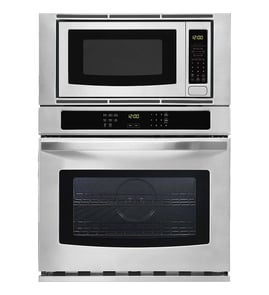
For the GE PT7800SH9SS built-in combination convection-microwave/convection wall oven, “high end” usually shows up as better cooking flexibility and more advanced controls compared with entry models.
Typical high-end indicators you may see:
- Combination design (microwave plus lower oven) to save cabinet space
- Convection cooking modes for more even baking and roasting
- More precise temperature management and programmed settings
- Premium fit and finish (control panel styling, door glass, trim)
- Expanded accessories and maintenance guidance in the documentation
For feature specifics and operating modes on this exact unit, use the PT7800SH9SS owner’s manual.
Why it matters
Knowing the tier helps set expectations for parts cost and repair approach. Higher-end models often use more sensors, boards, and interlocks, so accurate diagnosis matters before replacing components.
If you are troubleshooting performance issues (temperature swings, long preheat, uneven baking), a common first check is the oven temperature sensor; the wall oven temperature sensor WB21X10165 is a model-matched part option.
Last updated: February 2026
What are common problems with GE Profile microwaves?
Common problems we see with GE Profile microwaves (including the microwave in the GE PT7800SH9SS wall oven/microwave combo) are no heat, arcing (sparking), loud buzzing or humming, a dead display or unresponsive keypad, and turntable issues. Many “runs but won’t heat” complaints trace back to door interlock or high-voltage component failures.
Most common symptoms and what they usually mean
- Runs but does not heat: door interlock problem, high-voltage transformer, or control issue
- Arcing (sparks) inside: metal or foil contact, improper cookware, or food debris causing hotspots
- Loud buzzing/humming: high-voltage system strain, failing transformer, or cooling/airflow problem
- Buttons not working or display glitches: control board or keypad interface problem
- Turntable not rotating: tray/drive issue or a control/door-switch condition preventing operation
Quick checks you can do safely
Before assuming a major failure, we recommend these basic checks:
- Remove all metal (foil, twist ties, gold-rimmed dishes) and try a microwave-safe cup of water
- Clean the door sealing surfaces and cooking cavity; residue can contribute to arcing
- Confirm the door closes firmly and latches consistently (a mis-latch can stop heating)
- Power-cycle the unit (turn breaker off, wait 2 minutes, turn back on)
- If you smell burning or see repeated arcing, stop the cycle and use the guidance in the PT7800SH9SS owner’s manual
Parts that commonly relate to these problems (for PT7800SH9SS)
If symptoms point to a specific failure, these model-matched parts are often involved:
| Symptom | Common suspect part | Example model-matched part |
|---|---|---|
| Runs but won’t heat | High-voltage component | Microwave high-voltage transformer WB17X10030 |
| Starts then stops, won’t run reliably | Door safety circuit | Microwave door interlock switch WB24X25397 |
| Light out | Lamp | Microwave light bulb WB02X35488 |
Why it matters
Microwaves contain high-voltage components that can remain dangerous even when unplugged. GE’s safety guidance emphasizes using the appliance as intended and leaving internal adjustments and repairs to properly qualified service personnel; the PT7800SH9SS installation guide also helps confirm the unit is installed and grounded correctly.
Last updated: February 2026
What is the average lifespan of a GE microwave?
A GE microwave typically lasts 8 years. For the GE PT7800SH9SS wall oven/microwave combo, most owners see about 5 to 10 years of service from the microwave section depending on daily use, ventilation, and keeping the door and interior clean; heavy use shortens lifespan.
Typical lifespan ranges (what to expect)
- Light use (reheating only): often closer to 10 years
- Daily cooking use: commonly around 7 to 9 years
- Heavy use (multiple cycles per day): often 5 to 7 years
- Early failures: usually tied to door-switch wear, overheating, or power issues
| Usage pattern | Typical lifespan | What usually wears first |
|---|---|---|
| Light | 9 to 10 years | Door switches, light bulb |
| Moderate | 7 to 9 years | Door switches, control components |
| Heavy | 5 to 7 years | Interlock switches, high-voltage components |
How to help your microwave last longer
- Keep the door closing smoothly; do not slam it
- Wipe the cavity and door edges to prevent grease buildup
- Use microwave-safe covers to reduce splatter and steam damage
- Ensure vents are not blocked so heat can escape
- Avoid running the microwave empty
Parts that commonly affect “it won’t run” symptoms
If the microwave suddenly stops heating or will not start, these are common wear items on combo units like PT7800SH9SS:
- Microwave door interlock switch WB24X25397 (door sensing and safety)
- Microwave door interlock switch WB24X10047 (door sensing and safety)
- Microwave high-voltage transformer WB17X10030 (power for heating circuit)
Why it matters
Knowing the typical lifespan helps you decide whether to troubleshoot a no-heat or no-start issue, replace a common wear part, or plan for a larger repair. For PT7800SH9SS, door-interlock problems are a frequent cause of intermittent operation.
For model-specific operating and care guidance, follow the maintenance and use recommendations in the PT7800SH9SS owner’s manual.
Last updated: February 2026