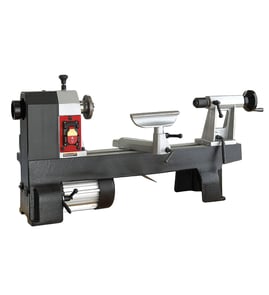

Can a milling machine be used for drilling?
Yes. An Emco FB-2 milling and drilling machine can be used for drilling as long as you use the correct tooling, speeds, and workholding. In practice, a milling machine often drills more accurately than a handheld drill because the spindle and table control the hole location.
How drilling on a milling machine works
When we drill on a mill, we use the spindle to drive a drill bit (or center drill) while the table and vise position the workpiece.
Typical drilling setup steps:
- Secure the workpiece in a vise or with a clamping kit; never hold it by hand.
- Spot the hole with a center drill to reduce bit walking.
- Use the correct spindle speed for the material and drill diameter.
- Feed smoothly; back the bit out periodically to clear chips (peck drilling).
- Use cutting fluid when appropriate for the material.
What a mill does well (and where it is different from a drill press)
A milling machine is designed for side loads and precision positioning, so it is well-suited for drilling, boring, and reaming.
| Task | Milling machine (like FB-2) | Drill press |
|---|---|---|
| Hole location accuracy | Excellent with table dials or DRO | Good, depends on setup |
| Side-load capability | Designed for it | Limited |
| Common hole-making ops | Drill, bore, ream, spot, countersink | Mostly drilling and countersinking |
| Setup time | Often longer | Often faster |
Common mistakes to avoid
These issues cause broken bits, oversized holes, or poor finish:
- Drilling with the workpiece not fully supported or clamped
- Using too much speed on large drill bits
- Skipping the spot drill or center drill on hard materials
- Letting chips pack in the flutes (no pecking)
- Using a dull bit or incorrect chuck/collet setup
Why it matters
Using your Emco FB-2 for drilling lets you place holes precisely for machining operations like tapping, slotting, and boring. Good workholding and correct speeds protect the spindle, chuck/collets, and the workpiece.
For more DIY safety and best practices before working around rotating tools and electrical components, review are diy appliance repairs safe.
Last updated: February 2026
What are the 7 major parts of a milling machine?
Most milling machines (including the Emco FB-2 milling & drilling machine) are built around seven core assemblies: the base, column, knee, saddle, table, spindle, and a feed drive (power feed or hand-feed mechanism). These parts work together to support the workpiece and move the cutter accurately.
The 7 major parts (what each one does)
- Base: Supports the machine’s weight and helps damp vibration.
- Column: Vertical structure that supports the head and guides vertical movement.
- Knee: Raises and lowers on the column to set cutting height.
- Saddle: Sits on the knee and provides cross (Y-axis) movement.
- Table: Holds the vise or workholding; provides longitudinal (X-axis) movement.
- Spindle: Rotating shaft that holds the tool (via a chuck or collet) and does the cutting.
- Feed mechanism: Moves the table/saddle/knee at a controlled rate (handwheels, gears, or power feed).
Quick reference: part to motion/function
| Major part | Primary job | Typical movement it enables |
|---|---|---|
| Base | Stability and vibration control | None |
| Column | Structural support and guidance | Z guidance for knee/head |
| Knee | Vertical positioning | Z-axis |
| Saddle | Cross positioning | Y-axis |
| Table | Workpiece positioning | X-axis |
| Spindle | Tool rotation and cutting | Rotational |
| Feed mechanism | Controlled movement | X/Y/Z depending on design |
Why it matters when troubleshooting
Knowing these seven parts helps us narrow symptoms fast. For example, chatter often points to the base/column rigidity or spindle/tooling, while backlash and drifting cuts often point to the feed mechanism, saddle, or table adjustments.
A practical way to identify parts on your FB-2
- Unplug/lock out power before inspecting.
- Follow the casting: base at the bottom, column rising vertically.
- Locate the table and trace down to the saddle, then the knee.
- Find the spindle at the head where tooling mounts.
- Turn each handwheel to confirm which axis it drives.
For general repair safety and best practices before servicing wiring or switches, use are diy appliance repairs safe.
Last updated: February 2026
What is a milling machine used for?
A milling machine (including the Emco FB-2 milling & drilling machine) is used to remove material from a workpiece using a rotating cutting tool. We use milling to make flat surfaces, slots, pockets, holes, and precise shapes in materials like metal, plastic, and wood.
Common jobs a milling machine handles
- Facing a surface flat and square
- Cutting slots, keyways, and grooves
- Milling pockets and steps
- Drilling and boring accurate holes
- Shaping contours with end mills or form cutters
- Light machining of plastics and hardwoods (with the right cutter and speeds)
Milling vs. lathe work (quick comparison)
Milling and turning both remove material, but they do it differently.
| Operation | What rotates | Best for | Typical examples |
|---|---|---|---|
| Milling | The cutter/tool | Flats, slots, pockets, complex shapes | Keyways, T-slots, pockets |
| Turning (lathe) | The workpiece | Round parts and diameters | Shafts, bushings, threads |
What “milling & drilling machine” means for model FB-2
On a milling & drilling machine like the Emco FB-2, we typically use the same platform for both:
- Milling with end mills, face mills, or slot drills
- Drilling with twist drills and countersinks
Setup tips that affect results
These basics determine accuracy, finish, and tool life.
- Clamp the work securely in a vise or with a clamping kit
- Use the correct spindle speed and feed rate for the material
- Keep the cutter sharp and matched to the job (HSS vs. carbide)
- Take lighter passes when the setup is tall or the cutter is long
- Use cutting fluid when machining many metals to improve finish and reduce heat
Why it matters
Choosing milling (instead of lathe turning or hand tools) is how we get repeatable accuracy, clean edges, and consistent dimensions, especially for slots, pockets, and flat reference surfaces.
Related help: must have tools for appliance repair
Last updated: February 2026
What is the difference between a lathe and a milling machine?
A lathe spins the workpiece while a cutting tool shapes it, so it’s best for round parts like shafts, bushings, and threads. A milling machine spins the cutting tool while the work stays fixed or moves on a table, so it’s best for flats, slots, pockets, and precise hole patterns.
How each machine “moves” the cut
- Lathe: the workpiece rotates; the tool feeds in to turn, face, bore, or thread.
- Mill: the cutter rotates; the work is clamped and moved in X, Y, and Z to shape features.
- Drilling on a mill: holes are typically more accurate because the work is rigidly fixtured and positioned.
- Turning on a lathe: roundness and concentricity are typically easier because the part is spinning on an axis.
What you typically make on each
| Task | Lathe is usually best | Mill is usually best |
|---|---|---|
| Round diameters | Yes | Sometimes (with rotary setups) |
| Threads | Yes | Sometimes (thread milling/tapping) |
| Flat surfaces | Limited (facing only) | Yes |
| Slots and keyways | Limited | Yes |
| Bolt-hole patterns | Not typical | Yes |
Where the Emco FB-2 fits in
The Emco FB-2 is a milling and drilling machine, so it’s designed around milling-style workholding and tool rotation. If you’re comparing it to a lathe, think “make shapes and hole patterns in a clamped part” rather than “spin a part to make it round.”
Why it matters
Choosing the right machine affects accuracy, setup time, and safety. Using a lathe for milling-type cuts (or a mill for turning-type cuts) often requires special fixtures and increases the chance of chatter, tool breakage, or poor finish.
For general repair and electrical troubleshooting practices that apply to powered equipment, see how to use a multimeter to test electrical parts video.
Last updated: February 2026