Owner’s manual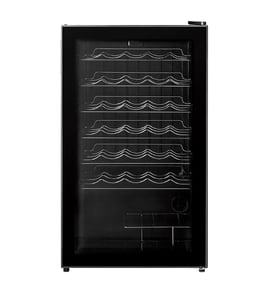




What is the best wine cooler on the market?
There is no single “best” wine cooler for everyone; the best choice depends on your bottle count, whether you need dual-zone storage, and where you will install it. If you already own KitchenAid model KUWS24RSBS01, the best “upgrade” is dialing in setup, ventilation, and temperature settings using the KUWS24RSBS01 owner's manual.
- Cooling type: Compressor cooling is the standard for steady temperatures in most homes.
- Zones: Dual-zone is best if you regularly store whites and reds at different temps.
- Installation fit: Built-in vs. freestanding; confirm clearances and airflow needs.
- Temperature range and stability: Look for tight control and minimal swings.
- Door and glass: UV protection and a solid seal help protect wine.
- Noise level: Fans and compressors make “normal sounds” during operation.
Your KUWS24RSBS01 is designed to run best with proper ventilation and correct control settings.
- Allow about 1/4 inch clearance on each side and at the top for ventilation.
- Avoid installing near heat sources; do not install where temps fall below 55°F.
- Start at the factory mid-setting, then wait 24 hours between temperature adjustments.
- For short-term storage (a few months), 55°F is a common target.
| Your goal | Best-fit cooler features | Why it helps |
|---|---|---|
| Everyday mixed drinks and wine | Single-zone, steady compressor | Simple, consistent cooling |
| Reds and whites at once | Dual-zone control | Separate temps for each style |
| Long-term aging focus | Premium insulation, stable temps, low vibration | Protects flavor over time |
| Tight space or budget | Compact capacity, basic controls | Lower cost, easier placement |
Wine quality is sensitive to heat, temperature swings, and air leaks. A correctly installed, well-sealed cooler with stable control protects taste and aroma better than simply buying a larger unit.
Last updated: January 2026
What is the difference between a wine cooler and a beverage cooler?
A wine cooler is built to protect wine quality with steadier temperatures, gentler operation (low vibration), and storage that supports corked bottles; a beverage cooler is built to chill a variety of drinks quickly and conveniently. Your KitchenAid KUWS24RSBS01 is a wine cellar style unit with user-adjustable controls and dual-zone temperature display.
- Temperature range and stability: Wine storage prioritizes stable temps (often around 45 to 65°F); beverage storage often targets colder serving temps (often around 35 to 50°F).
- Storage layout: Wine coolers commonly use wine racks for bottle support; beverage coolers commonly use flatter, adjustable shelves for cans and bottles.
- Humidity and cork care: Wine coolers are designed to be friendlier to corked bottles stored on their side; beverage coolers are not focused on cork moisture.
- Vibration and noise: Wine coolers aim to minimize vibration that can disturb sediment; beverage coolers prioritize fast chilling and access.
- Controls and zones: Many wine cellars use separate zones for different wine styles; the KUWS24RSBS01 temperature separator displays upper and lower zone temperatures.
The KUWS24RSBS01 uses a mid-setting as a factory starting point, and we recommend waiting at least 24 hours between temperature adjustments so the cabinet can stabilize.
- Set the control to the mid-setting after installation.
- Wait 24 hours before deciding whether to change the setting.
- Adjust one step at a time (higher setting = colder; lower setting = less cold).
- Keep bottles arranged so air can circulate around racks.
- Confirm the door seals tightly; air leaks can cause temperature swings.
| Feature | Wine cooler (wine cellar) | Beverage cooler |
|---|---|---|
| Primary goal | Preserve wine flavor and structure | Chill drinks for serving |
| Typical setpoint | 45 to 65°F | 35 to 50°F |
| Storage | Wine racks, bottle support | Shelves, mixed container sizes |
| Best for | Wine (especially corked bottles) | Soda, beer, water, mixers |
Choosing the right style helps you avoid common problems like wine that tastes “flat” from warm storage, or beverages that never get cold enough because the unit is tuned for wine-friendly temperatures. For model-specific control guidance and zone display details, use the KUWS24RSBS01 owner's manual.
Last updated: January 2026
What is the life expectancy of a wine cooler?
A KitchenAid wine cooler like model KUWS24RSBS01 typically lasts 10 to 15 years. Lifespan depends most on ventilation, stable room temperature, clean condenser airflow, and a tight door seal so the compressor and fans do not run excessively.
- Ventilation and airflow: keep the base grille and vents clear of dust and obstructions.
- Room conditions: avoid placing the unit in direct sunlight or near heat sources.
- Door sealing: a leaking gasket forces longer run times and faster wear.
- Loading habits: overpacking can block airflow around bottles and racks.
- Temperature changes: make adjustments gradually; the manual recommends waiting at least 24 hours between temperature adjustments.
Use the care and cleaning guidance in the KUWS24RSBS01 owner's manual.
- Vacuum dust from intake and grille areas regularly.
- Keep the door closed as much as possible.
- Confirm the unit is level so the door closes consistently.
- Set temperatures for steady storage (short-term wine storage is commonly around 55°F).
- Listen for normal operating sounds (clicking, gurgling, fan/compressor changes) so you can spot new, abnormal noises early.
| Symptom | Often related to | What to check first |
|---|---|---|
| Warm cabinet, long run times | Air leak at door | Inspect the door gasket WPW10238068 for gaps, tears, or looseness |
| Temperature swings | Control issue or airflow | Verify settings, wait 24 hours between changes, confirm vents are clear |
| Loud or changing fan noise | Fan motor wear or obstruction | Check for bottle/rack contact and dust buildup |
A wine and beverage cooler is a small refrigeration system; when airflow is restricted or the door does not seal, the compressor and fans cycle longer and hotter. That extra workload is the biggest reason coolers fail before the 10 to 15 year range.
Last updated: January 2026
What is the most common problem with wine coolers?
The most common problem we see with wine coolers like KitchenAid model KUWS24RSBS01 is temperature not staying where you set it (too warm, not cooling evenly, or running too long). In most cases, the root cause is restricted airflow (dirty condenser coils or a blocked base grille) or a control/thermostat issue.
Start with the simple airflow and door checks before replacing parts:
- Dirty condenser coils: Dust buildup reduces heat transfer and makes the compressor work harder.
- Blocked base grille: Blocking the grille can cause warm temps and long run times.
- Door not sealing: A door left slightly open or a worn gasket lets warm air in.
- Control setting changes: After adjusting temperature, allow 24 hours before changing it again.
- Frequent door openings: Each opening warms the cabinet and increases moisture.
For model-specific operating and troubleshooting steps, use the KUWS24RSBS01 owner's manual.
| Symptom | Most likely cause | Best first step |
|---|---|---|
| Temperature too warm | Dirty coils, blocked grille, door opened often | Clean coils; confirm grille is clear |
| Runs a lot or sounds “different” | High-efficiency compressor and fans | Verify temps; allow normal run time |
| Moisture/condensation inside | Door opened often, warm humid air entering | Reduce openings; confirm door seals |
| Door hard to open or won’t close | Sticky/dirty gasket, racks out of position | Clean gasket; reposition racks |
If airflow is clear and the door seals well, temperature control components become more likely.
- If the door seal is torn, flattened, or no longer sealing, replace the door gasket WPW10238068.
- If temperatures drift and the unit does not respond correctly to setting changes, a control/thermostat can be involved; for this model, see options such as wine cooler temperature control WP4344859 or maytag wine cooler temperature control thermostat W10163278.
Wine and beverages store best when the cabinet holds a steady temperature. Airflow restrictions and door seal leaks force the compressor to run longer, which can cause temperature swings, excess moisture, and higher energy use.
Last updated: January 2026