

Do all over-the-range microwaves have the same dimensions?
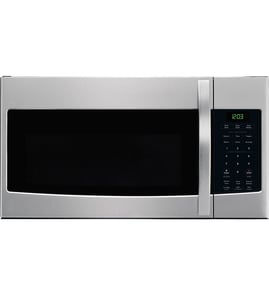
No. Over-the-range microwaves are built around similar cabinet standards, but they do not all share the same dimensions. For your GE JVM6172SK3SS microwave/hood combo, you should measure your existing cutout and compare width, height, depth, and venting alignment before choosing any replacement.
Typical over-the-range microwave size ranges
Most OTR units fall into a few common “families” of sizes:
- Width: usually about 30 inches (some are closer to 24 inches)
- Height: commonly 16 to 18 inches (low-profile models are often around 10 to 11 inches)
- Depth: commonly 15 to 18 inches (handle and door can add extra projection)
- Mounting/venting: bolt pattern and duct location can vary even when the width matches
What to measure before you buy
Use a tape measure and write down these numbers from your current installation:
- Cabinet opening width (side-to-side)
- Space from cabinet bottom to range top (clearance)
- Maximum allowed depth (including door swing and handle)
- Location of the upper cabinet mounting holes and power cord access
- Venting setup: recirculating vs. outside vent (top or rear)
Quick comparison table
| Feature | “Standard” OTR | Low-profile OTR | Why it matters |
|---|---|---|---|
| Width | ~30 in. | ~30 in. | Fits most cabinet openings |
| Height | ~16 to 18 in. | ~10 to 11 in. | Changes cabinet clearance |
| Depth | ~15 to 18 in. | ~15 to 18 in. | Affects how far it sticks out |
Why it matters
Even small differences can prevent a clean swap. A microwave can match the cabinet width but still fail to fit because of height, depth, mounting plate pattern, or vent damper alignment. If you are converting between venting styles, parts like the microwave vent damper WB06X10920 may also come into play.
Last updated: February 2026
Is the JVM6172SK3SS easy to use?
Yes. The GE JVM6172SK3SS microwave/hood combo is designed to be straightforward for everyday cooking, with a typical GE over-the-range layout: a keypad for time/weight entry, quick-start style cooking, and simple vent and cooktop light controls.
What “easy to use” usually means on this model type
Most microwave/hood combos like the JVM6172SK3SS feel easy to use when these basics are working smoothly:
- Keypad responds consistently to presses
- Door opens and closes cleanly and latches without slamming
- Turntable rotates quietly and steadily
- Vent fan and cooktop light controls are simple and predictable
- Common tasks (reheat, timed cook, defrost) take only a few button presses
Quick checks if it feels hard to use
If the microwave seems finicky (won’t start, stops when you close the door, or needs repeated button presses), the issue is often mechanical at the door or a basic internal safety circuit.
- If the door doesn’t “click” closed firmly, inspect the latch area for looseness or binding
- If it won’t run unless you lift or push the door, the latch or interlock parts are often involved
- If the turntable is noisy or not rotating, check the roller/support and motor function
- If the cooktop light is dim or out, replace the bulb
Parts that commonly affect day-to-day usability
| Symptom | Common area | Example part for JVM6172SK3SS |
|---|---|---|
| Won’t start or starts intermittently | Door interlock system | Micro-switch WB24X830 |
| Door doesn’t latch smoothly | Latch mechanism | Microwave latch body WB06X10676 |
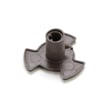
| Turntable not rotating | Turntable drive | Microwave turntable motor WB26X10233 |
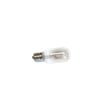
| Cooktop light out | Lighting | Microwave light bulb WB36X10003 |
Why it matters
On a microwave/hood combo, “ease of use” depends heavily on the door interlock system and turntable operation. When those are working correctly, the controls and daily operation feel simple and consistent.
Last updated: February 2026
What is the life expectancy of a GE microwave?
Most GE microwaves, including over-the-range models like JVM6172SK3SS, typically last 7 to 10 years with normal household use. Heavy daily cooking, poor airflow, and skipped cleaning shorten lifespan; basic maintenance and prompt repair of small issues help you reach the upper end.
Typical lifespan and what changes it
A microwave/hood combo works harder than a countertop unit because it also handles ventilation heat and grease.
Common factors that affect life expectancy:
- Daily run time (reheating vs. long cook cycles)
- Vent fan use while cooking on the range (heat management)
- Grease buildup on filters and internal airflow paths
- Door closing habits (slamming stresses latches and interlock switches)
- Power quality (surges can damage control components)
What usually fails first (and what it looks like)
These are common wear items and symptoms we see on GE microwave/hood combos:
- Door interlock system: won’t start, starts then stops, or blows a fuse (often tied to switches and latch parts)
- Turntable drive: turntable stops rotating or is noisy (motor or support issues)
- Cooktop light: light out or flickering
- Heating circuit: runs but does not heat (high-voltage components)
Quick part-to-symptom guide
| Symptom | Common area | Example part for JVM6172SK3SS |
|---|---|---|
| Won’t start or stops when door moves | Door interlock | Micro-switch WB24X830 |
| Turntable not turning | Turntable drive | Microwave turntable motor WB26X10233 |
| Poor odor control in recirculating mode | Vent filtration | Microwave charcoal filter WB02X11536 |
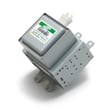
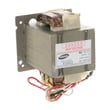
| Runs but does not heat | High-voltage circuit | Microwave magnetron WB27X11079 |
Why it matters
Knowing the typical 7 to 10 year lifespan helps you decide whether to repair or replace. If your JVM6172SK3SS is near that range and needs a major heating repair, comparing part cost and labor to replacement value usually leads to a clearer decision.
Maintenance that extends microwave life
- Run the vent fan when cooking on the range to reduce heat stress
- Clean grease filters regularly and replace charcoal filters as needed
- Keep the door and latch area clean so switches engage correctly
- Never run the microwave empty
- Use microwave-safe cookware only
For more prevention tips, see never do these things with a microwave.
Last updated: February 2026