Installation guide
 Owner’s manual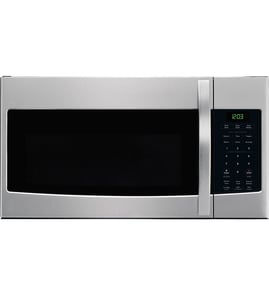



What is the average lifespan of a GE microwave?
Most GE microwaves last about 7 to 10 years with normal household use. For an over-the-range model like GE PVM9179SF2SS, lifespan depends most on ventilation, keeping the interior clean, and avoiding repeated overheating; our PVM9179SF2SS owner’s manual covers the care and operating practices that help it last.
Typical lifespan and what changes it
In real homes, we see these patterns most often:
- Light use (reheating only): often closer to 10 years
- Daily cooking (multiple cycles/day): often closer to 7 years
- Poor airflow or heavy grease buildup: can shorten life noticeably
- Frequent door slamming or misalignment: can lead to early door-switch issues
Quick habits that extend microwave life
These are the highest-impact steps for a microwave/hood combo:
- Run the hood fan when cooking on the cooktop to reduce heat and steam exposure.
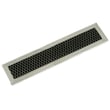
- Keep the grease filters and vent path clean so the unit can cool properly.
- Wipe spills quickly; dried-on food can cause hot spots and arcing.
- Use microwave-safe containers; avoid metal or foil contact.
- Stop using the unit if the door does not close smoothly or feels loose.
Repair vs. replace: a practical guide
Use this as a quick decision check.
| Situation | Usually makes sense to… | Why |
|---|---|---|
| Unit is under ~5 years old and otherwise solid | Repair | Parts and labor often restore full function |
| 7 to 10 years old with a single clear failure | Repair if cost is reasonable | You may get several more years |
| 10+ years old with multiple symptoms | Replace | Reliability drops and repairs stack up |
Why it matters
A microwave that is struggling (slow heating, loud fan noise, intermittent power) often runs hotter and longer per cycle. That extra stress can shorten the life of key components like door interlocks, thermal protection, and internal cooling airflow parts.
Last updated: February 2026
What are common problems with GE Profile microwaves?
Common problems we see with GE Profile microwave/hood combos like model PVM9179SF2SS include no power, the microwave runs but does not heat, keypad or sensor issues, turntable problems, and vent or fan concerns. Many fixes start with power checks and door-switch inspection; some repairs require a technician.
Most common symptoms and what they usually point to
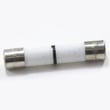
- Dead/no display: tripped breaker, loose outlet connection, blown internal fuse, or an overheated safety device.
- Runs but does not heat: door interlock problem, or a high-voltage component issue (magnetron/diode/capacitor).
- Starts then stops: overheating protection opening, airflow restriction, or a failing interlock switch.
- Buttons do not respond: control panel or control board issue; sometimes a stuck key.
- Turntable not rotating: tray/roller alignment issue or a failed turntable motor.
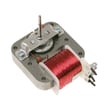
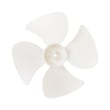
- Fan/vent issues: blocked damper/ducting, misaligned exhaust adaptor, or a blower problem.
Quick checks we recommend before ordering parts
- Confirm the outlet is working and the breaker is fully reset.
- Make sure the door closes firmly and is not sagging.
- Listen for a clear “click” at the door latch area (often tied to interlock switches).
- Check that the vent damper swings freely and the ducting is aligned (important on over-the-range installs).
- If the unit is newly installed, verify it is mounted correctly to both the top cabinet and wall per the PVM9179SF2SS installation guide.
Parts that commonly solve “won’t start” or door-related issues
If the microwave will not run, runs intermittently, or stops when the door is moved, the door interlock circuit is a frequent cause.
| Symptom | Common part to inspect | Example part for this model |
|---|---|---|
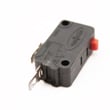
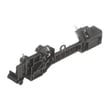
| No start or intermittent start | Primary interlock switch | Primary switch WB24X10047 |
| Blows fuse or acts erratic when closing door | Monitor switch | Monitor switch WB24X25397 |
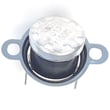
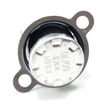
| Shuts down after heating | Thermal cut-off | Microwave thermal cut-off WB21X10148 |
Why it matters
Microwaves contain high-voltage components that can store dangerous energy even when unplugged. We use the simplest checks first (power, door alignment, airflow) to avoid unnecessary parts replacement and to keep troubleshooting safe and efficient.
Last updated: February 2026
Is GE Profile considered high end?
Yes. GE Profile is widely considered GE’s premium (high-end) line; it typically adds upgraded finishes, more advanced cooking and ventilation features, and more convenience options than standard GE models, while still sitting below GE’s luxury Monogram lineup.
What “high end” means for a microwave/hood combo like PVM9179SF2SS
GE Profile positioning usually shows up as feature upgrades and design details rather than a different basic installation style. For this over-the-range microwave, you can expect a premium feature set compared with many entry-level units.
Common premium differences you’ll notice:
- More sensor-driven cooking options (for example, humidity or auto-cook features)
- Stronger or more configurable vent fan settings
- More polished exterior styling and controls
- More convenience features (lighting, presets, easier cleaning surfaces)
- Better overall fit and finish compared with base lines
Quick comparison: GE vs GE Profile vs Monogram
| Line | Typical positioning | What you’re paying for most |
|---|---|---|
| GE | Mainstream | Core performance and value |
| GE Profile | Premium | More features, styling, and convenience |
| Monogram | Luxury | High-end design, pro-style options, luxury pricing |
Why it matters when buying parts or planning a repair
Knowing the product line helps you set expectations for parts and service. Premium models often use additional sensors, switches, and control components that are model-specific.
For PVM9179SF2SS, examples of parts that support premium features include:
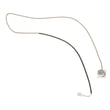
- Microwave humidity sensor WB27X10857
- Door safety interlock components (switches and mounts)
- Venting and mounting hardware that must match the cabinet and wall setup
Where to confirm features and installation requirements
For the exact feature set and installation requirements for your specific unit, we recommend checking the documentation for your model:
Last updated: February 2026
What replaced PVM9179SF2SS?
GE does not use a single universal “replacement model” for the PVM9179SF2SS microwave/hood combo; the correct successor depends on your cabinet cutout, venting direction (recirculating or ducted), and electrical setup. We recommend matching the installation requirements in the PVM9179SF2SS installation guide before choosing a new unit.
How to choose the right replacement
Use these checks to avoid fit and venting problems:
- Confirm mounting space and cabinet cutout measurements from the installation instructions.
- Identify your venting setup: outside top, outside rear, or recirculating.
- Verify power: most over-the-range microwaves use a dedicated 120 V, 15 to 20 amp grounded outlet.
- Check whether your existing mounting plate and top cabinet template can be reused or must be replaced.
- Match door swing and handle clearance to nearby cabinets.
Quick compatibility checklist
If you are comparing models, line up these items side-by-side.
| What to match | Why it matters | Where to verify |
|---|---|---|
| Cutout and mounting space | Prevents gaps and cabinet interference | Installation instructions |
| Exhaust type and duct location | Avoids reworking ducting | Installation instructions |
| Electrical requirements | Prevents nuisance breaker trips | Installation instructions |
| Mounting hardware/plate style | Ensures safe support | Installation instructions |
Why it matters
Over-the-range microwaves are installed as a system (mounting plate, cabinet template, exhaust adaptor/damper, and filters). Choosing a “close” model without matching the cutout and venting often leads to extra carpentry, duct changes, or an unsafe mount.
If you are replacing because of a failure
If the microwave is not running or not heating, we recommend troubleshooting first; a repair can be more cost-effective than a full replacement. Start with the PVM9179SF2SS manual for operating checks and basic symptoms.
Last updated: February 2026