 Owner’s manual
 Error Codes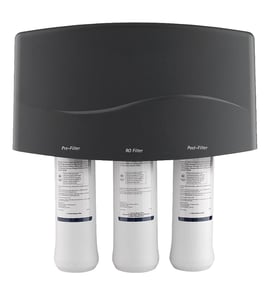






What is a major problem with reverse osmosis?
A major problem with reverse osmosis (RO) is that it sends some water to the drain as “reject” or waste water while it makes purified product water. On the Kenmore 625384700 RO system, this is normal operation because the membrane flushes minerals and impurities away.
RO works by forcing water through a semi-permeable membrane; clean water goes to the faucet or storage, and the concentrated minerals and impurities go to the drain.
Common points customers notice:
- You will see drain flow while the system is making water.
- Production is slow by design (about 1 ounce per minute through the membrane).
- The system stores water in a pressurized tank so the faucet can flow faster.
- Water quality and filter condition affect how much water goes to the drain.
This model uses an automatic shutoff valve that closes when the RO faucet is closed and the storage tank is full. That feature helps prevent continuous drain flow once the tank is topped off.
If you still see constant drain flow, the most common causes are a valve issue, a diaphragm issue, or a tank that is not reaching proper pressure.
| Symptom | What it usually points to | What to check first |
|---|---|---|
| Drain runs only while filling | Normal RO operation | Let the tank fill fully, then recheck |
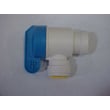
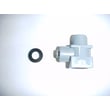
| Drain runs even with tank full | Shutoff or valve problem | Inspect the waterworks reverse osmosis system valve diaphragm 7099296 |
| Low faucet flow, frequent drain activity | Tank not storing/pressurizing | Check the waterworks reverse osmosis system storage tank 7205326 |
Waste water is part of how RO removes total dissolved solids (TDS). Keeping supply water within the system’s specifications and replacing filters on schedule helps the membrane last longer and keeps performance steady.
- Confirm the cold water supply is within the quality limits listed in the 625384700 owner’s manual.
- Replace clogged prefilter and postfilter cartridges on schedule (a plugged prefilter can reduce production and change drain behavior).
- If the drain never stops after the tank should be full, check the shutoff valve components and diaphragm.
- If the faucet flow is weak, verify the storage tank is filling and holding pressure.
Last updated: January 2026
What is the average cost of a whole house reverse osmosis system?
A whole-house reverse osmosis (RO) system typically costs $1,000 to $4,800 for the equipment, and the installed total commonly lands around $1,100 to $5,300+ depending on plumbing complexity and any needed pre-treatment. Your Kenmore 625384700 is a point-of-use RO drinking water system, not a whole-house unit.
- Capacity and flow rate (higher gallons-per-day and higher peak flow cost more)
- Number of stages (sediment, carbon, RO membrane, postfilter, remineralization)
- Pre-treatment needs (hard water, iron, sediment, chlorine, well water conditions)
- Tank size and materials (larger storage and higher-grade components cost more)
- Installation scope (new drain connection, dedicated faucet, long tubing runs)
| System type | Typical equipment cost | Typical installed total |
|---|---|---|
| Point-of-use under-sink RO (like Kenmore 625384700) | $150 to $600 | $250 to $1,200 |
| Whole-house RO (point-of-entry) | $1,000 to $4,800 | $1,100 to $5,300+ |
| Whole-house RO with heavy pre-treatment | $3,000 to $8,000+ | $4,000 to $10,000+ |
We recommend pricing these line items together so you do not get surprised after purchase:
- RO unit and storage tank
- Any pre-filters or conditioning equipment (sediment filtration, softener)
- Plumbing labor and any code-required fittings
- Ongoing filter and membrane replacements
If you are maintaining the Kenmore 625384700, the biggest recurring cost is usually the RO membrane and filter cartridges; the manual also notes the system needs periodic water testing to confirm performance. See the 625384700 owner's manual for care guidance, operating limits (including pressure and temperature), and maintenance intervals.
Whole-house RO is a major plumbing project; matching the system to your water pressure, water quality, and household demand helps avoid low flow, excessive waste water, and premature membrane replacement.
Last updated: January 2026
Why am I thirsty after drinking reverse osmosis water?
Reverse osmosis water from Kenmore model 625384700 can taste very “clean” because the RO membrane filters out minerals (total dissolved solids) along with impurities. If your diet is low in electrolytes, you may feel thirsty sooner even after drinking plenty of RO water; adding electrolytes through food often helps.
If the system is over-filtering due to a maintenance issue, water quality and taste can change. We recommend these quick checks using the 625384700 owner's manual.
- Confirm your supply water pressure is within 40 to 100 psi.
- Replace worn filters on schedule (prefilter, postfilter, and RO membrane).
- Make sure the system has been properly purged after filter changes.
- If water production is slow, verify the storage tank is filling and the shutoff is working.
- Test your water periodically to confirm the system is performing satisfactorily.
RO water itself is not “dehydrating”, but it is low in dissolved minerals. Thirst after drinking can also be driven by lifestyle and health factors.
- High sodium meals or salty snacks
- Heavy exercise or sweating
- Dry indoor air (winter heating)
- Caffeine or alcohol intake
- Not eating enough potassium, magnesium, or calcium
| Water type | Mineral content (TDS) | Typical taste | What it means for thirst |
|---|---|---|---|
| Reverse osmosis water | Very low | Very “clean” | You may want electrolytes from food/drinks |
| Mineral-containing water | Higher | More “minerally” | Can feel more satisfying for some people |
Your Kenmore 625384700 system is designed to remove minerals and impurities through a semi-permeable membrane, then deliver product water to the faucet or storage tank. Keeping filters maintained and verifying pressure and performance helps ensure you get consistent water quality and normal drinking experience.
Last updated: January 2026