 Error Codes



How old is my GE water heater by serial number?
On a GE water heater like model GG40S12BXR01, we determine age by decoding the serial number. On many GE units, the first four digits after the “GE” (or “GENG”) portion of the serial number are MMYY: the first two digits are the month and the next two digits are the year.
How to decode the serial number (MMYY method)
Look at the serial number label on the tank and find the digits that come immediately after GE (or GENG).
- Find the first 4 digits after GE or GENG
- Read the first 2 digits as the month (01 to 12)
- Read the next 2 digits as the year (for example, 19 = 2019)
- Convert that into a manufacture date
- Use the manufacture date to estimate the unit’s age in years
Quick examples
| Serial digits after GE/GENG | Manufacture date | What it means |
|---|---|---|
| 0319 | March 2019 | Built in 03/2019 |
| 1121 | November 2021 | Built in 11/2021 |
| 0708 | July 2008 | Built in 07/2008 |
Where to find the serial number
Most GE gas water heaters place the rating plate on the outside of the tank, often:
- On the side of the tank near the gas control
- Near the bottom access/door area
- On the front jacket panel
If the label is damaged or unreadable, a replacement label is sometimes available, but it does not change the original manufacture date. For label-related parts, see refrigerator nameplate WR04X10181.
Why it matters
Knowing the manufacture date helps us choose the right GE replacement parts (like a pilot assembly, burner assembly, thermistor, or T and P valve) and set realistic expectations for maintenance and service life.
Last updated: February 2026
What is the most common problem with gas water heaters?
The most common problem we see with gas water heaters like the GE GG40S12BXR01 is ignition trouble, usually a weak or failed pilot/ignition system or a failing gas control that will not keep the burner running. Sediment buildup in the tank is another top issue because it reduces efficiency and hot water output.
Most common symptoms and what they usually point to
- No hot water or burner will not stay lit: pilot/ignition issue or gas control sensing problem
- Rumbling, popping, or banging: sediment buildup on the tank bottom
- Water takes longer to heat: restricted dip tube, sediment, or burner performance issue
- Water around the heater: leaking drain valve, fittings, or (worst case) tank leak
- Water dripping from the relief line: temperature/pressure relief valve opening due to overheating or pressure
Quick checks we recommend (before replacing parts)
- Confirm the gas shutoff valve is fully open and other gas appliances work.
- Make sure the venting is clear and the area around the burner is not blocked.
- Listen for ignition and burner operation; repeated attempts often indicate a sensing or control issue.
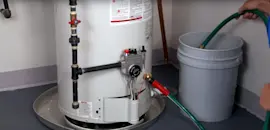
- If you hear rumbling, plan a tank flush and inspect the drain valve for seepage.
Parts that commonly solve these problems on this model
| Problem you notice | Part that often relates | What it does |
|---|---|---|
| Pilot will not stay lit | Pilot assembly - long nat WS52X23201 | Provides pilot flame and ignition components for natural gas setups |
| Burner will not run reliably | Gas control valve (atm - ng) thermistor WS21X24921 | Monitors temperature and helps the control regulate burner operation |
| Leaking during flushing or at the outlet | Valve drain brass WS06X23203 | Lets you drain/flush the tank; can seep when worn |
| Dripping from relief discharge | T-p valve WS06X22864 | Safety valve that opens if temperature or pressure gets too high |
Why it matters
Ignition and control problems can leave you with no hot water, while sediment buildup quietly drives up fuel use and shortens tank life. Catching the symptom early helps you choose the right repair path and avoid repeat failures.
For diagnostic help when you see a fault code, use GE geospring error codes.
Last updated: February 2026
What are the parts on a gas water heater?
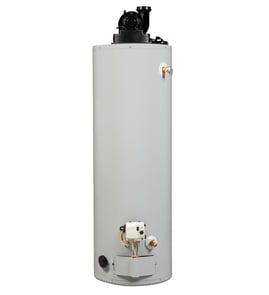
A GE gas water heater like model GG40S12BXR01 is built around a storage tank plus a gas burner system and safety controls that heat water and vent combustion safely. The most common serviceable parts include the dip tube, anode rod, drain valve, and temperature and pressure relief valve.
Main parts you will typically find
- Tank: stores hot water and is insulated to reduce heat loss
- Gas control valve/thermostat: regulates gas flow and water temperature
- Burner and pilot assembly: ignites and maintains the flame that heats the tank
- Flue and venting parts: carry exhaust gases safely out of the home
- Safety devices: temperature and pressure relief valve (T&P valve) and related insulation
Model-relevant examples for GG40S12BXR01
These are common parts we see customers replace on this GE model:
- T-p valve WS06X22864
- Valve drain brass WS06X23203
- Dip tube (24l) WS08X23164
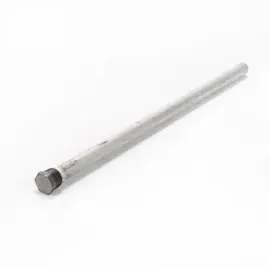
- Rod anode WS02X22821
- Pilot assembly - long nat WS52X23201
- Burner assembly (18.5 - 2.90 - atm - ng) WS50X23192
Quick “what it does” table
| Part | What it does | Common symptom when it fails |
|---|---|---|
| Dip tube | Directs incoming cold water to the bottom of the tank | Hot water runs out fast, lukewarm water |
| Anode rod | Protects the tank from corrosion | Rusty water, sulfur odor, shortened tank life |
| Drain valve | Lets you drain/flush the tank | Leaks at valve, won’t drain, clogged with sediment |
| T&P valve | Releases pressure/temperature for safety | Dripping/discharge, won’t reseat, corrosion |
| Pilot/burner | Provides flame to heat water | No hot water, pilot won’t stay lit |
Why it matters
Knowing the major components helps you troubleshoot faster and order the right replacement part for your GE GG40S12BXR01. For example, “no hot water” often points to the pilot/burner or gas control, while “leaking at the bottom” often points to the drain valve or fittings.
Helpful DIY reference
Last updated: February 2026
Is it cheaper to repair or replace a water heater?
For a GE GG40S12BXR01 gas water heater, it’s usually cheaper to repair when the problem is isolated (pilot won’t stay lit, a leaking drain valve, a bad sensor) and the tank itself is sound; replacement is the better value when the tank is leaking, the heater is 10+ years old, or repairs are becoming frequent and expensive.
Quick decision checklist
- Replace if you see water leaking from the tank body (not a fitting or valve).
- Repair if the issue is a serviceable component like the pilot, burner, drain valve, or T and P valve.
- Replace if you’ve had multiple repairs in the last 1 to 2 years.
- Repair if the heater is under ~10 years old and the fix is straightforward.
- Replace if you have rusty water, heavy sediment issues, or recurring shutdowns after parts have been replaced.
Common repair scenarios for this model
These are typical “repair-first” problems on gas water heaters like the GG40S12BXR01:
| Symptom | Likely direction | Example part to check |
|---|---|---|
| Pilot won’t stay lit | Repair | Pilot assembly - long nat WS52X23201 |
| Burner won’t ignite or flame is weak | Repair | Burner assembly (18.5 - 2.90 - atm - ng) WS50X23192 |
| Water won’t drain or drain valve drips | Repair | Valve drain brass WS06X23203 |
| T and P valve weeps or won’t reseat | Repair (often) | T-p valve WS06X22864 |
Cost rule of thumb we use
A practical way to decide is to compare the total repair cost (parts + labor) to replacement.
- If the repair is under about 50% of replacement cost, repairing is usually the cheaper move.
- If the repair is over about 50%, replacement usually makes more financial sense.
Why it matters
A leaking tank typically means the internal tank has failed; replacing parts will not stop that type of leak. Repairing the right component (pilot assembly, burner assembly, drain valve, or T and P valve) can restore safe operation and extend service life when the tank is still in good shape.
Helpful DIY references
- How to replace a water heater drain valve
- How to replace a water heater temperature and pressure t and p relief valve
Last updated: February 2026
Can you replace parts on a hot water heater?
Yes. On a GE GG40S12BXR01 gas water heater, we can replace many serviceable parts (like the T&P valve, drain valve, anode rod, dip tube, pilot, or burner) to restore performance and extend the heater’s life; shut off gas and water and follow safe procedures before starting.
Parts you can commonly replace
These are typical DIY-to-intermediate repairs on a gas water heater when the tank itself is still sound:
- T&P relief valve (leaking or weeping) using the t-p valve WS06X22864
- Drain valve (won’t close, clogged, or leaking) using the valve drain brass WS06X23203
- Anode rod (odor, accelerated corrosion, rusty water) using the rod anode WS02X22821
- Dip tube (reduced hot water volume, lukewarm water) using the dip tube (24l) WS08X23164
- Pilot assembly (pilot won’t stay lit) using the pilot assembly - long nat WS52X23201
- Burner assembly (poor combustion, delayed ignition) using the burner assembly (18.5 - 2.90 - atm - ng) WS50X23192
When to stop and use a professional
Gas and combustion issues can become unsafe quickly. We recommend a qualified technician if you see any of these:
- You smell gas or suspect a gas leak
- Sooting, scorch marks, or signs of backdrafting near the draft hood
- Repeated pilot outages after basic cleaning and inspection
- Water leaking from the tank body or seams (not from a fitting)
Quick safety checklist before you start
Use this as a minimum baseline for most part replacements:
- Turn the gas control to OFF; let the burner area cool
- Shut off the cold water supply to the tank
- Open a hot water faucet to relieve pressure
- Drain water to a safe level if you’re removing the drain valve, anode rod, or dip tube
- Restore water flow and purge air before relighting the pilot
Common symptoms and likely parts
| Symptom | Common cause | Part to check |
|---|---|---|
| Valve dripping from discharge pipe | Relief valve not sealing or overheating condition | T-p valve WS06X22864 |
| Drain valve won’t stop dripping | Worn valve seat or debris | Valve drain brass WS06X23203 |
| Hot water runs out fast | Broken/short dip tube | Dip tube (24l) WS08X23164 |
| Pilot won’t stay lit | Weak pilot, dirty pilot, or related components | Pilot assembly - long nat WS52X23201 |
Why it matters
Replacing the right water heater parts can fix leaks, improve recovery, and reduce nuisance shutdowns without replacing the entire unit. It also helps protect the tank from corrosion (anode rod) and keeps safety devices (T&P valve) working correctly.
Last updated: February 2026