



Does KitchenAid sell replacement parts?
Yes. KitchenAid sells replacement parts and accessories, and we also carry model-specific parts for your KitchenAid built-in microwave model KMBP100ESS20 so you can repair common issues like a door not latching, no power, or a turntable that will not rotate.
What you can replace on model KMBP100ESS20
For this built-in microwave, we commonly see customers replace safety, power, and turntable-drive components.
- Door safety and latch-related parts (interlock system)
- Power protection parts (fuse)
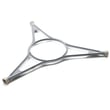
- Turntable drive parts (motor and coupler)
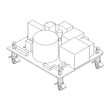
- Heating system electronics (inverter, magnetron)
- Cooling and airflow parts (cooling fan)
Popular replacement parts we stock for this model
Here are examples of KitchenAid-compatible parts available for KMBP100ESS20:
| Symptom | Part to check first | What it does |
|---|---|---|
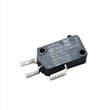
| Microwave will not start | Switch W10211972 | Confirms the door is closed so the unit can run |
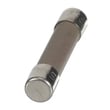
| Dead, no display | Fuse mda 20a W11188752 | Protects the microwave from overload |
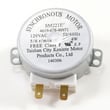
| Turntable not turning | Microwave turntable motor W10911403 | Rotates the turntable during cooking |
How to make sure you order the right part
Microwave parts are model- and revision-specific, especially for controls and door assemblies.
- Match the full model number: KMBP100ESS20
- Compare the part ID on the listing to your original part
- Verify finish when ordering cosmetic assemblies (stainless vs black stainless)
- For electrical parts, confirm symptoms before replacing multiple components
- If wiring looks damaged, repair the connection before replacing boards
Why it matters
Using the correct KitchenAid replacement part helps restore safe operation (especially the door interlock system) and prevents repeat failures. On built-in microwaves, correct fit and electrical compatibility are critical for reliable heating and ventilation.
Last updated: February 2026
Is it worth repairing a built-in microwave?
Yes, repairing a built-in microwave like the KitchenAid KMBP100ESS20 is usually worth it when the problem is a common service part (switch, fuse, fan, control) and the cabinet cutout and trim are still in good shape. Built-in replacement costs and installation effort are typically higher than a repair.
Quick way we decide: repair vs replace
We look at three things first:
- Age and condition: If the unit is under about 8 to 10 years old and the cavity, door, and trim are solid, repair is the better value.
- Type of failure: No heat, dead display, or door won’t start often points to repairable components.
- Total repair cost: If parts plus labor are under about 50% of replacement cost, repair is the smart move for most built-in models.
Common repairs that are usually worth it
These are frequent, cost-effective fixes on built-in microwaves:
- Door won’t start or stops when you open or close the door: check the switch W10211972 and related door latch alignment
- Completely dead (no display): check the fuse mda 20a W11188752
- Loud running or overheating: inspect the assembly, cooling fan W11344874
- Turntable not rotating: test the microwave turntable motor W10911403 and coupler
- Intermittent operation or keypad issues: control components may be involved
Repairs that often push you toward replacement
Some failures are higher-cost and can make replacement the better value:
| Symptom | Likely area | Typical direction |
|---|---|---|
| Runs but does not heat | High-voltage system | Compare repair total vs replacement |
| Burning smell, repeated fuse blowing | Shorted wiring or HV components | Service call recommended |
| Door damage, hinge issues, poor seal | Door system | Replace only if parts cost stays reasonable |
Why it matters for built-in microwaves
With a built-in unit, replacing the microwave can also mean dealing with fit, trim, and installation time. A targeted repair keeps your KitchenAid KMBP100ESS20 in place and restores safe, reliable operation without reworking the cabinet opening.
If you are troubleshooting electrical parts, we follow safe test practices and use the steps in how to tell if a fuse is blown before ordering parts.
Last updated: February 2026
Can you fix a KitchenAid microwave?
Yes, we can often fix a KitchenAid built-in microwave like model KMBP100ESS20 when the problem is a simple power, door, or turntable issue; repairs involving high-voltage components (heating circuit) should be handled by a qualified technician for safety.
What we recommend checking first (safe DIY)
- Confirm the outlet has power (try a lamp or small appliance).
- Reset the breaker; built-in microwaves can trip a dedicated circuit.
- Make sure the door closes firmly and the latch area is clean.
- If the unit is dead, a blown internal fuse is common; see fuse mda 20a W11188752.
- If the turntable is not rotating, inspect the coupler and motor: microwave turntable motor W10911403 and tt drive ht W11179756.
When it is repairable vs. when to stop
Microwaves are very repairable, but the right repair depends on the symptom.
| Symptom | Common cause | Typical fix |
|---|---|---|
| Completely dead (no display) | Blown fuse, loose wiring, control issue | Test/replace fuse; check connections; control diagnosis |
| Runs but does not heat | Door interlock issue, inverter/magnetron circuit | Pro diagnosis; possible inverter or magnetron replacement |
| Turntable not turning | Motor or coupler problem | Replace motor or coupler |
| Starts then stops when door moves | Door interlock switch/holder issue | Inspect/replace switch or switch mount |
Parts that commonly solve the problem on KMBP100ESS20
These are frequent fixes for the symptoms above:
- Switch W10211972 (door interlock switch)
- Holder, switch W11214928 (mounting for the interlock switch)
- Fuse mda 20a W11188752 (loss of power)
- Microwave turntable motor W10911403 (no turntable rotation)
- Inverter W11578579 (heating circuit diagnosis)
Why it matters
A microwave that will not start, stops mid-cycle, or will not heat is often reacting to a safety condition (door interlock, overheating, or electrical protection). Fixing the root cause prevents repeat fuse failures and helps protect the control board.
Last updated: February 2026
What usually breaks in a microwave?
In a KitchenAid built-in microwave like model KMBP100ESS20, the parts that most often fail are the door interlock system, internal fuse, cooling/turntable components, and the high-voltage heating system. Many “dead” or “won’t heat” complaints trace back to a switch W10211972 or a fuse mda 20a W11188752.
Most common failures (and what you’ll notice)
- Door interlock switch or mount: won’t start, stops when the door is touched, or shows door-related symptoms (see switch W10211972 and holder, switch W11214928).
- Internal fuse: completely dead display, no response to keypad (see fuse mda 20a W11188752).
- Turntable drive: tray does not rotate or is noisy (see microwave turntable motor W10911403 and tt drive ht W11179756).
- Cooling fan: loud fan, overheating shutoff, or burning smell (see assembly, cooling fan W11344874).
- Heating system electronics: runs but does not heat, or heats inconsistently (often involves the inverter or magnetron, such as inverter W11578579 or magnetron 2m W11578959).
- Controls: unresponsive buttons, random beeping, or blank/garbled display (often involves electronic control board WPW10260060 or control W10776407).
Quick triage: symptom-to-part guide
| Symptom | Most likely area | Example part for KMBP100ESS20 |
|---|---|---|
| Completely dead | Fuse or power feed | Fuse mda 20a W11188752 |
| Won’t start, door-related | Interlock switch system | Switch W10211972 |
| Runs but no heat | Inverter or magnetron | Inverter W11578579 |
| Turntable not turning | Motor or coupler | Microwave turntable motor W10911403 |
| Overheats or loud fan | Cooling fan | Assembly, cooling fan W11344874 |
Why it matters
Microwaves rely on safety interlocks and high-voltage components. A simple failure (like a fuse or door switch) can look like a major breakdown, while heating-system issues (inverter/magnetron) usually require more involved diagnosis.
Safety note before troubleshooting
- Unplug power before any inspection.
- Do not open the cabinet; high-voltage parts can retain a dangerous charge.
- If the unit is “dead” after a power reset, focus on safe checks and part replacement planning rather than internal disassembly.
Last updated: February 2026