



Can a countertop microwave be used as built-in?
Yes, a countertop microwave can be placed into a cabinet opening for a built-in look, but it must have the clearances and ventilation the manufacturer requires. For safety and reliability, we recommend using a true built-in unit (like the Jenn-Air JMC2430LL00) or a countertop model that’s specifically approved for built-in installation.
What makes a countertop microwave risky to “build in”
When a countertop unit is boxed into cabinetry, it often cannot shed heat correctly. That can lead to overheating, nuisance shutoffs, poor cooking performance, or damage to surrounding cabinets.
- Air intake and exhaust vents can get blocked
- Heat can build up around the magnetron and electronics
- The power cord can be pinched or routed unsafely
- The cabinet cutout may not match required clearances
- Service access becomes difficult (and repairs take longer)
Safer options that still free up counter space
If you want the built-in look, these approaches are the most dependable.
| Option | Best for | What to watch for |
|---|---|---|
| True built-in microwave (like JMC2430LL00) | Permanent, clean install | Requires correct cutout and mounting method |
| Countertop microwave approved for built-in use | Budget-friendly built-in look | Must follow the exact clearance/venting rules |
| Microwave trim kit (model-specific) | Finished look in a cabinet | Trim kits are not universal; match the exact model |
Quick checks before you install anything in a cabinet
Use these checks to avoid common installation problems.
- Confirm the microwave is explicitly rated for built-in installation
- Verify required side, top, and rear clearances
- Make sure vents are not blocked by the cabinet or trim
- Use a dedicated, properly grounded outlet (no extension cord)
- Confirm the door can open fully without hitting adjacent cabinetry
Why it matters
Microwaves move a lot of heat through specific vent paths. A built-in microwave like the Jenn-Air JMC2430LL00 is designed around those airflow and mounting requirements; a typical countertop model is not.
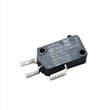
If you’re repairing an existing built-in microwave installation, door safety parts matter too. A worn door interlock switch can prevent safe operation; see the switch W10211972.
Last updated: February 2026
Is there a built-in microwave air fryer combo?
Yes. Built-in microwave combos with an air fry function exist, but your Jenn-Air JMC2430LL00 is a built-in microwave model page focused on replacement parts, not an air fryer upgrade kit. Air fry capability is typically built into specific convection microwave models rather than added later.
What “air fryer combo” usually means
Most “microwave air fryer combos” are convection microwaves that include an air fry mode (high heat plus forced air). They are designed that way from the factory.
Common features you will see on true air fry combo units:
- Convection heating element plus a high-speed fan
- Air fry preset or dedicated air fry mode
- Air fry basket or rack accessory
- Higher temperature capability than a standard microwave-only cavity
- Different control programming than non-convection models
Can I add air fry to a JMC2430LL00?
For built-in microwaves like the Jenn-Air JMC2430LL00, air fry is not a practical add-on. The air fry function depends on specific heating hardware, airflow design, and control software.
If you are troubleshooting performance that feels “weak” (slow cooking, uneven heating), focus on repairable components instead of trying to convert the unit.
Parts that relate to heating, airflow, and door safety
If your microwave is not heating or is shutting off, these model-matched parts are commonly involved:
| Symptom | Common area to check | Example model-matched part |
|---|---|---|
| Runs but does not heat | High-voltage system/control | Inverter W11578579 |
| Stops when door moves or won’t start | Door interlock circuit | Switch W10211972 and interlock W11033422 |
| Overheats or shuts down mid-cycle | Cooling airflow | Assembly, cooling fan W11344874 |
Why it matters
Air fry performance depends on controlled hot airflow and higher-temperature heating. If a microwave is missing that hardware by design, repairs (like replacing an inverter, interlock switch, or cooling fan) restore normal microwave operation but do not create air fry capability.
Last updated: February 2026
What is the disadvantage of a built-in microwave?
A built-in microwave like the Jenn-Air JMC2430LL00 typically costs more up front and is less flexible than a countertop unit because it is designed to fit a specific cabinet cutout. If it fails later, replacement can be harder because the new unit must match the opening and trim style.
Common disadvantages to plan for
- Higher total cost: the microwave plus trim, cabinetry, and labor often costs more than a freestanding model.
- More complex installation: it may require cabinet modification, dedicated electrical routing, and careful ventilation clearances.
- Harder replacement later: you often need the same size class and similar mounting points to avoid reworking the cabinet.
- Service access can be tighter: built-ins can be harder to pull out for diagnosis.
- Fewer “quick swap” options: style and finish matching (stainless, black trim) can limit choices.
What this means for repairs on JMC2430LL00
If your goal is to keep the existing built-in setup, repairing common wear items is often the simplest path because it preserves the cabinet fit.
Here are examples of parts on this model that commonly relate to “it won’t run” or “door won’t latch” complaints:
| Symptom | Common area to check | Example part for this model |
|---|---|---|
| Won’t start, acts dead when door closes | Door interlock circuit | Switch W10211972 |
| Door won’t close or unit stops when bumped | Door latch/interlock alignment | Interlock W11033422 |
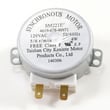
| Turntable not rotating | Turntable drive | Microwave turntable motor W10911403 |
Why it matters
Built-in microwaves are designed around a precise opening, so the cabinet becomes part of the “system.” Planning for fit and service access helps you avoid extra carpentry costs and reduces downtime if you ever need a repair.
Last updated: February 2026
Are microwaves with built-in air fryers any good?
Microwaves with built-in air fry are a good space-saving option for reheating plus crisping, but they usually do not match the browning and crunch of a dedicated air fryer. Jenn-Air model JMC2430LL00 is a built-in microwave with convection-style cooking features; it is not an air fry microwave.
What “good” means for microwave air fry combos
Air fry performance varies by design (fan airflow, heating element power, and rack or tray setup). In general, these units are best for smaller batches and convenience, not maximum crispiness.
- Best for: frozen snacks, reheating pizza, quick crisping
- Expect: lighter browning than many countertop air fryers
- Works best: single-layer cooking with space for airflow
- Tradeoff: smaller capacity than many standalone air fryers
- Cleanup: more splatter management than basic microwaving
Quick comparison
| Feature | Microwave with air fry | Dedicated air fryer | Convection microwave (like JMC2430LL00) |
|---|---|---|---|
| Main advantage | One appliance, crisping option | Strongest crisping | Built-in versatility, baking/roasting-style results |
| Crispiness | Good | Excellent | Good (varies by food and settings) |
| Batch size | Small to medium | Medium to large | Small to medium |
Tips for better crisping (air fry or convection)
- Use a low-sided, microwave-safe rack or tray so air can circulate.
- Cook in one layer; avoid stacking.
- Turn or rotate food halfway through.
- For breaded foods, a light oil mist improves browning.
- Keep the door closing and latching smoothly; if the microwave will not start or stops when the door moves, inspect the door interlock system (the switch W10211972 is one interlock-related part used on this model).
Why it matters
Air fry and convection results depend on consistent airflow and heat. If your priority is the crispiest finish, a dedicated air fryer wins; if you want built-in convenience and multi-cook flexibility, a convection microwave setup is the better fit.
Last updated: February 2026