- Kenmore refrigerator water filters
- Whirlpool refrigerator water filters
- Samsung refrigerator water filters
- GE refrigerator water filters
- LG refrigerator water filters
- Frigidaire refrigerator water filters
- KitchenAid refrigerator water filters
- Maytag refrigerator water filters
- Kenmore Elite refrigerator water filters
- Estate refrigerator water filters
- GE Profile refrigerator water filters
- Amana refrigerator water filters
- Bosch refrigerator water filters
- Dacor refrigerator water filters
- Electrolux refrigerator water filters
Top DIY repair help
View All Repair Categories
Appliances
Lawn & Garden
Power Tools
Home Improvement
Sports & Leisure
Heating & Cooling
Washer water usage explained
less than a minute readJan 30Kim Hillegass
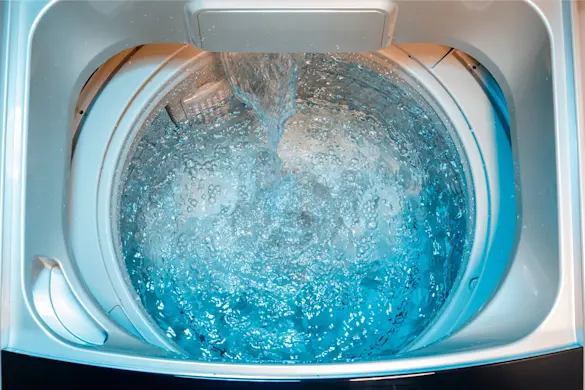
Have you ever wondered how much water a washing machine uses? You're not the only one. The answer depends on factors like the type of washer, the load size, and even the cycle.
Understanding your washer’s water use can satisfy more than curiosity. It can help you cut utility bills, spot potential problems, and keep your laundry routine running smoothly. And if you run into issues along the way, our washer DIY repair help page is a great place to start.
How much water does a washing machine use on average?
The amount of water your washer uses depends a lot on its design. Here’s a quick comparison:
| Washer type | Average gallons per load |
|---|---|
| Older top-load washer | 30-45 gallons |
| High-efficiency top-load washer | 12-17 gallons |
| Front-load washer | 15-25 gallons |
If you’re not sure which style of washer makes the most sense for your home, our look at the pros and cons of each compares top-load and front-load models in more detail.
What affects how much water a washer uses?
As the chart above shows, the type of washer plays a big role in how much water gets used. But that’s not the only factor; other settings and conditions also affect water levels:
Load size. Small loads don’t always mean less water. Some washers still fill nearly as much as they would for a full load.
Wash cycle. Heavy-duty or bulky cycles usually add more water, while delicate or quick-wash settings use less.
Age of the washer. Older machines weren’t designed with efficiency standards in mind and can use double or even triple the water of today’s models.
To save water (and money), it helps to know how to use your washing machine efficiently. And if your washer seems to keep filling endlessly, you may be dealing with an overfilling problem that needs further troubleshooting.
How to tell if your washer is using too much water
Sometimes it’s easy to spot when a washer is wasting water. If the tub fills higher than normal, water spills into the drum after it’s already full, or the fill levels are inconsistent from one load to the next, there’s likely a problem.
Common culprits include a faulty water-level sensor, a bad inlet valve, or issues with the control board. In many cases, you can fix the problem yourself by replacing the water-level pressure switch or swapping out a worn water inlet valve.
How much does washer water use impact your bill?
It doesn’t take long for a washer’s water use to show up on your utility bill. Run a traditional top-load washer at 40 gallons per load, five times a week, and you’ll rack up more than 800 gallons of water each month. Switch that out for a high-efficiency washer using 15 gallons per load, and you’ll cut that number down to about 300 gallons.
That difference (roughly 500 gallons a month) can be huge over the course of a year. And remember, if you wash in hot or warm cycles, you’re also paying to heat every one of those gallons. Saving water means saving energy too. If you want to boost efficiency even further, try these simple tips for cleaner clothes.
Ways to reduce water usage in your washer
Want to trim down your washer’s water use without sacrificing clean clothes? Here are a few smart habits that make a big difference:
Run full loads. Washing half a load uses almost as much water as a full one.
Pick cycles wisely. Heavy-duty isn’t for every load; save it for towels and bedding.
Keep it clean. A gunky door seal or detergent drawer can keep your washer from running efficiently.
Think about upgrading. If your washer is old enough to remember cassette tapes, it’s probably wasting water. A newer high-efficiency model uses far less.
Want even more ideas? Take a look at these washing machine tips. And if you’re stocking up on hoses, cleaners, or other laundry must-haves, we can help with that too.
When to repair vs. replace
If your washer is using too much water, the fix isn’t always a new appliance. Problems like overfilling or inconsistent fill levels are often caused by parts that can be replaced, like a faulty water-level sensor or inlet valve.
But if your washer has been around for years and keeps guzzling water no matter what you try, it may be time to think about upgrading. A new high-efficiency washer could pay for itself in lower utility bills over time.
Not sure which way to go? Our washer repair help page can walk you through common fixes and help you decide whether repair or replacement makes the most sense.
Knowing how much water your washer uses isn’t just trivia; it’s a smart way to save money and extend the life of your appliance. Running full loads, choosing the right cycles, and keeping the washer clean all add up to less wasted water and lower bills. And if you ever run into problems along the way, our washer DIY repair help hub has step-by-step guides to get you back on track.