Owner’s manual
 Error Codes







What is the average cost of a 50 gallon gas water heater?
A typical 50-gallon gas water heater usually runs about $600 to $1,200+ for the tank, and $900 to $3,100+ installed once labor, venting, gas piping adjustments, and code-required items are included. For your American FG1F3030S3PV, confirm sizing and installation requirements in the FG1F3030S3PV owner's manual before you buy.
- Venting type and changes needed (draft hood vs. power vent, vent resizing, chimney liner)
- Gas supply work (pipe sizing, shutoff valve, sediment trap, leak test)
- Water piping updates (shutoffs, dielectric connections, expansion control)
- Location and access (attic, crawlspace, tight closet, stairs)
- Permit/inspection requirements (varies by area)
| Scenario | Tank cost (typical) | Installed cost (typical) |
|---|---|---|
| Basic atmospheric-vent replacement (easy swap) | $600 to $900 | $900 to $1,800 |
| Standard replacement with moderate updates | $700 to $1,100 | $1,400 to $2,500 |
| Complex install (venting, gas line, relocation) | $900 to $1,200+ | $2,200 to $3,100+ |
Your FG1F3030S3PV manual includes guidance that commonly impacts install scope and price:
- Combustion air sizing: unconfined spaces typically need 50 cubic feet per 1,000 BTUH of total gas-appliance input; tight or confined spaces may require added air provisions.
- Gas pipe sizing: the manual provides natural gas and LP capacity tables to match pipe diameter and length to the heater’s BTU input.
- Thermal expansion control: in closed water systems, the manual notes that an expansion tank is often used; a common guideline shown is 1.5 gallons of expansion tank capacity per 50 gallons stored.
Getting the installed price right is mostly about avoiding surprises: venting changes, combustion air requirements, and gas pipe sizing can turn a simple replacement into a larger project. Using the manual’s requirements up front helps you budget accurately and install safely.
Last updated: February 2026
What is the average cost of installing a new gas water heater?
For a standard tank-style gas water heater like the American FG1F3030S3PV, the typical installed cost is about $1,600 to $2,400 for a straightforward replacement. If the job requires venting, gas-line, or code upgrades, total cost commonly increases.
Installation cost is mostly labor plus any materials needed to meet venting, combustion air, and gas supply requirements. Your FG1F3030S3PV is a Category I, non-direct vented gas water heater, so venting and combustion air setup can affect the final price; see the FG1F3030S3PV owner's manual for the installation requirements.
Common cost drivers include:
- Type of job: simple swap vs. new location or first-time install
- Venting work: new vent connector, chimney/vent sizing, added elbows, termination changes
- Gas piping changes: resizing pipe, adding shutoff/sediment trap, longer run to the heater
- Water piping updates: new shutoff valve, dielectric unions, expansion tank (where required)
- Safety items: drain pan and drain line to help prevent property damage from leaks
- Permits and inspections: varies by area
| Installation scenario | Typical total cost range | Notes |
|---|---|---|
| Like-for-like replacement (standard tank) | $1,600 to $2,400 | Most common when hookups and venting already exist |
| Replacement with moderate upgrades | $2,400 to $3,500 | Often includes venting or gas-line modifications |
| Complex install (major rework) | $3,500+ | Relocation, significant vent changes, extensive piping |
Gas water heater installation is safety-critical. Correct venting, combustion air supply, and properly sized gas piping help prevent poor burner performance and unsafe exhaust conditions. The manual also emphasizes installing the heater per local codes and the National Fuel Gas Code; the FG1F3030S3PV owner's manual outlines the key requirements.
If your existing components are worn or leaking, replacing them during installation can prevent callbacks and water damage:
Last updated: February 2026
What is the most common problem with gas water heaters?
The most common gas water heater problem is ignition failure, meaning the pilot will not light or will not stay lit. On American model FG1F3030S3PV, this often ties to the pilot/ignition components, air flow/flammable vapor safety shutdowns, or gas supply issues; use the lighting steps in the owner's manual.
- Confirm the gas shutoff valve is fully open and other gas appliances work.
- If you have LP (propane), smell near floor level before lighting; LP gas is heavier than air.
- Follow the exact lighting sequence: set temperature to lowest, press and hold reset, click igniter, and verify pilot through the viewport.
- If the heater has been unused for 2+ weeks, run hot water at a kitchen faucet for several minutes before using any electrical appliance (hydrogen gas warning).
- If flammable vapors may be present (gasoline, solvents), ventilate and do not attempt to relight until the area is safe.
| Symptom | Likely cause | What to do next |
|---|---|---|
| Pilot will not light | No gas, air in line, igniter issue | Recheck shutoff, follow lighting steps, inspect igniter/pilot assembly |
| Pilot lights but goes out | Weak pilot flame, dirty pilot, failing pilot/igniter assembly | Clean pilot area; replace pilot/igniter if needed |
| Burner shuts down and will not relight | Flammable vapor safety system activation | Remove flammable vapors; the safety system can permanently disable the heater |
| Water too hot then no heat | High-limit (ECO) trip | Thermostat replacement is required by a qualified service technician |
If your troubleshooting points to ignition hardware, these model-matched parts are common fixes:
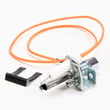
- Water heater pilot igniter 100110927
- Water heater pilot igniter 100110936
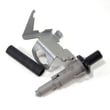
- Water heater piezo igniter bracket 100093718
A gas water heater that will not stay lit can indicate unsafe combustion conditions, gas supply problems, or a safety shutdown. Correct diagnosis protects against fire risk and carbon monoxide exposure, and it prevents repeated failed lighting attempts that can damage components.
Last updated: February 2026
What's the average lifespan of a gas hot water heater?
A tank-style gas water heater typically lasts 8 to 12 years. With consistent maintenance, many reach 12 to 15 years. For your American FG1F3030S3PV, routine tank flushing and periodic anode-rod inspection (outlined in the owner's manual) are the biggest factors that extend tank life.
Most gas storage water heaters wear out from internal tank corrosion and sediment buildup. These factors have the biggest impact:
- Water quality (hard water and corrosive water shorten tank life)
- Sediment in the bottom of the tank (reduces efficiency and stresses the tank)
- Anode rod condition (your manual recommends inspecting about every 3 years)
- Temperature setting (higher temps increase scaling and stress)
- Installation and venting (poor combustion air or venting can cause performance issues)
| Water heater age | What we recommend | Why it matters |
|---|---|---|
| 0 to 7 years | Maintain and monitor | Prevents early corrosion and sediment damage |
| 8 to 12 years | Plan for replacement timing | Failure risk rises as the tank ages |
| 12 to 15+ years | Replace proactively if conditions are harsh | Avoids sudden leaks and water damage |
Use these symptoms to judge whether your heater is aging out:
- Rusty or discolored hot water
- Popping, rumbling, or banging (often sediment)
- Water around the base of the tank
- Inconsistent hot water or long recovery times
- Frequent pilot or burner issues
If you’re troubleshooting ignition problems on this model, a common repair item is the water heater pilot igniter 100110927.
These steps help a tank last longer and keep performance steady:
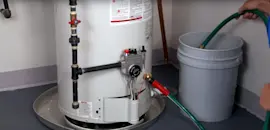
- Flush the tank periodically to reduce sediment
- Inspect the anode rod about every 3 years and replace it if heavily depleted
- Check the T&P relief valve for proper operation
- Keep the burner area clean and ensure proper airflow
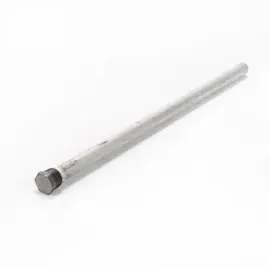
Common replacement parts for this model include the water heater anode rod 100109594 and the t&p valve 100108279.
Once a tank begins to corrode internally, it can fail with little warning. Planning replacement around the 8 to 12 year mark helps you avoid unexpected leaks, downtime, and damage, especially if the heater is installed in a finished space.
Last updated: February 2026