 Owner’s manual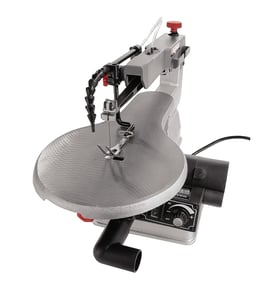

Should I get pinless or pinned scroll saw blades?
For the Craftsman 315216090 scroll saw, we recommend pinless (plain-end) blades for most projects because they support finer, more intricate cutting and interior cuts. This model accepts 5-inch blades in either pin-end or plain-end style, so you can choose based on the type of work you do (detail vs. thicker, simpler cuts). See the 315216090 owner's manual for blade installation and selection guidance.
Quick comparison: pinned vs. pinless
| Feature | Pinned (pin-end) blades | Pinless (plain-end) blades |
|---|---|---|
| Best for | Faster, simpler cuts; thicker stock | Detailed fretwork, tight curves, interior cuts |
| Blade changes | Often quicker on older setups | Slightly more setup, more flexibility |
| Interior cutting | Less convenient | Ideal (feeds through a drilled hole) |
| Availability | Common, but fewer specialty options | Widest range of sizes and tooth patterns |
How we choose the right blade for the job
Use these rules of thumb (they match how this saw is designed to be used):
- Choose narrow, fine blades for intricate curves and tight radius work.
- Choose wider blades for straighter cuts and larger curves.
- Match the blade to the material and thickness; blade packages list intended materials and cut radius.
- Plan to replace blades often; blades typically stay sharp for about 1/2 hour to 2 hours of cutting time.
- For best results in wood, cut stock under about 1 inch thick when possible.
Why pinless blades matter for interior cuts
A key scroll saw advantage is interior cutting (cutouts without entering from an edge). The typical process is:
- Remove the blade.
- Drill a starter hole in the workpiece.
- Thread the blade through the hole and reinstall it.
- Set blade tension and cut the interior shape.
Pinless blades make this easier because they fit through smaller starter holes and allow tighter detail work. The manual also notes interior cutting steps and blade handling in the 315216090 owner's manual.
Safety and setup notes that affect blade performance
- Unplug the saw before changing blades.
- Mount the saw securely to a workbench to reduce movement.
- If you use padding to reduce vibration, do not overtighten mounting bolts.
Why it matters
Choosing the right blade style and size reduces blade breakage, improves cut accuracy, and makes detailed work (like puzzles and fretwork) much easier on the Craftsman 315216090.
Last updated: February 2026
How thick of wood can a scroll saw cut through?
For the Craftsman 315216090 scroll saw, we use it to cut wood and other fibrous materials up to 2 inches thick when the correct blade and technique are used. For the cleanest, easiest cuts, we typically get the best results on wood under 1 inch thick (especially hardwoods). See the owner's manual for blade selection and operating guidance.
What affects the maximum cutting thickness?
- Wood species and density: softwood cuts thicker stock more easily than hardwood.
- Blade type and size: wider, coarser blades handle thicker stock better; fine blades are for thin material and tight curves.
- Cut style: straight cuts are easier than tight-radius scrolling in thick wood.
- Feed rate: a slow, steady feed prevents blade deflection and overheating.
- Saw stability: mounting the saw reduces vibration and helps the blade track correctly.
Practical thickness guidance (what we see most often)
| Material type | Typical “easy” thickness | Upper-end thickness (with the right blade and patience) |
|---|---|---|
| Softwood (pine, cedar) | 3/4 in. to 1 in. | Up to 2 in. |
| Hardwood (oak, maple) | 1/2 in. to 3/4 in. | 1 in. to 2 in. (slower feed, more blade wear) |
| Plywood | 1/2 in. to 3/4 in. | Up to 2 in. (watch for glue layers heating the blade) |
Setup tips that help you cut thicker stock safely
- Bolt or clamp the saw to a workbench before cutting; it reduces walking and vibration.
- Use a sharp blade; dull blades wander and burn the wood.
- Let the blade do the work; do not force the cut.
- If you notice excessive vibration or unusual noise, stop, turn the saw off, remove the switch key, and unplug before checking.
- For thick stock, plan for more frequent blade changes.
Why it matters
Cutting beyond the saw’s practical capacity increases blade breakage, rough edges, burning, and loss of control. Staying within the 2-inch capability (and choosing the right blade for the thickness) gives cleaner cuts and safer operation.
Last updated: February 2026
How do I know which scroll saw blade to use?
For the Craftsman scroll saw model 315216090, choose a blade based on the material type, material thickness, and how tight your curves are. As a rule, we use narrow, fine blades for intricate curves and thin stock, and wider blades for straighter cuts and larger curves; the blade package should also list the intended thickness range.
Blade selection basics (what to match)
- Material: wood, plastic, paper, felt, bone, veneer, etc.
- Thickness: very thin stock needs finer blades; thicker stock needs larger blades.
- Cut style: tight-radius scrolling vs. straighter or large-radius curves.
- Blade type: this saw uses 5-inch blades in pin-end or plain-end styles.
- Tooth count and kerf: finer teeth generally cut smoother but slower; coarser teeth clear sawdust faster.
Quick guide: blade width vs. the cut you want
| What you’re cutting | Best blade choice | Why it works |
|---|---|---|
| Tight curves, intricate patterns | Narrow blade | Turns tighter without binding |
| Straight cuts, large curves | Wider blade | Tracks straighter and stays stable |
| Thin material (about 1/4 in. or less) | Very fine, narrow blade | Cleaner control in thin stock |
| Wood thicker than about 1 in. | Use thinner stock when possible | Best results are typically achieved under 1 in. |
Speed and blade choice (practical pairing)
The manual includes a blade chart that pairs blade size and teeth-per-inch with recommended strokes per minute and material thickness ranges. Use that chart to pick a blade, then set speed to match the blade and material. See the owner's manual.
Why it matters
Using the wrong blade is the fastest way to get burning, rough edges, wandering cuts, and broken blades. The right blade and speed combination improves cut quality and reduces blade breakage.
Last updated: February 2026
How do I change the blades on a scroll saw?
To change the blade on your Craftsman 315216090 scroll saw, we turn the saw OFF, unplug it, release blade tension, remove the throat plate, then remove the blade from the holders and install a new 5-inch pin-end or plain-end blade with the teeth pointing down.
Safety first (do this every time)
- Push the ON/OFF knob to OFF
- Unplug the scroll saw from the power source
- Let the blade come to a complete stop before reaching near the blade holders
- Keep the drop foot acting as a blade guard positioned correctly after the blade change
For the exact diagrams and the blade-holder locations on this model, use the 315216090 owner's manual.
Blade type and direction (what fits this model)
This Craftsman 315216090 uses 5-inch blades in either pin-end or plain-end styles. Install the blade so it cuts on the downstroke, meaning the teeth point down toward the table.
| What you are doing | What to look for | Why it matters |
|---|---|---|
| Choosing a blade | Narrow blade for tight curves; wider blade for straighter cuts | Better control and cleaner cuts |
| Setting direction | Teeth point down | Prevents lifting and chatter |
| Setting tension | Blade “plucks” like a guitar string | Reduces wandering and breakage |
Steps to remove and install a blade (pin blades)
- Turn the saw OFF and unplug it.
- Pull up the tension release.
- Turn the blade tension knob to loosen tension.
- Push up from under the table and remove the throat plate.
- Remove the blade from the upper and lower blade holders.
- Install the new blade in the holders (teeth down), reinstall the throat plate, then re-tension the blade.
Set blade tension and drop foot after the change
- Adjust tension using the blade tension knob; aim for a clear musical note when plucked.
- Adjust the drop foot so it just rests on the workpiece (it should not drag).
Why it matters
Correct blade direction and tension on a scroll saw prevent rough cuts, blade breakage, and workpiece lifting, especially when cutting tight radii or thicker wood.
Last updated: February 2026