 Owner’s manual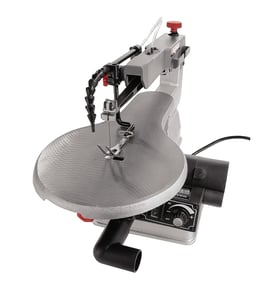

What size blade for 16 scroll saw?
For the Craftsman 113236090 16-inch variable-speed scroll saw, use 5-inch long scroll saw blades only; this model accepts both pin-end and plain-end blade styles. For the correct blade type and installation steps, follow the 113236090 owner's manual.
Blade size and type that fit this model
This saw is designed around a standard 5-inch blade length, and it can clamp either blade end style.
- Blade length: 5 inches
- Blade end styles: pin end and plain end
- Choose tooth count by material: finer teeth for thin stock and smoother cuts; coarser teeth for thicker stock
- Rule of thumb: keep at least 2 teeth in the material at all times
How to choose the right blade for your cut
Blade selection is mostly about the material thickness, the curve radius you need, and the finish quality you want.
- Thin wood (about 1/4 inch or less): use a very fine, narrow blade for tight scrolling
- Thicker wood (over 1/4 inch): use a wider blade for better tracking on straighter cuts
- Tight curves: narrower blades turn tighter but work best in thinner material
- Smooth finish or hard materials: finer tooth blade, often with slower speed
- Fast cutting in softer wood: coarser tooth blade, often with higher speed
Quick reference: blade choice by goal
| Your goal | Best general blade direction | Why |
|---|---|---|
| Tight-radius scrolling | Narrower blade, finer teeth | Turns tighter and reduces tear-out |
| Straighter cuts in thicker stock | Wider blade, coarser teeth | Tracks straighter and clears sawdust |
| Smoother edge | Finer teeth | Leaves a cleaner kerf |
| Longer blade life | Match blade to thickness and speed | Reduces overheating and tooth wear |
Why it matters
Using the correct 5-inch blade length and the right tooth pattern helps the blade track properly, reduces burning and breakage, and improves cut accuracy on wood, plastics, and non-ferrous metals.
Last updated: February 2026
How do I change the blades on a scroll saw?
To change the blade on your Craftsman 113236090 16-inch variable-speed scroll saw, turn the switch OFF, unplug the saw, then loosen blade tension and the blade holders to remove the old blade. Install the new blade with the teeth pointing down (it cuts on the downstroke), then re-tension and recheck tracking.
Step-by-step: blade change (pin-end or plain-end)
- Turn the speed control/on-off knob to OFF and unplug the power cord.
- Raise or loosen the blade guard/hold-down so you can access the blade area.
- Loosen the tension knob (counterclockwise) to reduce blade tension.
- Loosen the upper and lower blade holders/clamps, then remove the blade.
- Install the new 5-inch blade in the holders:
- Teeth face down toward the table.
- Center the blade in the blade support/hold-down area.
- Tighten the blade holders/clamps firmly.
- Tighten the tension knob (clockwise) until the blade is properly tensioned.
- Spin the blade by hand (with the saw unplugged) to confirm it moves freely and stays aligned.
Quick checks after installation
- Confirm the blade is clamped tight; a loose clamp is a common reason a plain-end blade slips.
- Set the hold-down foot so it supports the workpiece without binding the blade.
- Start at a slower speed for the first test cut, then increase speed as needed.
Blade selection tips (helps prevent breakage)
Your saw accepts 5-inch pin-end and plain-end blades. Use these guidelines:
| What you are cutting | Blade choice | Why |
|---|---|---|
| Thin wood (about 1/4 inch or less) | Fine, narrow blade | Tighter curves, smoother cut |
| Thicker wood | Wider or coarser blade | Better chip removal, less heat |
| Any material | Blade with at least 2 teeth in the cut | Reduces snagging and breakage |
Why it matters
Correct blade direction, clamp tightness, and tension directly affect cut quality and safety. Wrong tension, twisting the blade in the wood, or over-feeding the workpiece are top causes of broken blades and rough cuts.
For diagrams of the tension knob, blade holders, and guard/hold-down locations, use the 113236090 owner's manual.
Last updated: February 2026
What are the different types of scroll saws?
Scroll saws mainly fall into stationary benchtop scroll saws and portable scroll saws. Your Craftsman 113236090 is a stationary, 16-inch variable-speed scroll saw designed for controlled, detailed cuts in wood, plastics, and nonferrous metals; blade choice and speed control determine how cleanly it cuts.
Main scroll saw types (and what they’re best for)
- Stationary benchtop scroll saw: Most common; best for precision, repeatable cuts and interior cutouts.
- Portable scroll saw: Lighter-duty; used when you need to move the tool to the work (less common for fine scrolling).
- Variable-speed vs. single-speed: Variable speed helps match blade speed to material and cut quality.
- Pin-end vs. plain-end blade systems: Affects blade selection and how fine a cut you can make.
Key features that separate one scroll saw from another
These are the specs and design choices that matter most when comparing models:
- Throat size (cutting depth from blade to rear frame): Commonly 16 to 20 inches.
- Speed range and control: Variable speed helps reduce burning in wood and improves control in plastics and metal.
- Blade type compatibility: The 113236090 uses 5-inch pin-end and plain-end blades.
- Table tilt: Helps with bevel cuts; check the exact tilt range in the owner's manual.
- Blade changing method: Faster changes matter if you do frequent interior cuts.
Quick comparison table
| Feature | Stationary benchtop scroll saw (like 113236090) | Portable scroll saw |
|---|---|---|
| Best use | Fine detail work, tight curves, interior cuts | Light, occasional cuts where mobility matters |
| Stability | High (bench-mounted) | Lower (more vibration potential) |
| Typical materials | Wood, plastics, nonferrous metals | Mostly wood and thin materials |
| Blade options | Broad (often pin and plain end) | More limited |
Why it matters
Choosing the right “type” of scroll saw is really about matching stability, blade system, and speed control to your projects. For example, fine, narrow blades are best for tight-radius work in thin stock, while wider blades handle thicker wood but cannot cut tight curves as well.
Last updated: February 2026