 Owner’s manual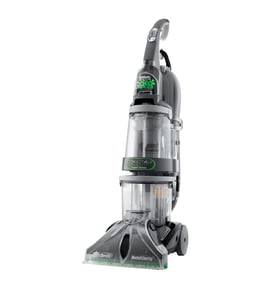

Can I use Dawn in my Hoover FloorMate?
Yes, you can use a small amount of Dawn in your Hoover FH40010B hard floor cleaner, but we recommend using it sparingly and avoiding oily or overly sudsy mixtures that can leave residue, reduce pickup performance, and create excess foam. For the safest mix ratios and approved cleaners, check the FH40010B owner's manual.
Recommended approach (safe, low-foam)
- Use only a few drops of Dawn per tank; more soap usually means more foam and more residue.
- Prefer clear, non-oily dish soap; avoid anything with added oils, lotions, or heavy fragrances.
- If you see foam in the recovery tank, dump and rinse, then refill with plain warm water.
- After using any soap, run a rinse-only pass (clean water, no detergent) to flush the system.
- Empty and rinse both tanks after each use to prevent odor and buildup.
What to avoid
Using the wrong cleaner is a common reason a floor scrubber leaves streaks or stops picking up water well.
- Oily cleaners (they can coat internal passages and floors)
- High-suds detergents (they can cause foaming and poor suction)
- Bleach or ammonia mixes (can damage components and create harsh fumes)
- Wax or polish products (can leave a film and clog the recovery path)
Quick mix guide
| Cleaner type | Works in FH40010B? | Why |
|---|---|---|
| A few drops of Dawn + warm water | Yes, in small amounts | Low-cost, effective on light grime if kept low-foam |
| Hard-floor machine solution | Yes | Designed to be low-foam and rinse cleaner |
| Oily soap, wax, polish | No | Leaves residue, can reduce pickup and cause streaking |
Why it matters
The FH40010B relies on steady airflow and clean internal channels to scrub and recover dirty water. Too much soap or oily additives can create foam, leave film on tile or sealed wood, and make the machine seem like it is “not picking up.”
Last updated: February 2026
How to use the Hoover FloorMate hard floor cleaner?
To use the Hoover FH40010B FloorMate hard floor cleaner, fill the clean-solution tank, lock the lid fully closed, set the dial to Wash, then lower the handle and start cleaning with steady forward and backward passes so the brushes can scrub and the squeegee can pick up dirty water.
Quick start steps
- Vacuum or sweep first; grit can reduce scrubbing performance.
- Fill the clean-solution tank with warm water and the recommended hard-floor cleaning solution.
- Reinstall the tank and press the lid down until it’s fully seated and sealed.
- Turn the selector dial to Wash for normal cleaning.
- Step on the handle release pedal to lower the handle.
- Power on and clean using slow, overlapping passes.
Best cleaning technique (what works in real homes)
- Forward pass: lets the brushes scrub and apply solution.
- Backward pass: improves pickup as the squeegee pulls water into the recovery tank.
- For sticky spots, pause briefly over the area, then make 1 to 2 extra passes.
| Task | Recommended approach | Result |
|---|---|---|
| Routine cleaning | 1 forward + 1 backward pass | Even wash and pickup |
| Heavy soil | Slower passes, extra overlap | Better agitation |
| Final dry pass | Run a few passes with minimal solution | Drier floor |
After-clean care (prevents odors and clogs)
- Empty and rinse the dirty-water (recovery) tank right after use.
- Rinse the squeegee area and wipe it clean.
- Let tanks and any removable parts air-dry before reassembly.
Why it matters
Using the correct Wash setting, a tight tank seal, and slow back-and-forth passes helps the FH40010B scrub effectively while maximizing water pickup; that means cleaner floors, faster drying, and fewer leaks.
For model-specific controls, tank fill lines, and cleaning-solution guidance, follow the FH40010B owner's manual.
Last updated: February 2026
Why is my floor scrubber not putting out water?
If your Hoover FH40010B hard floor cleaner is not putting out water, the most common causes are an empty or unseated clean-water tank, a clogged nozzle or internal passage, or a trigger/pump issue. We recommend checking the tank first, then clearing clogs and confirming the trigger is working.
Quick checks (most fixes are here)
- Refill the clean-water tank and reseat it firmly until it sits flat.
- Confirm the tank cap is tight and the gasket area is clean (a poor seal can stop flow).
- Make sure the solution selector (if equipped) is not set to a “dry” or “no solution” position.
- Squeeze and hold the trigger for 15 to 30 seconds to prime the system.
- Inspect the spray area for dried cleaner or debris blocking the outlet.
Clear a blocked spray path
- Unplug the unit.
- Remove the clean-water tank.
- Wipe the tank outlet/valve area and the machine inlet where the tank sits.
- Use warm water to flush the tank outlet; clear visible buildup with a soft brush.
- Reinstall the tank and prime again.
What to use (and what to avoid)
| Task | Recommended | Avoid |
|---|---|---|
| Clearing residue | Warm water, soft brush | Pins/metal picks that can enlarge nozzles |
| Cleaning tank seal | Damp cloth | Solvents that can swell rubber seals |
If the trigger is fine but there is still no water
These symptoms usually point to a restriction or a worn pump/valve:
- You hear the motor but never see spray.
- Flow starts briefly, then stops.
- Water leaks at the tank connection instead of spraying.
In these cases, follow the cleaning and priming steps above, then use the exploded-view diagrams and operating steps in the FH40010B owner's manual to identify the tank valve, internal tubing path, and any serviceable screens.
Why it matters
Running a floor scrubber with no water can leave streaks, reduce brush cleaning performance, and allow detergent residue to harden in the spray path, making future clogs more likely.
Last updated: February 2026
Are hard floor cleaner machines worth it?
Yes, a hard floor cleaner like the Hoover FH40010B is worth it when you want faster, lower-effort cleaning and better pickup of stuck-on grime than a mop. It is especially helpful for sealed hard floors, but it does not replace a dedicated vacuum for heavy debris.
When a hard floor cleaner is worth it
- You clean hard floors weekly (or more) and want to cut cleaning time.
- You have pets or kids and deal with frequent spills and tracked-in dirt.
- You want less bending and scrubbing than a mop-and-bucket routine.
- You prefer quicker dry times than traditional mopping.
- You want more consistent results on textured tile or grout lines.
When it may not be worth it
- You mostly have carpet or rugs (a hard floor cleaner is the wrong tool).
- You only spot-clean occasionally.
- Your floors are unsealed or water-sensitive (some wood, some laminates); always follow your flooring care rules.
- You already vacuum and mop lightly and are happy with the results.
What to expect (hard floor cleaner vs. mop)
| Feature | Hard floor cleaner (FH40010B type) | Traditional mop |
|---|---|---|
| Effort | Lower; machine does the scrubbing | Higher; more manual scrubbing |
| Dry time | Typically faster | Often slower |
| Crumbs and hair | Better pickup than a mop, but not a full vacuum | Usually pushes debris around |
| Deep grime | Better agitation | Depends on elbow grease |
Why it matters
Using the right tool protects your floors and your time. A hard floor cleaner can reduce over-wetting and improve soil removal, which helps keep sealed tile, vinyl, and sealed hardwood looking better between deep cleans.
Tips to get the best results
- Dry-pickup first if there is lots of grit (it prevents streaking and scratches).
- Use the recommended cleaning solution mix and avoid extra soap (it can leave residue).
- Empty and rinse tanks after each use to prevent odors.
- Clean the brush/roller area regularly so agitation stays strong.
- Check the care steps and maintenance schedule in the FH40010B owner's manual.
Last updated: February 2026