


How long do Jenn Air wall ovens last?
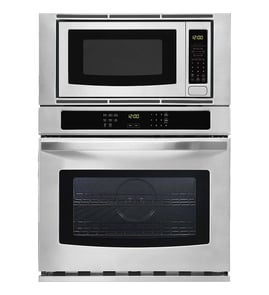
A Jenn-Air wall oven like model JMW2430LM02 typically lasts 15 years with normal household use. Keeping the cooling airflow clear, avoiding repeated self-clean overheating, and replacing wear parts promptly helps you reach (and often exceed) that lifespan.
Typical lifespan and what affects it
Most built-in wall ovens fall into a predictable range; how you cook and how well heat is managed matters most.
- Typical lifespan: 15 years
- Common real-world range: 12 to 20 years
- Biggest lifespan drivers: heat exposure, ventilation, electrical stability, and door seal condition
| Usage pattern | What you can expect | What to do |
|---|---|---|
| Light (few times/week) | Often closer to 18 to 20 years | Keep vents clear, clean gently |
| Average (most days) | Around 15 years | Address heating or fan issues early |
| Heavy (multiple cycles/day) | Often 12 to 15 years | Reduce high-heat stress, maintain airflow |
Signs your wall oven is nearing end-of-life
These symptoms usually point to a failing heating circuit, temperature control issue, or heat-management problem.
- Preheats slowly or struggles to hold temperature
- Uneven baking (hot spots, underbaked centers)
- Fan noise, weak airflow, or frequent shutdowns after heating
- Display resets, beeping, or intermittent controls
- Door not closing tightly or heat leaking around the door
Parts that commonly extend service life
Replacing a failed component is often the difference between a quick repair and ongoing performance problems.
- If baking is weak or uneven, check the range bake element W11545804.
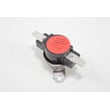
- If the unit overheats or shuts down, the range high-limit thermostat WP4449751 is a common protection device to inspect.
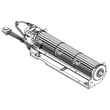
- If cooling airflow is poor, the assembly, cooling fan W11344874 is a key part of heat management.
Why it matters
Wall oven/microwave combos run hot in a tight cabinet space. Good airflow and stable temperature control reduce heat stress on the electronic control board, wiring harnesses, and door components, which directly supports a longer appliance life.
Last updated: January 2026
What is the disadvantage of a convection microwave oven?
A convection microwave (like the microwave in Jenn-Air model JMW2430LM02) trades capacity and simplicity for versatility: the biggest disadvantage is limited usable cooking space and uneven results if cookware, rack placement, or airflow is wrong, especially when cooking more than one item.
Common disadvantages to expect
- Smaller capacity than a full oven: most meals fit one dish at a time.
- More setup decisions: you may need the right rack, pan type, and spacing for airflow.
- Results vary by food: baked goods and crisping can be inconsistent if the load is too dense.
- Longer than standard microwave for some foods: convection preheat or browning time can offset speed.
- More cleanup: splatter plus browning can mean more interior wiping.
What this means for day-to-day cooking
Convection microwaves shine for reheating with better texture, roasting small portions, and crisping. They are less ideal when you need to cook multiple casseroles, bake several trays, or want predictable “full-oven” browning across a large batch.
| Task | Convection microwave | Full-size oven |
|---|---|---|
| Reheat pizza | Better crisp potential | Slower, but very even |
| Bake multiple trays | Limited | Best choice |
| Roast small portions | Fast and convenient | More preheat time |
| Large casserole/holiday cooking | Often too small | Designed for it |
Quick tips to reduce the downsides
- Leave space around food so hot air can circulate.
- Use cookware that fits the cavity without crowding.
- Avoid stacking dishes; cook in batches for even browning.
- Keep the turntable system working smoothly; a worn support can cause wobble and uneven heating.
- If the turntable support is damaged, replace it with the exact part for this model: microwave turntable tray support W11110134.
Why it matters
Most “convection microwave problems” are really capacity and airflow problems. When you plan for smaller loads and proper spacing, you get the speed of microwave cooking with noticeably better browning and texture.
Last updated: January 2026
Where is the model number on a Jenn Air wall oven?
On a Jenn-Air wall oven (including the JMW2430LM02 wall oven/microwave combo), the model number is typically printed on a rating label around the oven door opening. Check the frame area you can see when the door is open, then confirm the full model number before ordering parts.
Most common places to check
Look for a silver or white rating label (sometimes called a model and serial tag) in these spots:
- Along the left or right side of the oven frame (visible with the oven door open)
- On the top edge of the oven frame, just inside the door opening
- On the bottom edge of the oven frame, just inside the door opening
- On the side trim area near the hinge side (still within the door opening)
- For combo units, also check the microwave door opening frame if you do not see it on the oven side
What to write down (so you get the right parts)
We recommend copying the information exactly as shown on the label:
- Model number (example: JMW2430LM02)
- Serial number
- Any revision, engineering code, or “MOD” style suffix if shown
Quick checklist
| Item | Why it matters |
|---|---|
| Model number | Ensures diagrams and parts match your exact unit |
| Serial number | Helps confirm production run changes |
| Suffix/revision | Prevents ordering a similar-looking but incompatible part |
Why it matters
Jenn-Air wall oven and microwave combo units can use different door switches, control boards, and thermal safety parts depending on the exact model and revision. Matching the rating label to the part listing helps avoid fit and wiring issues.
Example parts that depend on exact model matching
- Switch W10211972 (microwave door interlock switch)
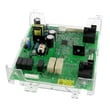
- Electronic control board WPW10260060 (main electronic control board)
- Fuse mda 20a W11188752 (microwave fuse)
Last updated: January 2026