- Kenmore refrigerator water filters
- Whirlpool refrigerator water filters
- Samsung refrigerator water filters
- GE refrigerator water filters
- LG refrigerator water filters
- Frigidaire refrigerator water filters
- KitchenAid refrigerator water filters
- Maytag refrigerator water filters
- Kenmore Elite refrigerator water filters
- Estate refrigerator water filters
- GE Profile refrigerator water filters
- Amana refrigerator water filters
- Bosch refrigerator water filters
- Dacor refrigerator water filters
- Electrolux refrigerator water filters
Top DIY repair help
View All Repair Categories
Appliances
Lawn & Garden
Power Tools
Home Improvement
Sports & Leisure
Heating & Cooling
Why dishwasher door seals fail and how to catch early signs of wear
less than a minute readSep 22Kim Hillegass
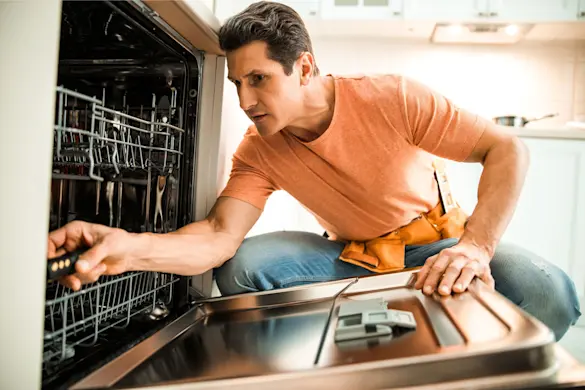
For such a simple strip of rubber, your dishwasher's door seal does a big job: keeping water sealed inside the tub where it belongs. If that seal starts to wear down, small drips can turn into messy leaks. Ignore it, and repairs can extend beyond your dishwasher to your floors and cabinets. Recognizing early signs of door seal wear and when to replace it will help protect your appliance and kitchen against damage from a leaking dishwasher.
What does a dishwasher door seal do?
The door seal (also called a gasket) fits into a channel around the tub opening. When the door closes, it compresses against the gasket to form a watertight barrier. This keeps high-pressure spray, soap, and hot water from leaking out during a cycle.
Most dishwashers have one continuous seal that runs around the tub opening, while some models also include a secondary lower seal or splash guard along the bottom edge of the door. Together, these flexible strips make sure water stays where it belongs, inside the tub, while your dishes get cleaned.
Why dishwasher door seals fail
Like any part that works hard with every cycle, a dishwasher door seal doesn’t last forever. Here are the most common reasons it can wear out or stop sealing properly:
Age and wear. Rubber and synthetic gaskets naturally degrade over time, losing their flexibility and ability to form a tight seal.
Heat and detergent exposure. Years of hot water, steam, and harsh detergents can dry out the material or cause cracks.
Food and debris buildup. Bits of food or soap scum stuck along the gasket keep it from sealing evenly, which can lead to drips. Routine maintenance and cleaning helps prevent this.
Misalignment or door issues. If the dishwasher door isn’t closing squarely, the seal may wear unevenly or fail to compress where it should.
Early signs your dishwasher door seal is wearing out
Door seals don’t usually fail overnight. Instead, they show gradual signs of wear that you can spot if you know what to look for:
Leaks on the floor. Small puddles forming near the base of the door after a cycle often point to a weakened seal.
Visible cracks or fraying. Run your finger along the gasket around the tub opening; cracks, flat spots, or torn edges mean the seal isn’t doing its job.
Damp smell or mildew. Trapped water around a compromised seal can leave a musty odor inside the dishwasher.
Longer or louder cycles. If the dishwasher has to work harder to keep water pressure consistent, you may hear it or notice longer runtimes.
It’s important to note that sometimes a leak may not be the door seal. Using liquid dish soap, a damaged door latch, or a warped tub could also cause leaking, especially if it happens suddenly or you see suds spilling onto the floor.
How to check your dishwasher door seal
If you’re not sure whether the door seal is the culprit, a quick inspection can give you answers. Here’s a simple way to check it yourself:
Unplug or shut off power and water. Safety first. Never inspect or repair a dishwasher while it’s connected.
Inspect the gasket. Open the door fully and look closely along the entire seal. Check for cracks, flat spots, fraying, or areas where the rubber feels brittle.
Try the paper test. Close the dishwasher door on a slip of paper. If you can pull it out easily, the seal isn’t making a tight connection in that spot.
If the seal looks worn or fails the test, it’s time to replace the door seal.
And remember: if the seal looks fine but your dishwasher is still leaking, the problem could lie elsewhere, like a faulty latch or even a warped tub.
When to replace the seal vs. call for repair
Replacing a worn dishwasher door seal is usually a straightforward, DIY-friendly job. If the gasket shows cracks, flat spots, or fails the paper test, swapping it out should stop most leaks.
But not every puddle points to the seal. If the dishwasher door doesn’t close squarely, the hinges may be bent or misaligned. A latch that isn’t holding tight can also let water slip through, even with a brand-new seal in place. And in some cases, a cracked or warped tub is the real source of the leak.
Those issues might be harder to fix on your own. If you’ve replaced the seal and the leaking continues, or the door clearly isn’t lining up, you should consider calling a technician. Knowing when it’s the seal and when it’s a bigger problem helps you avoid frustration and keeps your kitchen dry.
Preventing premature seal failure
A little upkeep goes a long way in extending the life of your dishwasher door seal. Here are a few habits that help prevent leaks before they start:
Wipe the gasket regularly. Food particles and detergent residue can build up along the seal, keeping it from closing tightly. A quick wipe after a cycle helps keep it clear.
Clean the dishwasher regularly. Use a dishwasher cleaner to remove hidden grime and buildup that contribute to gasket wear.
Avoid slamming the door. A hard close can flatten or stress the seal over time.
Run an occasional hot-water cycle. This helps dissolve detergent and keeps buildup from collecting around the seal.
Inspect regularly. Look over the gasket once or twice a year to catch cracks or wear early.
A worn dishwasher door seal may not seem like a big deal at first, but catching problems early can save you from messy leaks and costly damage. With regular cleaning, gentle use, and quick action when you spot wear, you’ll keep your dishwasher running smoothly and your kitchen dry. And if you need step-by-step help with repairs, our dishwasher DIY repair help hub has guides to walk you through the process.