Owner’s manual
 Error Codes
What are the most common issues with GS650YBRT?
The most common issues we see on the State GS650YBRT gas water heater are “no hot water” (pilot or burner problems), not enough hot water (thermostat setting or dip tube/sediment issues), and water leaking (valve, fittings, or tank-related leaks). Use the GS650YBRT owner's manual for model-specific checks and safety steps.
- Pilot will not stay lit: dirty pilot/thermocouple area, weak thermocouple signal, or combustion air issues
- Burner won’t ignite: gas control/thermostat problems, clogged burner orifice, or gas supply shutoff
- Water not hot enough: thermostat set too low, high hot-water demand, or heavy sediment reducing heat transfer
- Rumbling or popping noises: sediment buildup on the tank bottom
- Water around the heater: loose plumbing connections, leaking temperature and pressure relief (T&P) valve, or condensation (especially after heavy use)
- Sooting or scorch marks: improper combustion or restricted airflow (needs immediate attention)
- Confirm the gas shutoff valve is fully open.
- Verify the thermostat temperature setting is appropriate.
- Look for error/status indications on the gas control (if equipped).
- Inspect for water leaks at fittings, drain valve, and around the T&P discharge pipe.
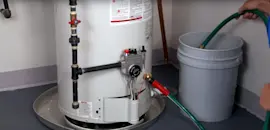
- Listen for sediment noise; plan a tank flush if maintenance is due.
| Problem | What you can check | When to stop and get service |
|---|---|---|
| No hot water | Pilot status, thermostat setting, gas supply | Gas smell, repeated pilot outage, soot/scorching |
| Not enough hot water | Temp setting, usage pattern, sediment | Water too hot, relief valve discharging |
| Leaking | Fittings, drain valve, T&P valve discharge | Water from tank body, active spraying, corrosion |
Gas water heater issues often involve combustion, gas supply, and scald risk. Catching pilot, burner, airflow, and leak problems early helps prevent unsafe operation and avoids bigger repairs.
Last updated: March 2026
What is the average cost of a 50 gallon gas water heater?
A typical 50-gallon gas water heater usually costs about $600 to $1,500 for the unit, and about $1,200 to $3,500 installed depending on brand, efficiency, venting, and local labor rates. For a State GS650YBRT gas water heater, your exact total depends on the vent type and any code-required upgrades; see the GS650YBRT owner's manual for venting and installation requirements.
- Venting type: atmospheric vent vs. power vent vs. direct vent
- Efficiency level: standard vs. higher-efficiency models
- Gas control and safety features: ignition type, sensors, and control complexity
- Local code upgrades: expansion tank, seismic straps, drip pan, shutoff valve, vent changes
- Labor and access: tight closets, attic installs, long vent runs, disposal fees
| Cost item | Common range | Notes |
|---|---|---|
| Water heater (50-gal gas) | $600 to $1,500 | Higher for power/direct vent and premium efficiency |
| Basic installation labor | $600 to $2,000 | Varies by region and complexity |
| Common add-ons/upgrades | $100 to $1,000+ | Venting changes and code items can add up |
| Total installed (typical) | $1,200 to $3,500 | Wide range based on venting and upgrades |
- Confirm your vent type and whether it can stay the same.
- Check if your area typically requires an expansion tank or other code items.
- Note access issues (stairs, attic, tight closet) that increase labor time.
- If you are troubleshooting instead of replacing, compare the cost of common repairs (thermocouple, gas control valve, burner parts) versus replacement.
A 50-gallon gas water heater replacement can look inexpensive until venting and code upgrades are included. Matching the correct venting and safety requirements helps prevent nuisance shutdowns, poor draft, and premature part wear.
Last updated: January 2026
What's the average lifespan of a gas hot water heater?
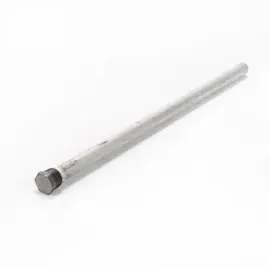
A gas water heater like the State GS650YBRT typically lasts 8 to 12 years. Lifespan depends most on water quality, maintenance (especially periodic tank flushing), and whether key components like the anode rod and gas control are kept in good working condition.
- Gas tank water heater: 8 to 12 years
- Electric tank water heater: 10 to 15 years
- Shorter lifespan is common when: hard water causes heavy sediment buildup
- Longer lifespan is common when: the tank is flushed regularly and the anode rod is maintained
| Water heater type | Typical lifespan | Biggest life-shortener |
|---|---|---|
| Gas tank (like GS650YBRT) | 8 to 12 years | Sediment and overheating |
| Electric tank | 10 to 15 years | Sediment and element stress |
Most tank-style gas water heaters fail due to tank corrosion or chronic overheating from sediment. These are the most common contributors:
- Worn-out anode rod (tank corrodes faster)
- Heavy sediment insulating the tank bottom
- Leaking tank seams or fittings
- Failing gas control valve/thermostat
- Burner or pilot issues causing poor combustion and soot
For model-specific maintenance intervals and safety steps, follow the GS650YBRT owner’s manual.
- Flush the tank periodically to reduce sediment
- Test the temperature and pressure relief (TPR) valve as directed
- Keep the burner area clean and ensure proper airflow
- Watch for early warning signs: rumbling, slow recovery, rusty water, or moisture at the base
- Maintain safe temperature settings to reduce stress on the tank
A water heater near end-of-life is more likely to leak, lose heating performance, and waste fuel. Planning replacement around the 8 to 12 year mark helps avoid unexpected downtime and water damage.
Last updated: January 2026